









<h1>How to Get Your Cornelius Ice Machine DF250 Appraised</h1>
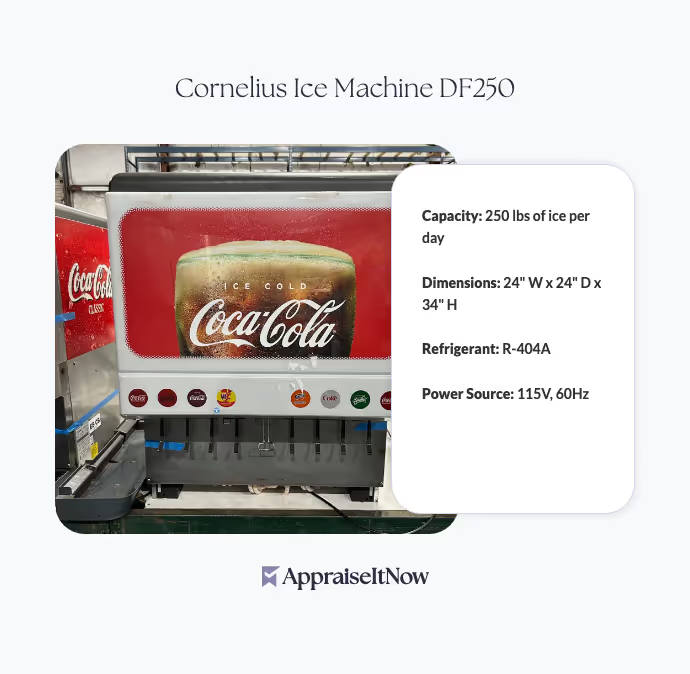
<p>The Cornelius Ice Machine DF250 has been a trusted workhorse in commercial food service operations since its introduction in 1980, commanding a market value between <strong>$3,500 and $5,000</strong> for units in good condition. Whether you're buying, selling, or seeking insurance verification for this reliable piece of <a href="/types/restaurant-equipment">restaurant equipment</a>, understanding what drives its appraisal value and how to navigate the professional valuation process will help you make confident decisions.</p>
<h2>Understanding the Cornelius DF250's Market Position</h2>
<p>The DF250 represents more than just an ice maker—it's a dependable asset that's earned its reputation across decades of commercial service. With its durable stainless steel construction, automatic self-cleaning capabilities, and energy-efficient design, this machine delivers consistent, crystal-clear ice production that restaurants, bars, hospitals, and hotels rely on daily. The compact footprint makes it adaptable to various kitchen layouts, while its intuitive control panel and easy maintenance requirements minimize downtime and staffing demands.</p>
<p>Current market demand for used DF250 models reflects its proven reliability. Unlike equipment prone to obsolescence, the Cornelius DF250 maintains strong resale value because operators understand its performance track record and replacement costs for comparable new units often exceed $8,000 to $12,000. This differential between used and new pricing creates a healthy secondary market for well-maintained examples.</p>
<div class="callout tip"><p><strong>Market Insight</strong></p>
<p>Cornelius DF250 units with documented maintenance records and minimal repair history typically command prices at the higher end of the $3,500-$5,000 range, sometimes exceeding it in tight regional markets.</p></div>
<h2>Key Factors That Determine Your DF250's Appraisal Value</h2>
<p>When a professional appraiser evaluates your Cornelius ice machine, they examine several critical dimensions that directly affect its worth. Understanding these factors helps you prepare documentation and realistic expectations before obtaining your valuation.</p>
<p><strong>Age and operational hours</strong> significantly impact the DF250's value. A unit manufactured in 1995 with moderate usage history presents differently from one made in 2010 that's been running 24/7 in a high-volume restaurant. Appraisers investigate the serial number to establish manufacturing date and cross-reference this against visible wear patterns. The DF250's robust engineering means even older units can command solid value if they've been properly maintained, though units exceeding 25-30 years of age may see valuation discounts of 15-25% depending on condition.</p>
<p><strong>Mechanical condition forms the foundation</strong> of your appraisal. The compressor represents the DF250's most expensive component to replace, so appraisers test refrigeration cycling, evaluate cooling efficiency, and listen for abnormal noises indicating potential failure. A properly functioning compressor can mean $500-$1,000 difference in your unit's appraised value. The evaporator coil's ice-producing capacity, condenser cleanliness, and control panel responsiveness all factor into the overall mechanical assessment. Common issues like compressor degradation, evaporator frost accumulation, or control panel malfunction directly reduce valuation by 10-40% depending on severity and repair costs.</p>
<p><strong>Parts availability and model variations</strong> create nuance in the appraisal process. The DF250 has been produced in multiple configurations with varying water systems, ice cube sizes, and production capacities. Units with readily available replacement parts command premium pricing because operational risk decreases for potential buyers. Conversely, older variants where OEM parts have become scarce may see modest valuation discounts, though this rarely exceeds 5-10% unless critical components are no longer manufactured.</p>
<p><strong>Visual condition and aesthetics</strong> matter more than many equipment owners realize. Stainless steel finish integrity, dents or dings affecting structural integrity, rust spots indicating corrosion potential, and cabinet wear all influence perception and actual remaining lifespan. A DF250 with pristine finish and minimal cosmetic wear may appraise 15-20% higher than a functionally identical unit showing heavy cosmetic deterioration.</p>
<h2>Documentation That Strengthens Your Appraisal</h2>
<p>Professional appraisers working with <a href="/types/food-processing-equipment">commercial kitchen equipment</a> rely heavily on documentation to establish accurate valuations. Gathering the right materials before your appraisal appointment accelerates the process and often results in more favorable outcomes.</p>
<p>Your maintenance records represent the most valuable documentation. Service logs showing regular cleaning, compressor inspections, refrigerant checks, and component replacements demonstrate responsible stewardship. Restaurants maintaining detailed records often see 10-15% appraisal premiums because buyers perceive lower risk of imminent mechanical failure. If you lack comprehensive records, be prepared to discuss the unit's operational history verbally—appraisers understand that small operators sometimes maintain informal maintenance practices.</p>
<p>The original purchase documentation and any warranties or service contracts still in effect add value to your appraisal. Installation dates, original capacity specifications, and serial numbers help appraisers verify authenticity and establish the equipment's pedigree. Receipts from recent repairs or part replacements provide concrete evidence of system integrity. Before seeking remote appraisal services, compile any available documentation into a clear file or folder.</p>
<div class="callout note"><p><strong>Documentation Priority</strong></p>
<p>Even without perfect records, professional appraisers can assess mechanical condition directly. However, documentation accelerates the process and eliminates ambiguity about maintenance history, often resulting in higher valuations.</p></div>
<h2>Appraisal Methods for Commercial Ice Machines</h2>
<p>Understanding which valuation approaches apply to your Cornelius DF250 helps you recognize whether your appraiser is using industry-standard methodology. Professional appraisal services typically employ one or more of three primary approaches when evaluating <a href="/types/equipment-and-machinery">equipment and machinery</a>.</p>
<p>The <strong>market approach</strong> examines comparable DF250 units that have recently sold in your geographic region. Appraisers research online marketplaces, restaurant equipment retailers, auction results, and classified listings to identify similar machines and their selling prices. This method works particularly well for the DF250 because active secondary market activity provides abundant data points. Regional variations matter significantly—tight markets in hospitality-dense areas like Miami or Las Vegas may support higher prices than rural regions with limited buyer pools.</p>
<p>The <strong>cost approach</strong> evaluates replacement expense and depreciation. Appraiser establish new Cornelius DF250 pricing (typically $8,000-$12,000), assess your unit's condition, and calculate depreciation based on age and wear. This method provides a useful floor valuation and proves particularly valuable when market comparables are scarce. For a 15-year-old DF250 in good condition, the cost approach might calculate: New unit cost ($10,000) minus 40-50% depreciation equals $5,000-$6,000, which aligns reasonably with market expectations.</p>
<p>The <strong>income approach</strong> applies when the equipment directly generates revenue. For busy restaurant operations, appraisers might calculate ice machine productivity, relate it to customer service capacity, and estimate the income loss if the machine failed. This method rarely dominates DF250 appraisals for insurance or purchase verification, but it provides context when evaluating business interruption scenarios.</p>
<p>Most professional appraisers employ multiple methods and reconcile results into a final value opinion. When seeking your appraisal, clarify which methodology the appraiser plans to use and why it's appropriate for your situation.</p>
<h2>Remote Appraisal Versus In-Person Inspection</h2>
<p>Many restaurant operators wonder whether they can obtain accurate DF250 valuations without scheduling an in-person inspection. The answer depends on your appraisal purpose and the equipment's condition.</p>
<p><strong>Remote appraisals</strong> work effectively when you can provide comprehensive photographic documentation and detailed operational descriptions. The appraiser needs clear photos of the unit from multiple angles, close-ups of any damage or wear, and interior views showing the evaporator, compressor area, and control panel. You should record operational characteristics—how long the machine takes to produce a batch of ice, whether any unusual noises occur during cycling, water quality observations, and any recent repair work. Describing the unit's placement and surrounding conditions helps the appraiser assess environmental factors affecting performance.</p>
<p>AppraiseItNow specializes in remote appraisals for <a href="/blog/understanding-what-goes-into-a-beverage-equipment-appraisal">restaurant and beverage equipment</a>, using detailed photography and owner descriptions to reach reliable valuations for insurance, sale, or verification purposes. The remote approach typically costs 30-40% less than in-person inspections and delivers results within 5-7 business days.</p>
<p><strong>In-person inspections</strong> become necessary when mechanical condition is uncertain, the equipment hasn't been operated recently, or when high-value transactions demand maximum confidence. An appraiser visiting your location can test ice production, listen for compressor performance, verify serial numbers against parts lists, and assess environmental conditions affecting equipment lifespan. For a DF250 valued at $4,000-$5,000, in-person inspection adds $150-$300 to appraisal costs but eliminates ambiguity.</p>
<div class="callout tip"><p><strong>Appraisal Strategy</strong></p>
<p>Start with a remote appraisal if mechanical condition appears solid and maintenance records exist. Invest in in-person inspection only if you anticipate high-value transactions or suspect mechanical issues requiring expert assessment.</p></div>
<h2>Meeting Professional Appraisal Standards</h2>
<p>When selecting an appraiser for your Cornelius DF250, ensure they maintain USPAP (Uniform Standards of Professional Appraisal Practice) compliance. These standards govern data collection, analysis methodology, and reporting requirements across the appraisal industry. USPAP-compliant appraisals carry weight with lenders, insurers, and courts because they follow rigorous professional protocols.</p>
<p>Your appraiser should hold relevant credentials—look for AAA, ISA, ASA, CAGA, or AMEA designations indicating professional training and continuing education in equipment valuation. These credentials demonstrate expertise in distinguishing between cosmetic wear and functional degradation, understanding equipment-specific market dynamics, and recognizing depreciation patterns across equipment lifecycles.</p>
<p>The final appraisal report should include detailed photographs, mechanical assessment narratives, comparable sales analysis, depreciation calculations, and a clear value conclusion. For insurance purposes, insurers need documentation that supports the agreed-upon replacement cost. For sale transactions, detailed reports help justify your asking price to potential buyers and accelerate negotiations.</p>
<p>When requesting appraisal services, clarify your intended use—insurance verification, sales support, estate valuation, or loan collateral—because this affects the appraiser's analysis depth and report format. A certified professional appraisal typically costs $300-$500 for a Cornelius DF250, though complex situations involving multiple units or advanced condition assessment may exceed this range.</p>
<h2>Regional Market Dynamics and Liquidity</h2>
<p>Your Cornelius DF250's appraisal value reflects not just mechanical condition but also local market demand and buyer availability. Understanding regional dynamics helps you set realistic expectations and timing for sales.</p>
<p>Restaurant equipment markets vary significantly by geography. High-volume hospitality regions like California, Florida, Texas, and New York support robust secondary markets where used DF250 units move quickly at competitive prices. Less urbanized regions with fewer restaurants and bars may offer more limited buyer pools, potentially supporting lower valuations despite identical equipment condition. Climate also factors into demand—hot climates with year-round ice demand support stronger pricing than seasonal markets.</p>
<p>Liquidity considerations matter for both sellers and potential buyers evaluating insurance needs. A DF250 in an area with strong restaurant activity might sell within 2-3 weeks at asking price, while the same unit in a rural market might require significant discounting to attract buyers. Professional appraisers understand these regional variations and adjust valuations accordingly, sometimes providing a range reflecting local market strength rather than a single fixed value.</p>
<div class="callout note"><p><strong>Market Reality</strong></p>
<p>Local demand and available buyer pools significantly influence actual selling prices. A professional appraisal reflects what the equipment should fetch in your specific market, accounting for regional hospitality activity and equipment distribution density.</p></div>
<h2>Insurance and Valuation Certification</h2>
<p>If you're seeking appraisal for insurance purposes, understand that standard property policies may not adequately cover commercial equipment replacement. Specialized restaurant equipment insurance requires certified appraisals establishing agreed-upon values. Your Cornelius DF250 appraisal provides the documentation insurers need to confirm coverage limits and prevent disputes during claims.</p>
<p>Insurance companies increasingly require USPAP-compliant appraisals for equipment valued above $2,500, and most DF250 appraisals exceed this threshold. The appraiser's certified opinion becomes the reference point for what your insurer will pay if the machine fails or requires emergency replacement. Obtaining current appraisals every 3-5 years ensures your coverage reflects current market values, protecting you from under-insurance during inflationary periods.</p>
<p>Lenders evaluating restaurant businesses or refinancing operations also demand certified appraisals of significant equipment. Your DF250's documented value supports loan applications and demonstrates legitimate business assets supporting creditworthiness.</p>
<h2>Taking the Next Step</h2>
<p>Understanding your Cornelius Ice Machine DF250's market value requires evaluating condition, researching comparable units, and applying professional appraisal methodology. Whether you're buying, selling, managing insurance, or planning for succession, a certified appraisal provides the documentation and confidence needed to move forward decisively.</p>
<div class="callout note"><p><strong>Key Takeaway</strong></p>
<p>A professional USPAP-compliant appraisal of your Cornelius Ice Machine DF250 delivers accurate market valuation, comprehensive documentation suitable for insurance or sale purposes, and peace of mind knowing your equipment's worth is based on expert analysis rather than guesswork. With values typically ranging from $3,500 to $5,000, investing $300-$500 in professional appraisal services protects your asset and supports informed business decisions.</p></div>