









<h1>How to Get Your Bertram 390 Fishing Boat Appraised</h1>
<p>The Bertram 390 Fishing Boat represents a significant investment, commanding market values between <strong>$50,000 and $60,000</strong> depending on condition, engine hours, and regional demand. Whether you're preparing to sell, refinance, establish insurance coverage, or settle an estate, understanding how to obtain an accurate, professional appraisal ensures you have the documentation and valuation data you need to make informed decisions about your vessel.</p>
<h2>Understanding the Bertram 390's Market Position</h2>
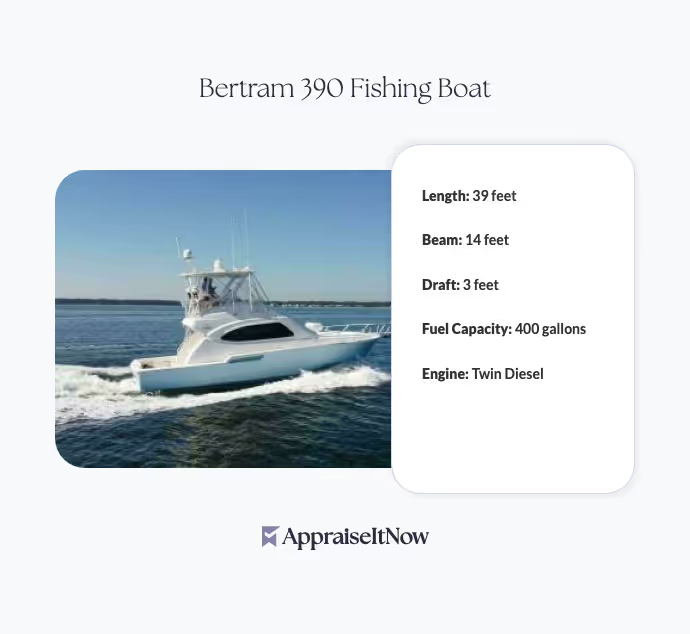
<p>Introduced in 1989, the Bertram 390 has established itself as a highly sought-after offshore fishing platform, known for its exceptional performance, luxurious accommodations, and proven seaworthiness. The vessel's twin diesel engines deliver a top speed of 35 knots while maintaining exceptional fuel efficiency compared to similar-sized sportfishers. With sleeping accommodations for six and a well-equipped galley, the Bertram 390 bridges the gap between serious fishing capability and comfortable cruising—a positioning that has sustained its collector and active-use market.</p>
<p>Your Bertram 390's specific value depends on factors beyond the base market range. When seeking an appraisal, understanding what drives value helps you prepare documentation and realistic expectations. Engine hours, maintenance history, upgrades to navigation systems, hull integrity, and regional market conditions all significantly impact your boat's worth within the $50,000-$60,000 range—and can move it meaningfully above or below these benchmarks.</p>
<h2>What Determines Your Bertram 390's Appraised Value</h2>
<p>The primary factors that influence market value fall into several distinct categories. <strong>Year of manufacture</strong> matters considerably; earlier 1989-1995 models typically appraise lower than mid-1990s to early-2000s examples, reflecting improvements in construction, systems integration, and engine technology. A Bertram 390 from 1995 will generally command 15-25% more than a 1989 original, all else equal.</p>
<p><strong>Engine condition and hours</strong> represent the single largest variable affecting value. Your diesel engines represent the most expensive component of the vessel to repair or replace. Appraisers thoroughly evaluate engine hours, maintenance records, and operational history. A well-maintained engine with comprehensive service documentation commands significant premiums, while high-hour engines or those with evidence of hard use can reduce value by 20-30% or more.</p>
<p><strong>Electronics and navigation systems</strong> have evolved dramatically since 1989. Modern fish-finding technology, GPS integration, autopilot systems, and communication equipment add measurable value. Conversely, outdated systems may require replacement, reducing your boat's appraisal value unless you've already upgraded to current marine electronics standards.</p>
<p><strong>Hull condition</strong> directly affects structural value and long-term ownership costs. A fiberglass hull free from crazing, osmotic blistering, or structural damage commands premium pricing. Evidence of professional repair work—documented with receipts and warranties—can offset concerns, but unaddressed hull deterioration significantly impacts appraisal values. Previous accident damage, even if repaired, requires disclosure and typically reduces value unless repairs were completed by certified marine repair facilities with full documentation.</p>
<p><strong>Comprehensive maintenance records</strong> demonstrate responsible ownership and support higher valuations. Appraisers weight boats with documented service histories substantially above those lacking maintenance documentation. If you possess records of regular engine servicing, haul-outs, systems upgrades, and professional inspections, compile these materials before your appraisal appointment—they directly contribute to establishing higher values.</p>
<div class="callout tip"><p><strong>Documentation Advantage</strong></p>
<p>Boats with complete service records and documented upgrades typically appraise 10-15% higher than similar vessels without maintenance documentation, even when mechanical condition appears equivalent.</p></div>
<h2>Bertram 390 Values by Decade and Market Timing</h2>
<p>Understanding how market conditions have affected Bertram 390 valuations across decades helps contextualize current pricing. During the 1980s production run through the early 1990s, when these boats were relatively new, purchase prices ranged from approximately $400,000-$600,000 (in nominal dollars). Today's $50,000-$60,000 appraisal values represent significant depreciation but reflect realistic secondary market dynamics for 30+ year-old fishing boats.</p>
<p>The 1990s fleet—models built from 1995-1999—represents the sweet spot for current secondary market activity. These boats benefit from improved systems and slightly reduced mileage compared to earliest production examples, yet remain substantially more affordable than original purchase prices. Current market demand for 1990s Bertram 390s typically peaks in the $55,000-$65,000 range for well-maintained examples.</p>
<p>Early 2000s models, though fewer in total production numbers, command premiums reflecting more modern construction standards and typically lower engine hours. A 2002-2004 Bertram 390 in comparable condition to a 1995 model might appraise $8,000-$12,000 higher, assuming both vessels maintain equivalent maintenance records and operational histories.</p>
<p>Regional market conditions significantly affect your specific appraisal value. Coastal areas with active sport-fishing communities—particularly Florida, California, the Gulf Coast, and the Northeast—typically support stronger pricing than inland or freshwater markets. If you're located in a secondary market region, your appraisal may reflect 10-15% lower values than comparable boats in high-demand coastal zones, regardless of mechanical condition. Conversely, if you're willing to market your vessel nationally rather than locally, professional appraisals become essential for establishing competitive positioning.</p>
<h2>Essential Documentation for Your Bertram 390 Appraisal</h2>
<p>Professional appraisers require specific documentation to complete thorough valuations. Your boat's <strong>title and registration</strong> establish legal ownership and manufacturing year, providing the foundation for all subsequent analysis. Appraisers cross-reference this documentation with hull serial numbers to verify authenticity and confirm production specifications.</p>
<p><strong>Engine documentation</strong> forms the critical component of any Bertram 390 appraisal. Compile engine hour logs, service records from diesel specialists, recent oil analysis reports, and any engine rebuilds or major repairs. If you've maintained comprehensive maintenance logs through a marina or independent diesel mechanic, these records directly support higher appraisals by demonstrating responsible engine stewardship.</p>
<p><strong>Survey reports</strong> from professional marine surveyors carry substantial weight in the appraisal process. If you've had the hull professionally surveyed—ideally a haul-out survey with underwater inspection—this documentation provides third-party validation of structural condition. Conversely, absence of recent survey data may prompt the appraiser to recommend one before finalizing values, particularly if significant time has elapsed since last inspection.</p>
<p><strong>Electronics and systems upgrades</strong> require documentation of installation dates, specifications, and any warranty information. Photographs of your GPS chart plotter, fish-finder display, autopilot control panel, and communication systems help the appraiser assess technological currency and functionality.</p>
<p><strong>Maintenance logs</strong> for systems beyond engines prove valuable supplementary documentation. Records of generator service, air conditioning maintenance, through-hull fitting inspections, and fuel system work demonstrate conscientious ownership. Compile these materials chronologically if possible, as professional appraisers use temporal patterns to assess whether maintenance was performed regularly or addressed only after failures occurred.</p>
<p><strong>Comparable sales data</strong> for similar Bertram 390 models recently listed or sold in your region helps frame market expectations. While appraisers conduct their own market research, providing information about comparable boats demonstrates engagement with current market dynamics and helps establish realistic value ranges.</p>
<div class="callout note"><p><strong>Documentation Tip</strong></p>
<p>Digital photo documentation of your boat's condition—exterior, cockpit, cabin, engine room, and systems—supports remote appraisals and helps appraisers make preliminary assessments before in-person inspection.</p></div>
<h2>Distinguishing Marine Surveys from Professional Appraisals</h2>
<p>Many boat owners conflate marine surveys with appraisals, though these serve distinct purposes. A <strong>marine survey</strong> focuses on mechanical and structural condition assessment, identifying defects, repair needs, and safety concerns. Surveyors document findings in detailed reports but typically avoid assigning market values, as that falls outside survey scope and liability parameters.</p>
<p>A <strong>USPAP-compliant appraisal</strong> goes beyond condition assessment to establish fair market value using documented comparable sales, market analysis, and standardized valuation methodologies. Professional appraisers synthesize survey findings, maintenance history, regional market conditions, and comparable sales data to arrive at defensible market value opinions. When you need documentation for insurance, financing, or sale purposes, professional appraisals provide the market-based valuation that surveys cannot deliver.</p>
<p>You should obtain a marine survey when evaluating a boat for purchase—it identifies potential repair costs and safety issues. You should obtain a professional appraisal when you need documented market value for insurance claims, estate settlement, divorce proceedings, or sale transaction documentation. Many boat owners benefit from both: a survey revealing condition issues, followed by an appraisal adjusting values based on those findings.</p>
<p>For detailed guidance on understanding these distinctions and their roles in various transaction types, explore our comprehensive resources on <a href="/blog/what-a-professional-boat-appraisal-includes">what professional boat appraisals include</a> and <a href="/blog/using-boat-appraisals-to-insure-your-boat">using boat appraisals for insurance</a>.</p>
<h2>The Appraisal Professional: Credentials and Expertise</h2>
<p>When selecting an appraiser for your Bertram 390, verify their professional credentials and specialization in marine valuation. <strong>ASA (American Society of Appraisers)</strong> members maintaining marine specialty credentials have demonstrated expertise in boat valuation methodology and market analysis. <strong>ISA (International Society of Appraisers)</strong> and <strong>AAA (American Association of Appraisers)</strong> similarly credential experienced boat appraisers who adhere to professional standards and continuing education requirements.</p>
<p><strong>CAGA (Certified Appraisers Guild of America)</strong> and <strong>AMEA (Association of Marine Equip Appraisers)</strong> represent additional professional affiliations indicating specialized marine knowledge. AppraiseItNow connects boat owners with credentialed appraisers holding these professional designations, ensuring your appraisal receives USPAP-compliant treatment accepted by insurance companies, lenders, and courts for all transaction types.</p>
<p>Beyond credentials, seek appraisers with documented experience specifically with Bertram 390 models or comparable offshore sportfishing vessels. Experience with your boat's production year, typical market value range, and known design characteristics ensures appraisers understand factory specifications and common upgrade patterns that affect values.</p>
<div class="callout tip"><p><strong>Credential Verification</strong></p>
<p>Always verify an appraiser's professional credentials directly with the credentialing organization rather than accepting claims at face value. Legitimate professionals welcome verification inquiries.</p></div>
<h2>Remote Appraisals Versus In-Person Inspections</h2>
<p>With technological advancement, many boat appraisals now incorporate remote assessment combined with in-person inspection. <strong>Photo-based appraisals</strong> leverage high-resolution images of your boat's exterior, interior, engine room, and systems to establish preliminary valuations. This approach works well when comparable market data, maintenance records, and photographic documentation are comprehensive.</p>
<p>However, <strong>in-person inspection</strong> remains essential for accurate valuations of significant assets like your Bertram 390, particularly when substantial sums are at stake. An experienced appraiser conducting on-site inspection can assess condition details, test systems functionality, evaluate hull integrity through physical examination, and verify equipment specifications that photographs cannot fully capture. Many appraisers recommend a hybrid approach: initial remote assessment followed by targeted in-person inspection addressing specific valuation questions or condition concerns.</p>
<p>For transactions involving purchase financing or insurance claims exceeding typical boat values, lenders and insurers almost universally require in-person appraisals by qualified professionals. Remote appraisals may suffice for loan recertification or portfolio updates involving minimal value fluctuations, but primary valuations demand comprehensive physical examination.</p>
<h2>Turnaround Times and Appraisal Costs</h2>
<p>Typical <strong>appraisal turnaround times</strong> for a 39-40 foot sportfisher like your Bertram 390 range from 5-10 business days, assuming you provide complete documentation upfront. Remote appraisals with minimal inspection requirements may be completed within 2-3 days, while in-person inspections requiring travel, haul-out evaluations, and detailed systems testing may extend timelines to 2-3 weeks depending on appraiser availability and seasonal scheduling demands.</p>
<p><strong>Appraisal costs</strong> typically range from $500-$1,500 for boats in your value category, with significant variation based on appraiser experience, required travel, inspection complexity, and regional markets. Appraisers charging substantially below this range may lack necessary credentials or experience; those charging significantly more may be serving ultra-high-value vessels or requiring extensive travel to remote marinas. Request quotes from multiple credentialed appraisers to establish competitive market pricing for your specific needs.</p>
<p>Several factors drive cost variation within typical ranges. In-person inspections cost more than photo-based assessments due to travel and time requirements. Appraisers in high-cost-of-living coastal markets charge more than those in secondary regions. Specialized expertise in rare models or comprehensive analysis for litigation support commands premium fees justified by professional qualifications and potential liability.</p>
<h2>How Damage History and Repairs Affect Valuation</h2>
<p><strong>Major repairs</strong> or documented damage history significantly impact Bertram 390 appraisals, though the specific impact depends on repair quality and professional documentation. A vessel with evidence of competent professional repair work backed by warranties and detailed receipts appraises substantially higher than a similar boat with unreported damage or amateur repairs.</p>
<p>For example, structural damage to the hull repaired by a certified marine repair facility and properly documented might reduce value by 15-20%, while similar damage concealed or addressed with amateur methods could reduce value by 40-50% or trigger appraisal rejection entirely if discovered during inspection.</p>
<p><strong>Salvage titles</strong> or documented insurance claims devastate boat valuations. A Bertram 390 with salvage title status typically cannot be appraised at market value; instead, values reflect estimated repair costs plus residual value, resulting in 60-70% reductions compared to clean-title equivalents. Insurance companies and lenders rarely accept boats with salvage titles for standard underwriting, severely limiting market appeal regardless of actual condition.</p>
<p>Appraisers specifically investigate damage history through survey reports, maintenance records, insurance claim documentation, and physical inspection. Concealing or misrepresenting damage history exposes you to legal liability and appraisal rejection. Transparent disclosure of all known damage, repairs, and insurance claims, combined with professional documentation of remediation work, positions your appraisal more favorably than hidden problems later discovered.</p>
<h2>Valuation Methodology and Comparable Sales</h2>
<p>Professional appraisers employ multiple valuation approaches when determining your Bertram 390's fair market value. The <strong>sales comparison approach</strong> analyzes recent sales of similar Bertram 390 models, adjusting for differences in condition, engine hours, upgrades, and regional market factors. This methodology forms the foundation for most boat appraisals, as it reflects actual market transactions by willing buyers and sellers.</p>
<p>The <strong>cost approach</strong> calculates replacement value by estimating new construction costs, adjusting for depreciation based on age and condition. This method proves useful for insurance valuation or situations where comparable sales data is limited, though it typically produces higher values than sales comparison approaches for older boats.</p>
<p>The <strong>income approach</strong>, used primarily for commercial fishing vessels or charter boats generating revenue, applies capitalization rates to documented income streams. If you operate your Bertram 390 as a charter fishing platform or commercial vessel, appraisers may employ this methodology to supplement sales comparison data.</p>
<p>Experienced Bertram 390 appraisers maintain databases of comparable sales, often accessing industry resources like <strong>MLS for boats</strong>, auction results, and dealer inventory listings to identify recent transactions of similar vessels. When comparable sales in your specific market are limited, appraisers may analyze transactions from adjacent regions, adjusting for geographic market variations. This systematic approach produces defensible valuations backed by market data rather than subjective estimation.</p>
<h2>Taking Action: Getting Your Bertram 390 Appraised</h2>
<p>Beginning the appraisal process starts with gathering documentation and identifying qualified appraisers with marine specialization. Compile your boat's title, service records, survey reports, and equipment specifications in organized format. Photograph your boat's exterior and systems from multiple angles under good lighting conditions.</p>
<p>Contact <strong>AppraiseItNow</strong> or other professional appraisal services specializing in marine assets to obtain quotes and scheduling information. Discuss whether your appraisal requires in-person inspection or can be completed with comprehensive photo documentation. Clearly communicate your appraisal purpose—insurance, sale, financing, or estate settlement—as this guides the appraiser's methodology and reporting format.</p>
<p>Plan for your boat to be accessible and, ideally, in operational condition for inspection. If your appraisal requires haul-out survey work, coordinate scheduling with your marina well in advance to secure dry-dock availability. Provide the appraiser with access to all documentation, systems demonstrations, and engine compartment inspection as needed to complete thorough evaluation.</p>
<p>For guidance on selecting the right professional, explore our resource on <a href="/blog/what-to-look-for-in-a-boat-appraiser">what to look for in a boat appraiser</a> and the importance of <a href="/blog/why-every-boat-owner-should-get-a-professional-boat-appraisal">professional appraisals for boat owners</a>.</p>
<div class="callout note"><p><strong>Key Takeaway</strong></p>
<p>Your Bertram 390 Fishing Boat represents a significant asset deserving professional valuation expertise. A USPAP-compliant appraisal from a credentialed marine specialist provides accurate, defensible market value documentation essential for insurance protection, sale transactions, estate settlement, or financing purposes. By understanding the factors that drive your boat's value and gathering comprehensive documentation, you position your appraisal for maximum accuracy and professional acceptance across all transaction contexts.</p></div>