









<h1>How to Get Your Beechcraft Premier 1A Appraised</h1>
<p>The Beechcraft Premier 1A stands as a premier choice for executives and private operators seeking reliable, high-performance business jet travel. With current market values ranging from <strong>$800,000 to $975,000</strong>, understanding the appraisal process for this sophisticated aircraft ensures you're equipped with accurate valuations whether you're buying, selling, or managing your <a href="/types/aircraft">aircraft</a> assets for insurance and tax purposes.</p>
<h2>Understanding Your Beechcraft Premier 1A's Market Position</h2>
<p>The Premier 1A represents a unique segment within the <a href="/types/commercial-jet">business jet</a> market. Introduced in 2001, this twin-engine aircraft combines advanced aerodynamics with composite construction, delivering exceptional value in mid-range business aviation. Your Premier 1A's position in today's market reflects both its proven reliability and operational efficiency compared to competing models.</p>
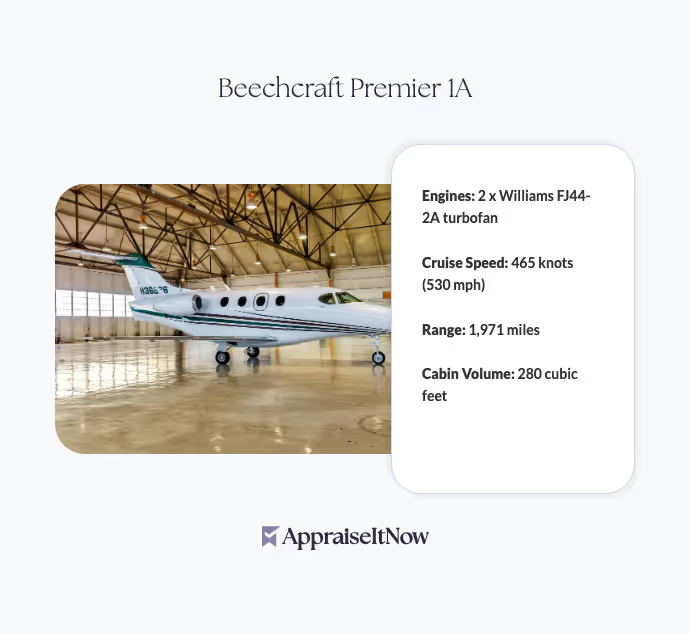
<p>What makes your Premier 1A worth between $800,000 and $975,000 specifically? Several factors drive this valuation range. The aircraft's composite airframe offers reduced maintenance costs and improved fuel efficiency compared to all-metal competitors, directly impacting its operational economics. The proven <strong>Williams International FJ44-2A engines</strong> have established themselves as exceptionally reliable powerplants, reducing operator anxiety about unexpected maintenance events. Combined with pressurized cabin capabilities for up to six passengers and range approaching 2,000 miles, the Premier 1A delivers genuine utility across diverse mission profiles.</p>
<div class="callout tip"><p><strong>Market Insight</strong></p>
<p>Premier 1A values have remained relatively stable compared to some competing mid-range jets, reflecting consistent demand from established operators with well-maintained fleets.</p></div>
<h2>Key Specifications That Impact Appraisal Value</h2>
<p>When professional appraisers evaluate your Premier 1A, they examine specific technical characteristics that directly influence market value. Understanding these factors helps you prepare documentation and ask informed questions during the appraisal process.</p>
<p>Your aircraft's maximum takeoff weight of 12,500 pounds positions it favorably within operating restrictions at many business aviation airports worldwide. The pressurized cabin maintains comfortable conditions at altitude while achieving cruise speeds exceeding 500 mph, making cross-country missions feasible within working days. With integrated avionics suites and certification for known icing conditions, the Premier 1A operates across a broader weather envelope than comparable aircraft in its category.</p>
<p>The composite construction deserves particular attention during appraisal. Unlike traditional aluminum airframes, composite materials require specialized inspection techniques to assess underlying structural integrity. Professional appraisers evaluate composite condition through visual inspection, documentation review of past maintenance, and recommendations for future inspections. This technical expertise becomes crucial when assessing whether your specific Premier 1A commands valuations toward the higher end of the market range.</p>
<h2>Flight Hours and Maintenance History: The Appraisal Foundation</h2>
<p>Professional appraisers examining your Beechcraft Premier 1A begin with documented flight hours and comprehensive maintenance records. These elements form the foundation of accurate valuations more than any other factor. An aircraft with 4,000 hours and meticulous maintenance documentation typically commands significantly higher prices than a similar aircraft with 6,000 hours and incomplete records.</p>
<p>Your maintenance logs provide essential context for condition assessment. The Premier 1A's robust design and proven engines mean that well-maintained examples often show minimal deterioration across systems and structures. Conversely, deferred maintenance on avionics, cabin systems, or engine components can substantively reduce appraisal values, sometimes by $50,000 or more depending on the nature of deferred work.</p>
<p>When seeking appraisal documentation, compile all available records including periodic inspections, component overhauls, engine condition reports, and any modifications or upgrades performed. Professional appraisers appreciate detailed documentation, as it demonstrates responsible ownership and often justifies valuations at the higher end of typical market ranges. This contrasts with appraisals of <a href="/types/vintage-aircraft">vintage aircraft</a> where documentation scarcity sometimes requires more subjective valuation approaches.</p>
<h2>Understanding Aircraft Appraisal Factors Unique to Business Jets</h2>
<p>Beyond baseline specifications and maintenance history, several factors specific to business aviation influence Premier 1A valuations. The aircraft's ability to operate from smaller airports—a capability documented in your POH (Pilot's Operating Handbook)—enhances utility and market appeal. Glass cockpit avionics installed and their age directly affect both operational capability and resale appeal to professional operators.</p>
<p>Market conditions within business aviation shift periodically based on economic factors, fuel prices, and operator demand. Recent Premier 1A sales patterns show sustained interest from established operators, suggesting stable valuations compared to some competing designs that experience broader value fluctuations. Professional appraisers access current market transaction data to ensure your valuation reflects real-world selling prices rather than theoretical values.</p>
<p>Geographic factors also influence appraisal outcomes. Aircraft based in regions with strong business aviation activity often command slight premiums over identical aircraft in areas with limited operator bases. This reality reflects both market demand and the practical considerations operators face when acquiring aircraft near existing maintenance and support infrastructure.</p>
<div class="callout note"><p><strong>Appraisal Consideration</strong></p>
<p>Your Premier 1A's avionics package and installed equipment can represent 10-15% of total value, making condition assessment of glass cockpits particularly important during professional appraisals.</p></div>
<h2>What Factors Affect the Resale Value of Your Premier 1A</h2>
<p>Understanding value drivers helps you maintain your investment strategically. Aircraft interior condition receives particular attention during appraisals, as cabin restoration costs can run $50,000 to $150,000 depending on scope. An aircraft with original interior in excellent condition versus one requiring updating represents a meaningful value differential.</p>
<p>Paint condition and external appearance affect both appraiser perceptions and actual market reception. Aircraft with fresh, flawless paint jobs often sell more readily and at slight premiums, while those showing oxidation or chips face valuation reductions. This mirrors <a href="/types/automobile">automobile appraisals</a> where exterior condition significantly impacts buyer perception and pricing.</p>
<p>Engine condition represents another critical value determinant. Premier 1A engines approaching major overhaul reserves (typically 3,500 hours) face substantial value reductions—sometimes $100,000 or more—as operators must budget for significant expenditures. Conversely, engines with recent overhauls or extensive time remaining since manufacture often justify valuations at the upper end of market ranges.</p>
<p>Modification history deserves careful documentation during appraisal. Approved modifications that enhance operational capability or safety often increase value, while poorly documented or unauthorized changes typically reduce it. Professional appraisers verify all modifications against FAA records to ensure compliance and assess their impact on marketability.</p>
<h2>Documentation Requirements for Professional Aircraft Appraisal</h2>
<p>Preparing your Premier 1A for professional appraisal requires assembling comprehensive documentation. Beyond maintenance records previously discussed, you should compile title documentation, registration papers, and any damage history. Insurance claims, even those resolved, require disclosure as they become part of the aircraft's permanent record and can influence appraiser conclusions.</p>
<p>Recent inspection reports provide immediate context for appraisers. Annual inspections, 100-hour inspections, and any specialized inspections (composite inspections, avionics checks) should be compiled in chronological order. Engine condition monitoring data—if available—strengthens documentation and supports higher valuations by demonstrating proactive maintenance practices.</p>
<p>Photographs documenting overall condition, cabin interior, avionics, and any systems showing wear help appraisers conduct preliminary assessments before physical inspection. This preparation mirrors professional <a href="/types/equipment-and-machinery">equipment and machinery</a> appraisals where comprehensive documentation accelerates the appraisal process and often improves valuation accuracy.</p>
<div class="callout tip"><p><strong>Documentation Best Practice</strong></p>
<p>Organize maintenance records chronologically and highlight major services, overhauls, and upgrade installations—this professionalism impresses appraisers and supports higher valuations.</p></div>
<h2>Professional Appraisal Standards and USPAP Compliance</h2>
<p>When engaging appraisers for your Beechcraft Premier 1A, ensure they comply with <strong>USPAP (Uniform Standards of Professional Appraisal Practice)</strong>. USPAP-compliant appraisals provide the credibility and legal standing required for insurance companies, lenders, and tax authorities. AppraiseItNow connects you with credentialed appraisers holding credentials including <strong>AAA, ISA, ASA, CAGA, and AMEA</strong> certifications—each recognizing distinct expertise in aircraft valuation.</p>
<p>Professional appraisers approach Premier 1A valuations through comparative market analysis, examining recent comparable sales to establish fair market value. This methodology requires access to current transaction data from aircraft brokers, auction results, and market databases that track business jet sales. The resulting appraisals provide defensible documentation suitable for insurance underwriting, <a href="/types/business-assets">business asset</a> management, estate planning, and litigation support.</p>
<h2>How Often Should You Obtain Updated Appraisals</h2>
<p>Market conditions and individual aircraft condition change continuously, making periodic reappraisal important for accurate asset management. For insurance purposes, many carriers recommend appraisals every 2-3 years to ensure coverage adequately reflects current market value. For <a href="/types/net-tangible-assets">tax purposes</a>, annual updates during years with significant operational changes provide proper documentation for tax reporting and potential deduction substantiation.</p>
<p>If your Premier 1A undergoes major maintenance—engine overhauls, avionics upgrades, or cabin refurbishment—obtaining updated appraisals afterward captures the value these investments create. Similarly, appraisals before significant transactions (sales, lease arrangements, or financing applications) ensure you're negotiating from documented positions backed by professional analysis.</p>
<p>Professional aircraft appraisals typically require 1-2 weeks from engagement through final report delivery. The appraiser physically inspects your aircraft, reviews documentation, researches comparable sales, and prepares a detailed report including photographs, technical observations, and valuation conclusions. This thorough process, while requiring modest investment, typically ranges from $1,500 to $3,500 depending on aircraft complexity and appraiser experience.</p>
<h2>Next Steps for Your Premier 1A Appraisal</h2>
<p>Begin by assembling your maintenance records, title documentation, and any recent inspection reports. Contact credentialed appraisers through AppraiseItNow to discuss your specific valuation needs—whether for insurance, sale preparation, or estate planning. Provide clear information about your aircraft's total time, recent major maintenance, avionics configuration, and current condition.</p>
<p>During the appraisal engagement, expect professional appraisers to spend 3-4 hours conducting thorough physical inspection, reviewing documentation, and discussing operational history with you or your facility manager. This hands-on approach, combined with market research and technical expertise, results in valuations that command respect from financial institutions, insurance companies, and potential buyers alike.</p>
<div class="callout note"><p><strong>Key Takeaway</strong></p>
<p>A certified appraisal of your Beechcraft Premier 1A provides the professional documentation necessary for accurate insurance coverage, sound financial decisions, and confident transactions—ensuring your $800,000 to $975,000 investment is properly understood and protected in today's competitive business aviation market.</p></div>