









<h1>How to Get Your Beechcraft King Air 90 Appraised</h1>
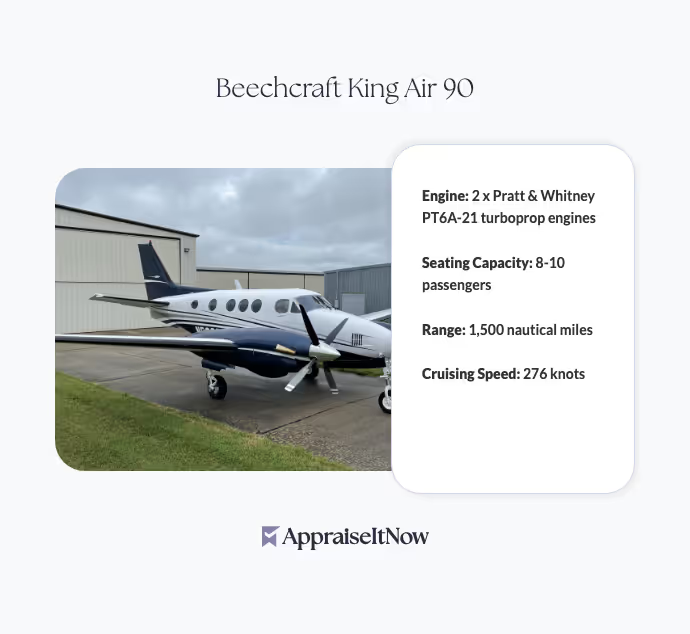
<p>The Beechcraft King Air 90 stands as one of aviation's most reliable workhorses, commanding <strong>market values between $150,000 and $225,000</strong> depending on condition, flight hours, and configuration. Whether you're evaluating this twin-engine turboprop for purchase, sale, insurance purposes, or estate planning, understanding what drives its valuation ensures you're making informed decisions about one of your most significant assets.</p>
<h2>Understanding the Beechcraft King Air 90's Market Position</h2>
<p>Since its introduction in 1964, Beechcraft has produced over 7,000 King Airs across all variants, making it one of aviation's most successful business aircraft. Your King Air 90 represents the original entry point into the King Air family—a proven platform that combines pressurized cabin comfort with genuine twin-engine safety and outstanding short-field performance. The aircraft's reputation for reliability and versatility across business travel, charter operations, cargo transport, and special missions drives consistent collector and operator demand.</p>
<p>The King Air 90's enduring market appeal stems from its ability to operate from shorter runways than comparable aircraft, dual-engine redundancy for safety-conscious operators, and a spacious pressurized cabin capable of accommodating up to nine passengers. These capabilities translate directly into operational value for charter companies, corporate flight departments, and private owners seeking dependable cross-country transportation. When evaluating how much a King Air 90 costs, the initial purchase price tells only part of the story—understanding the factors that influence current market values helps you assess whether you're looking at a sound investment or potential purchase.</p>
<div class="callout tip"><p><strong>Valuation Insight</strong></p>
<p>King Air 90 values are strongly influenced by total airframe hours, engine condition, panel upgrades, and maintenance records. Aircraft with less than 5,000 total hours and recent avionics upgrades typically command premiums of 15-25% above baseline market values.</p></div>
<h2>Key Factors That Drive King Air 90 Appraisal Values</h2>
<p>When professionals evaluate your King Air 90, they examine a comprehensive range of specifications and operational history. The aircraft's advanced Garmin G1000 avionics system, when installed, significantly enhances both operational capability and market value. This sophisticated glass-cockpit upgrade transforms the King Air from a traditional steam-gauge aircraft into a modern, feature-rich platform competitive with newer turboprop designs.</p>
<p>The King Air's turbine-powered engines deliver greater reliability compared to piston-powered competitors, requiring fewer unscheduled maintenance events and offering superior high-altitude performance. Your aircraft's ability to operate with single-pilot certification streamlines operational costs and broadens its appeal to experienced owner-operators. These technical advantages directly impact how professional appraisers value your specific King Air 90 compared to competing used aircraft.</p>
<p>Engine condition forms the foundation of any King Air 90 appraisal. Each of your two Pratt & Whitney PT6A-20A turboprops should be evaluated for time since overhaul, hot-section inspection status, and any manufacturer service bulletins. An engine with recent hot-section work may support valuation increases of $20,000-$35,000 compared to one approaching overhaul reserves. Airframe condition—including corrosion inspection results, structural integrity assessments, and any history of damage or repairs—equally influences your aircraft's market positioning.</p>
<table class='appraisal-table'>
<thead>
<tr>
<th>Valuation Component</th>
<th>Impact on Price</th>
<th>Details</th>
</tr>
</thead>
<tbody>
<tr>
<td>Airframe hours (under 5,000)</td>
<td>+15-25% premium</td>
<td>Lower utilization extends aircraft lifespan</td>
</tr>
<tr>
<td>Engine overhaul status</td>
<td>+$20K-$35K per engine</td>
<td>Recent work significantly increases value</td>
</tr>
<tr>
<td>Avionics upgrades (G1000)</td>
<td>+$50K-$75K</td>
<td>Modern glass-cockpit systems highly valued</td>
</tr>
<tr>
<td>Paint/interior condition</td>
<td>+$30K-$50K</td>
<td>Professional refresh increases appeal</td>
</tr>
<tr>
<td>Maintenance records completeness</td>
<td>+10-15% premium</td>
<td>Documented service history builds buyer confidence</td>
</tr>
</tbody>
</table>
<h2>The Cost of Operating Your King Air 90</h2>
<p>Understanding operating costs directly correlates to your aircraft's market value. Prospective buyers factor fuel consumption into their purchase decisions, making this a critical appraisal consideration. The King Air 90 burns approximately <strong>100-110 gallons of Jet-A fuel per hour</strong> at normal cruise power, translating to roughly <strong>$600-$700 per flight hour</strong> in fuel alone, depending on current market prices for aviation fuel.</p>
<p>Beyond fuel, your King Air 90's operating costs include regular inspections, engine reserves (set-asides for future overhauls), and routine maintenance. The aircraft qualifies for <strong>100-hour inspections</strong> rather than the more intensive annual inspections required for piston-powered aircraft, reducing downtime and maintenance expense compared to alternative platforms. These favorable operating economics enhance the King Air 90's attractiveness to charter operators and corporate flight departments, supporting its market value relative to competing twin-engine turboprops.</p>
<p>Maintenance expenses typically run $1,500-$3,000 monthly when the aircraft is actively flown, with major inspection cycles every five years. Understanding these operational realities helps appraisers assess whether your King Air 90 commands premium or discounted valuations based on owner maintenance records and demonstrated dispatch reliability.</p>
<div class="callout note"><p><strong>Operating Reality</strong></p>
<p>King Air 90 owners consistently report that despite turbine engine complexity, their aircraft's maintenance costs and dispatch reliability often compare favorably to comparable piston-powered twins.</p></div>
<h2>Performance Specifications That Impact Value</h2>
<p>The King Air 90's impressive performance envelope directly influences its market positioning. The aircraft achieves a <strong>maximum cruise speed of approximately 226 knots</strong> at optimal altitude and power settings, enabling efficient cross-country operations at normal business flight speeds. This performance combines with a <strong>service ceiling exceeding 35,000 feet</strong>, allowing your aircraft to climb above weather and enjoy optimal efficiency at high-altitude cruise operations.</p>
<p>Your King Air 90's <strong>range capability exceeding 1,700 nautical miles</strong> with reserves enables realistic cross-country missions without intermediate fuel stops. This means your aircraft can operate from coastal regions to Hawaii with proper planning and fuel management—a capability that charter operators and corporate flight departments highly value. The aircraft's ability to fly to Hawaii demonstrates the King Air 90's genuine long-range transportation capability, distinguishing it from short-range competitors that require multiple fuel stops.</p>
<p>Takeoff and landing performance equally matter to appraisers. The King Air 90 requires approximately <strong>2,000 feet of runway</strong> for takeoff under normal conditions and <strong>2,300 feet</strong> for landing, enabling operations from regional airports unavailable to larger twins or jets. This short-field capability creates operational flexibility that commands premium valuations from charter operators and remote-area users who require access to limited-runway facilities.</p>
<h2>Professional Pilot Qualification Requirements</h2>
<p>Many prospective buyers ask whether it's difficult to fly a King Air C90, and the answer reveals important appraisal considerations. Your King Air 90 requires <strong>commercial multi-engine pilot certification</strong> with type-specific training before operation, though the aircraft's modern avionics and excellent handling characteristics make it relatively accessible to qualified pilots. Unlike high-performance jet aircraft demanding extensive simulator time, the King Air qualifies for training on the actual aircraft rather than full-motion simulators, reducing training expense and broadening the pilot pool interested in operating one.</p>
<p>The question of whether a King Air needs two pilots depends on its configuration. Your King Air 90 is <strong>certified for single-pilot operation</strong> when properly equipped with autopilot and appropriate avionics, though many operators employ two-pilot crews for safety, redundancy, and regulatory compliance. This flexibility in crew requirements affects operational costs and market appeal, as both single-pilot owner-operators and two-pilot charter companies remain viable customer segments for the King Air 90.</p>
<h2>Appraisal Timing and Market Conditions</h2>
<p>Understanding current aviation market dynamics helps you time your appraisal appropriately. The King Air 90 market has demonstrated resilience across economic cycles, with strong demand from charter operators, corporate flight departments, and experienced private owners. Post-pandemic aviation recovery has strengthened demand for capable twin-engine aircraft with proven reliability records.</p>
<p>Used aircraft values are substantially influenced by the availability of comparable models, recent transaction history, and broader economic conditions affecting business aviation. Professional appraisers like those at <strong>AppraiseItNow</strong> track King Air 90 sales across major auction platforms and private transaction databases, providing current market intelligence that reflects genuine buyer-seller activity rather than asking prices alone.</p>
<p>Regulatory changes can also impact your King Air 90's valuation. Recent environmental regulations affecting general aviation fuel standards, enhanced medical equipment certification standards for special-mission aircraft, and updated avionics mandates all influence market positioning. Your appraiser should assess whether your specific aircraft meets current regulatory requirements or requires modifications that would affect operational costs and buyer appeal.</p>
<h2>Insurance and Valuation Documentation</h2>
<p>Professional appraisals for your King Air 90 serve multiple critical purposes beyond simple price discovery. When securing specialized aviation insurance, underwriters require certified appraisals documenting your aircraft's true replacement cost value. This documentation protects you by ensuring your coverage adequately reflects current market values, preventing underinsurance that could leave you exposed to significant financial loss following an accident.</p>
<p>The King Air 90's value can be substantial for estate planning purposes. If you're incorporating your aircraft into comprehensive wealth transfer or charitable giving strategies, your professional appraisal provides the <a href="/blog/uspap-compliance">documentation needed for tax compliance</a> and inheritance planning. Certified appraisals prepared according to USPAP standards demonstrate fair market value through comparable sales analysis, satisfying IRS requirements for estate valuation and donation purposes.</p>
<p>Divorce proceedings, business partnership dissolutions, and creditor disputes all require independent aircraft valuations that withstand professional scrutiny. When your King Air 90 represents a marital asset or partnership resource, a certified professional appraisal from a credentialed aviation appraiser provides impartial valuation documentation accepted by attorneys, judges, and mediators.</p>
<div class="callout tip"><p><strong>Documentation Value</strong></p>
<p>Maintaining comprehensive maintenance logs, service records, and modification documentation throughout your King Air 90's ownership directly enhances appraisal accuracy and market value positioning.</p></div>
<h2>Maintenance Records and Appraisal Value</h2>
<p>Complete and organized maintenance records form the foundation of any King Air 90 appraisal. Professional appraisers expect to review comprehensive documentation showing annual inspections, 100-hour inspections, mandatory airworthiness directives compliance, and all major component overhauls or replacements. Aircraft with gap-free maintenance records consistently command 10-15% premiums compared to those with incomplete documentation.</p>
<p>Your maintenance records should clearly demonstrate engine condition status, including time since last overhaul or hot-section inspection for each Pratt & Whitney turbine engine. Airframe inspections, propeller overhauls, alternator and starter maintenance, and avionics system service records all contribute to the appraiser's confidence in your aircraft's condition and remaining service life. Aircraft with recent major component work—including engine overhauls, extended-range fuel system installations, or modern avionics upgrades—generate substantial appraisal value increases when properly documented.</p>
<h2>Specialized Aircraft Appraisal Services</h2>
<p>When you decide to pursue a professional King Air 90 appraisal, you're engaging a specialized service requiring distinct expertise from general real estate or business valuations. Aviation appraisers must understand turboprop engine operations, complex avionics systems, regulatory compliance requirements, and aviation market dynamics. Our network of credentialed appraisers—including those holding AAA, ISA, and ASA certifications in aviation specialization—brings this specialized knowledge to your valuation.</p>
<p>Professional aviation appraisals through <strong>AppraiseItNow</strong> provide detailed inspection reports documenting your King Air 90's mechanical condition, avionics functionality, structural integrity, and cosmetic presentation. These certified valuations are recognized by insurance companies, financial institutions, and courts for all purposes requiring objective valuation documentation. Whether you're buying, selling, insuring, or planning your aircraft's future, a professional appraisal ensures decisions rest on current market intelligence and comprehensive condition assessment rather than speculation.</p>
<div class="callout note"><p><strong>Key Takeaway</strong></p>
<p>A certified King Air 90 appraisal from a credentialed aviation professional provides the accurate, well-documented valuation you need for confident purchasing, selling, insurance, or estate planning decisions. With values ranging from $150,000 to $225,000, professional appraisal protects your significant investment while establishing fair market value rooted in comparable sales analysis and genuine market conditions.</p></div>