Does each asset require its own appraisal?
The IRS generally requires a separate qualified appraisal for each item of property that is not part of a group of similar items. A single appraisal cannot cover dissimilar assets, so estates with varied holdings typically need multiple appraisals or a clearly segmented report.
Is there a timing requirement for when the appraisal must be prepared?
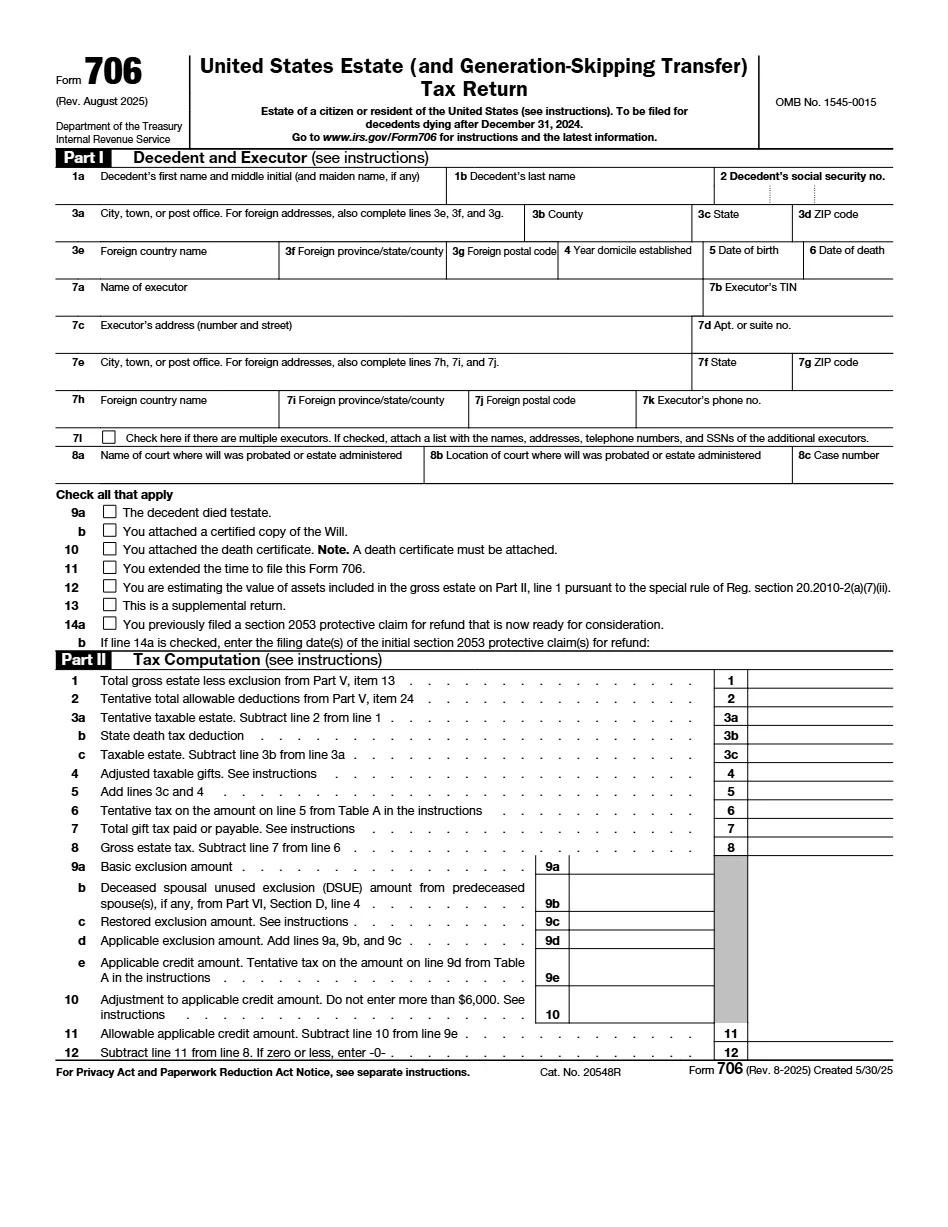
Not on the appraisal itself, but there is one on the return. An estate tax appraisal is retrospective by nature: it is prepared after the death and states what the property was worth as of the date of death, or as of the alternate valuation date where the executor elects it. What is fixed is the filing, which is due nine months after the date of death, with a six-month extension of time to file available on Form 4768. The 60-day rule people cite here belongs to charitable contribution appraisals under Form 8283 and does not reach a Form 706 valuation.
Do estate tax appraisals need to comply with state requirements as well as federal ones?
Yes. In addition to IRS standards, many states have their own estate tax thresholds, filing deadlines, and reporting formats. Estates subject to both federal and state tax obligations should ensure their appraisals address both sets of requirements to avoid penalties at either level.
When is Form 706 due?
Nine months after the date of death. Several states with their own estate taxes mirror that deadline; Rhode Island's Form RI-706, for example, is due to the state Division of Taxation within the same nine-month window. Appraisals of estate personal property need to be scheduled early enough inside that window to be completed, reviewed, and attached before filing.
Will the IRS accept one lump-sum value for an estate's personal property?
Usually not for items of consequence. The expectation is item-level documentation for jewelry, art, antiques, vehicles, and collectibles: photographs, detailed inventories, serial numbers or hallmarks, purchase records, prior appraisals, repair history, certificates of authenticity, and comparable sales. Condition, provenance, authenticity, and marketability can each move value dramatically, so a single aggregate estimate invites challenge where a documented item-by-item appraisal does not.













.jpeg)