
Estate Tax Appraisal of Household Goods Collection
Household goods appraisal for estate tax reporting, covering furnishings, decorative objects, and general contents valued as of the date of death. AppraiseItNow appraised a Maryland estate's furnishings and decorative items from executor-supplied images, researching the retail and secondary markets where each category of household property is actually resold.
Project Overview
Assignment Summary
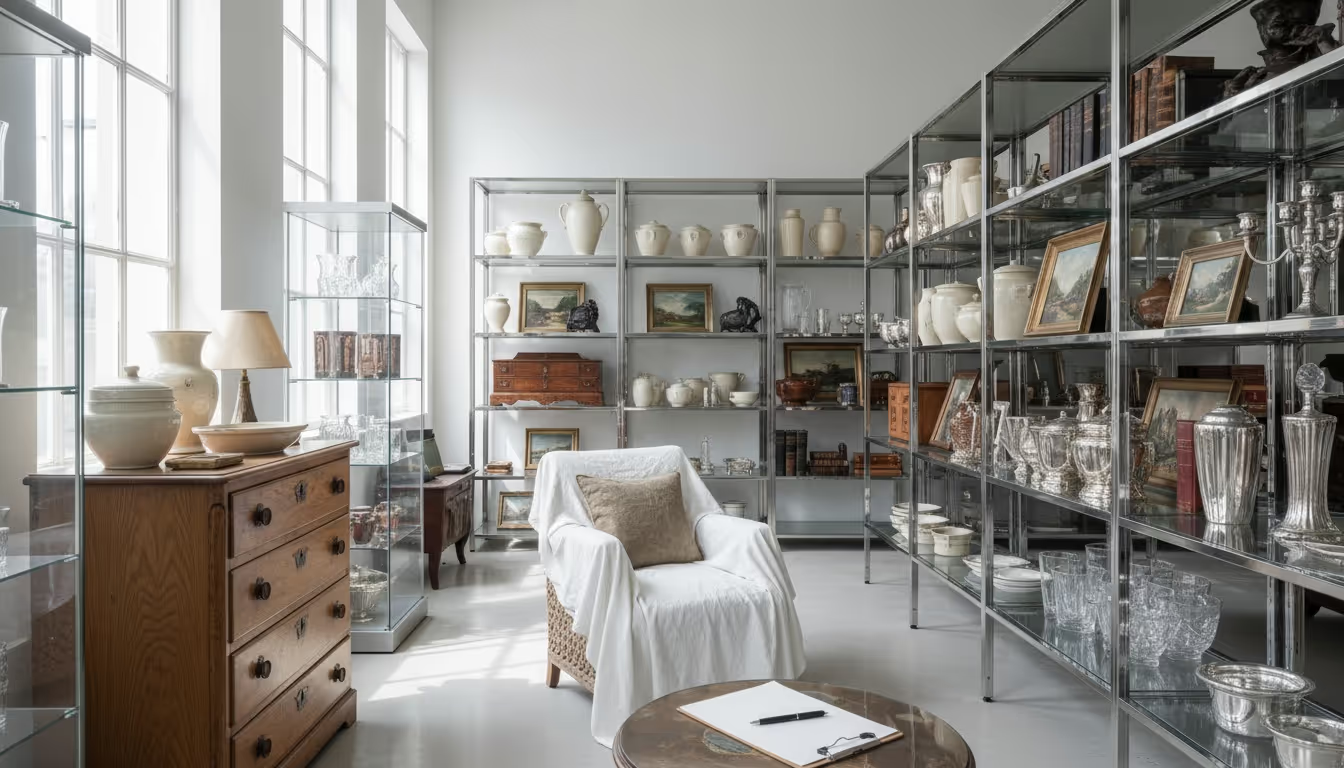
The scope of work centered on identifying and appraising household furnishings and decorative items using digital images and information supplied by the estate. The appraiser analyzed comparable sale data from relevant retail and secondary markets to establish fair market value conclusions appropriate for estate tax reporting. The appraisal was developed under the Uniform Standards of Professional Appraisal Practice and prepared in Appraisal Report format for use by the estate executor, legal counsel, accountants, and tax authorities. Several assignment-specific assumptions and limiting conditions were documented to reflect reliance on client-provided information and imagery. Representational photographs and descriptive notes were included for each item to create a clear audit trail and support the valuation conclusions.
Challenges
Our Approach
Project Outcome
Ready to start your appraisal?
Tell us the asset and what the value is for, and we will confirm scope, timing, and a fixed fee before any work begins.
Request an AppraisalFrequently Asked Questions
Are household furnishings usually worth what the family paid for them?
Rarely. Most furniture and decorative goods lose the majority of their value the moment they leave the store, and the secondary market for used furnishings is thin outside of designer, antique and collectible categories. Executors are frequently surprised by this. Reporting an inflated figure does not help the estate: it raises the taxable value without any benefit.
What happens when photographs do not show an item completely?
The item is valued on what is visible, with the limitation stated. Missing dimensions are the most common gap, and size drives value for rugs, tables and case furniture more than any other single characteristic. Where dimensions are unknown, the conclusion is drawn against the range of plausible sizes rather than assuming the most valuable one.
Which market applies to used household goods?
The one where property of that type is most commonly sold to the public, which for ordinary furnishings means the resale and secondhand market rather than retail replacement. This is the single largest difference between an estate appraisal and an insurance appraisal of the same contents, and it is why one report cannot serve both purposes.
Does the estate need an appraisal if the household goods are of modest value?
Not always. Estates below the filing threshold may not need a formal report at all, and even where a return is filed, executors often report modest household contents at a supportable estimate. The appraisal earns its cost when values are material, when beneficiaries are dividing property, or when the executor wants documented support for a figure they may have to defend.