How quickly must a Connecticut estate inventory be filed?
Within two months. Conn. Gen. Stat. § 45a-341 requires the fiduciary to file an inventory of all the decedent's property, appraised at fair market value, with the Probate Court within two months after the court accepts the bond or the fiduciary qualifies. That is a notably tighter window than the several-month deadlines many states allow, so estate valuations in Connecticut need to start early.
Does Connecticut still have its own estate tax?
Yes. Connecticut imposes a state estate tax, with an exemption of $13.99 million for decedents dying in 2025. Estates under that threshold file DRS Form CT-706 NT as nontaxable estates through the Probate Court, and estates above it owe Connecticut estate tax in addition to any federal Form 706 obligation.
Can the Probate Court question values reported on a CT-706 NT?
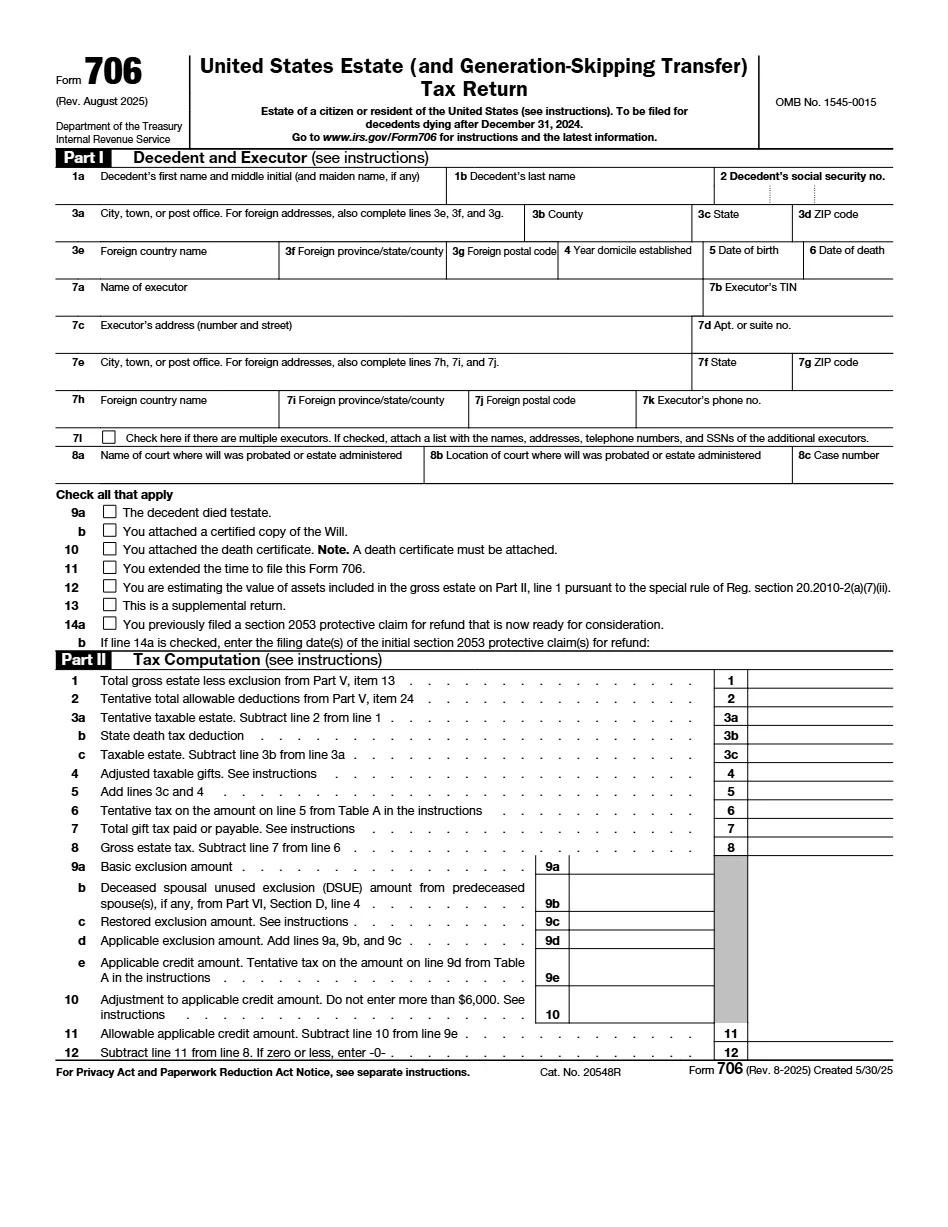
Yes. Rule 31(b) of the Connecticut Probate Court Rules of Procedure lets the court require a written appraisal or other reasonable proof of value for any personal property reported on Form CT-706 NT. And under Rule 31(c), if a federal Form 706 is required, each asset must be reported at its federal Form 706 value, binding the state filing to the federal appraisal.
Must every item in a Connecticut estate be professionally appraised?
No. Under § 45a-341(a)(4), the fiduciary may appraise inventoried property or cause it to be appraised, and the Probate Court user guide says fiduciaries determine fair market value through inquiry and their own experience. A formal appraisal becomes necessary when the court demands substantiation, when a federal filing requires supportable values, or when items are too valuable or specialized to estimate defensibly.









.jpeg)