

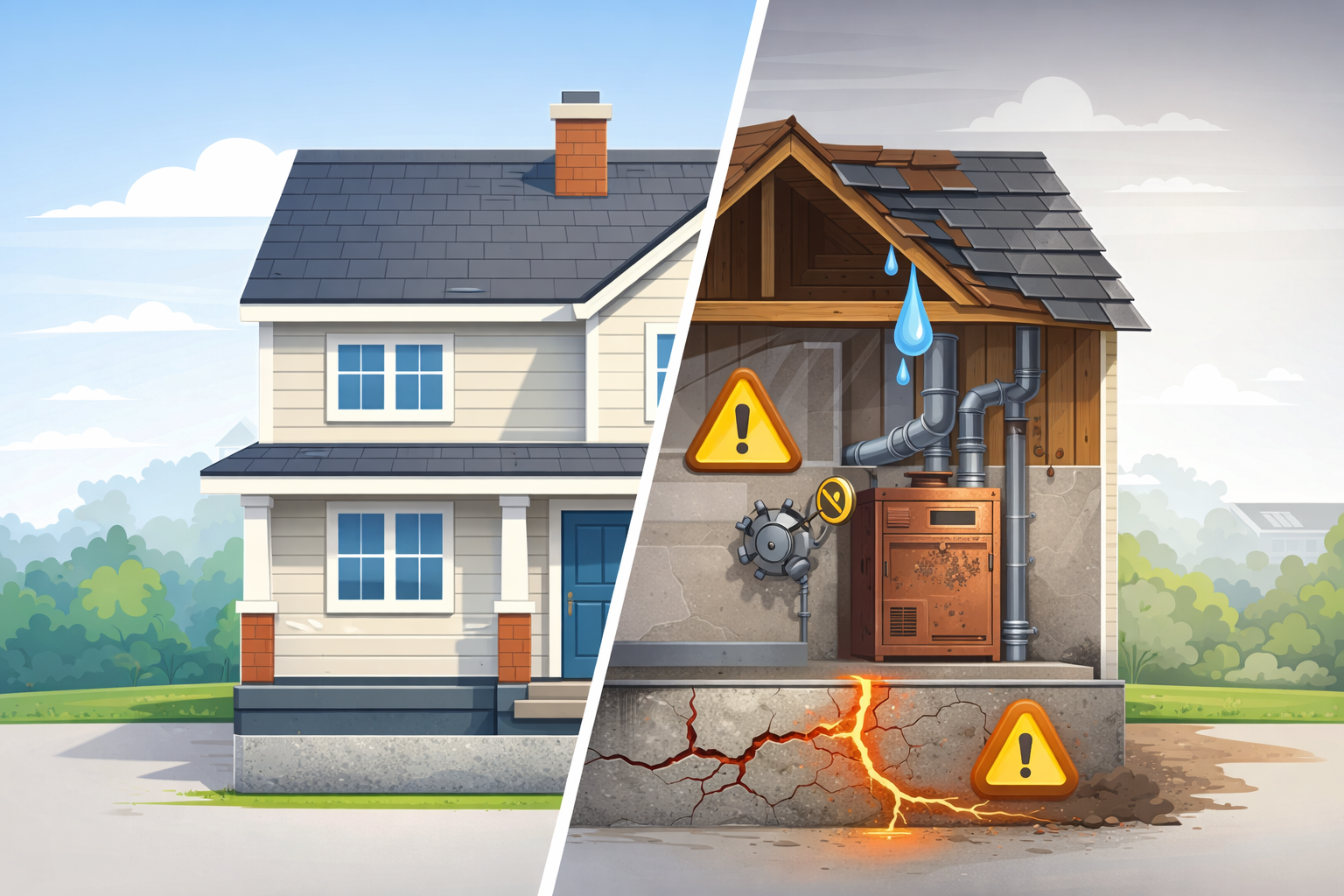






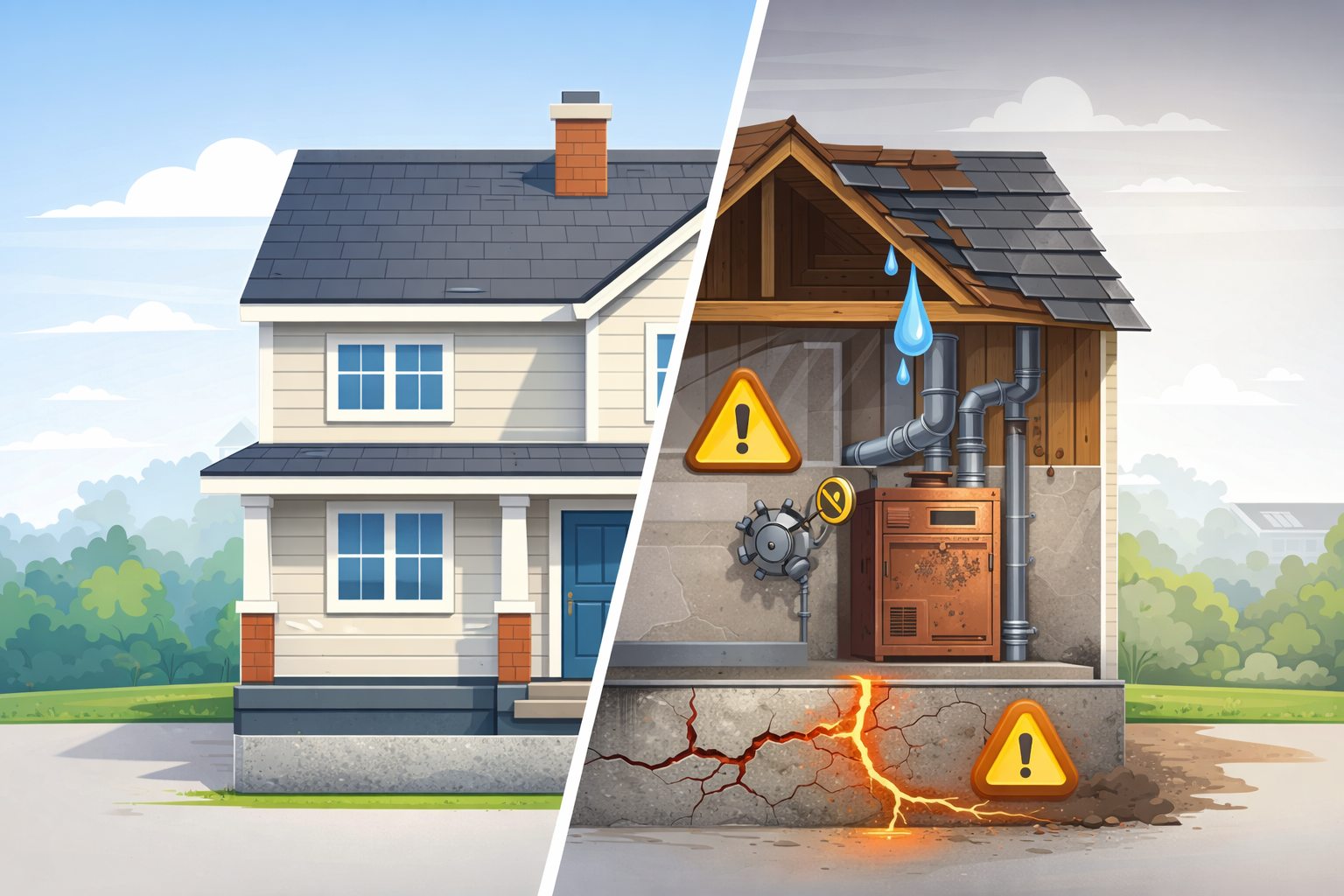
Whether you're refinancing, selling, or need a home appraisal for insurance or legal reasons, knowing the factors that can hurt your property value gives you a big advantage. While most homeowners think about what adds value, smart property owners also know how to avoid problems that can cost them thousands of dollars.
At AppraiseItNow, we've seen how small overlooked issues can surprise homeowners with terrible appraisal results. The good news is that most value-killing problems can be prevented or fixed when you know what to look for. This guide shows you the biggest threats to your home's value and tells you exactly what to do about them.
Foundation problems are the worst thing that can happen to your home's value because they mean serious trouble that can make it impossible to get financing. Even small foundation cracks create red flags for appraisers, while big structural damage can cost you tens of thousands of dollars in lost value. What makes foundation problems especially bad is that they often mean there are other hidden problems throughout the house.
Your roof needs just as much attention since it's one of the first things appraisers see. Missing shingles, water stains, or sagging sections reduce value and can even stop the whole sale. Many loan programs require you to fix the roof before they'll approve financing, which means a damaged roof can kill deals even when buyers want to work with you on price. Old heating, cooling, and electrical systems can also affect your property value negatively. When appraisers see systems that are getting old, they think about replacement costs.
Crucial Point: Foundation and roof problems usually cost much less to fix than the money you'll lose if you ignore them.
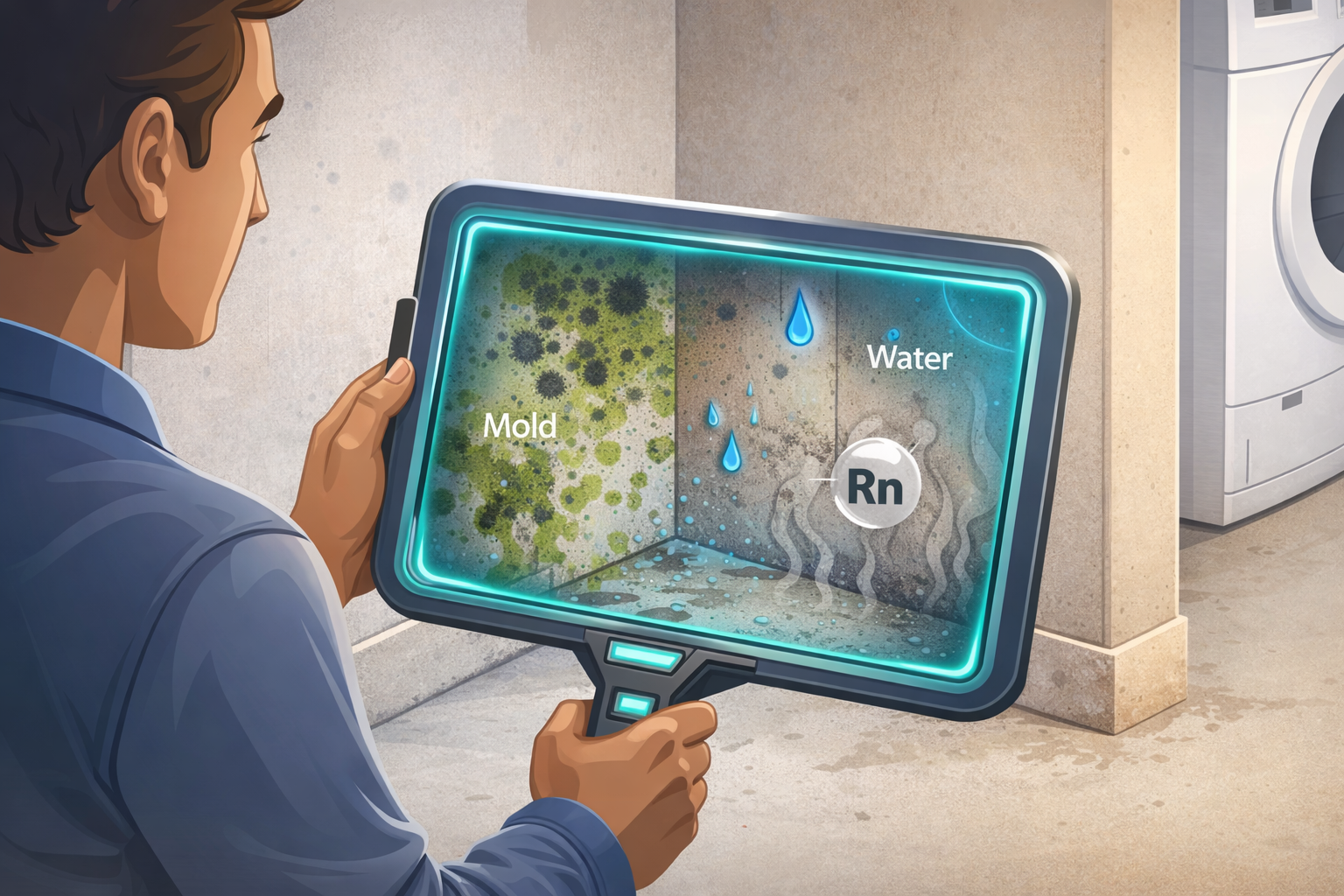
Mold is the single worst environmental threat to your home's value. Even small mold problems can trigger huge value drops because they suggest moisture issues that might be everywhere in the house. The bad reputation that comes with mold is so strong that many potential buyers won't even look at homes with any mold history, no matter how well it's been cleaned up.
Water damage and moisture problems create similar worries because they often lead to mold and show that the house has ongoing weak spots. Appraisers look for water stains, musty smells, and signs of poor drainage because these issues tend to get worse over time and create expensive problems that spread far beyond what you can see.
However, unlike mold or water damage, radon is different because you can't see or smell it. Radon is also the easiest environmental threat to handle because its problems are easily fixed with professional systems that actually become good selling points when properly documented. The trick is dealing with radon before it becomes a problem during the sale process.
Work done without permits creates one of the most frustrating situations for homeowners because improvements that should add value end up hurting it instead. Appraisers cannot count additions without permits toward your home's official size, which means that a beautiful family room addition might not count at all. Even worse, some lenders won't finance homes with known unpermitted work, which removes whole groups of potential buyers.
Improving your home beyond what's normal for your neighborhood creates a sneakier trap that catches many well-meaning homeowners. When you install fancy features that are way better than what's typical for your area, you often get back only a small part of what you spent because appraisers must base their values on what similar homes have sold for. This means your dream kitchen might add much less value than expected if your neighbors have simpler homes.
Smart Strategy: The best improvements bring your home up to neighborhood standards rather than pushing it way beyond them.
Where your house is located often has more impact on your home's value than anything you do to the property itself. Being close to busy roads, airports, or factories creates permanent value problems and concerns that no amount of inside renovation can fix. These location penalties are built into the sales data that appraisers use, making them almost impossible to avoid.
How good your school district is drives some of the biggest value differences in real estate, with homes in top-rated districts getting much higher prices than identical houses in average districts. Crime rates and neighborhood trends influence home values in ways that many homeowners don't think about. Areas with increasing crime or economic problems see steady value drops, while improving neighborhoods benefit from rising effects that boost all properties.
Location Reality: Neighborhood factors often matter more than property improvements in determining final value.
Good preparation makes the difference between a smooth appraisal process and costly surprises that can ruin your plans. Start with the basics by fixing any visible maintenance problems, since neglected maintenance immediately signals that the property hasn't been well cared for. Fresh paint, working fixtures, and clean surfaces create positive impressions that influence how appraisers view everything else about your home.
Good records become your secret weapon for getting the highest possible value because they help appraisers understand the quality and scope of your improvements. Gather records of major repairs, system upgrades, and renovations from recent years, including receipts, permits, and warranty information. This documentation not only supports higher values but also shows that work was done professionally and legally.
Preparation Tip: Research what similar homes in your area have sold for so you understand the market context for your appraisal.
Think about getting environmental testing done ahead of time, especially for radon and mold, since these issues are easier and less expensive to deal with before they become problems during a sale. Professional treatment with proper documentation turns potential problems into selling points that can actually make your home more attractive to buyers.
The most successful homeowners think like appraisers by focusing on the factors that create lasting value while avoiding the pitfalls that destroy equity. They maintain their properties consistently, document improvements professionally, and address problems before they become major issues. Most importantly, they work with certified professionals who understand how to navigate the complex world of property valuation.
AppraiseItNow provides fast, accurate, and certified appraisals for refinancing, insurance, legal, and tax purposes. Our experienced professionals understand current market conditions and use the latest methods to make sure you get reliable results you can trust. Whether you're planning a refinance, settling an estate, or need documentation for insurance claims, we're here to help you get through the appraisal process with confidence. Contact AppraiseItNow today to schedule your professional property valuation and take the first step toward protecting your most important investment.
Do I need to tell my appraiser about work done without permits?
Appraisers will find unpermitted work during inspection, and hiding it can create legal and financing problems.
Can I challenge a low appraisal?
Yes, through a review process if you have documentation of similar sales or factual errors.
How important is curb appeal for appraisals?
First impressions significantly influence how appraisers see your property and can affect how they evaluate your home's overall condition.
What's the most cost-effective way to protect my home's value?
Focus on consistent maintenance and fix small problems before they become major issues that signal neglect.




