Does Texas levy its own estate tax on top of Form 706?
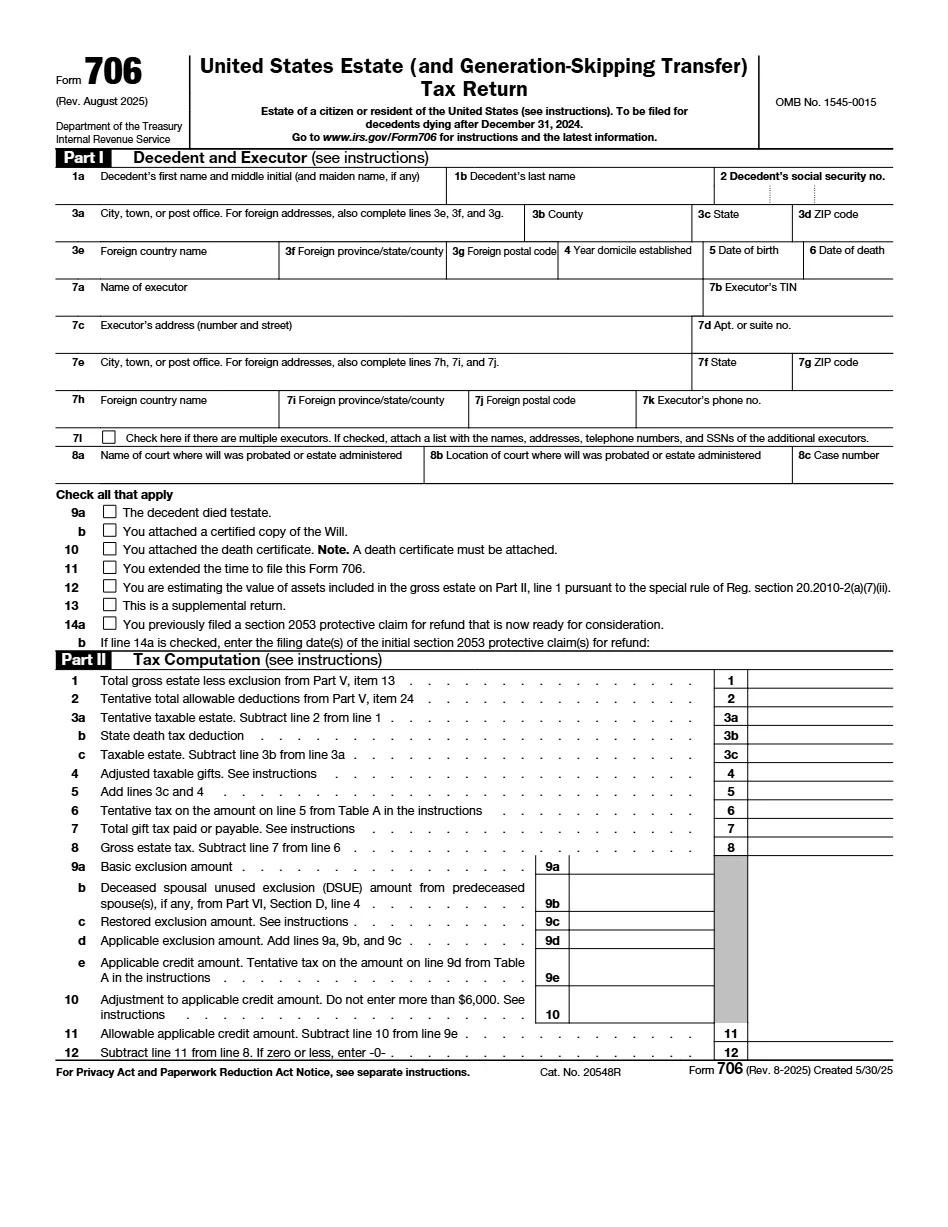
No. Texas has no state estate or inheritance tax, so only estates above the federal exemption (about $13.99 million in 2025) file Form 706, due nine months after death. Valuation work for a Texas estate serves the federal return and the probate record rather than any state death tax.
Must court-appointed estate appraisers live in Texas?
Yes, in the county itself. When a Texas probate court appoints appraisers under Estates Code Chapter 309, it names one to three disinterested residents of the county where letters were granted, with additional county residents appointed where estate property sits in another county. That residency rule is stricter than most states apply.
Why does a Texas inventory separate community and separate property?
Because the Estates Code requires it. The inventory and appraisement must state each item's fair market value as of the date of death and specify which property is community and which is separate, a distinction unique to community property states that shapes how the estate is reported and distributed.
Is household property in a Texas estate subject to local property tax?
No. Texas exempts tangible personal property not used to produce income, so a decedent's jewelry, art, and household contents carry no county tax valuation. Date-of-death values for Form 706 therefore come from appraisal evidence rather than public records, while income-producing equipment and inventory remain on the county rolls.









.jpeg)