Is any separate Hawaii filing required when donating appraised personal property?
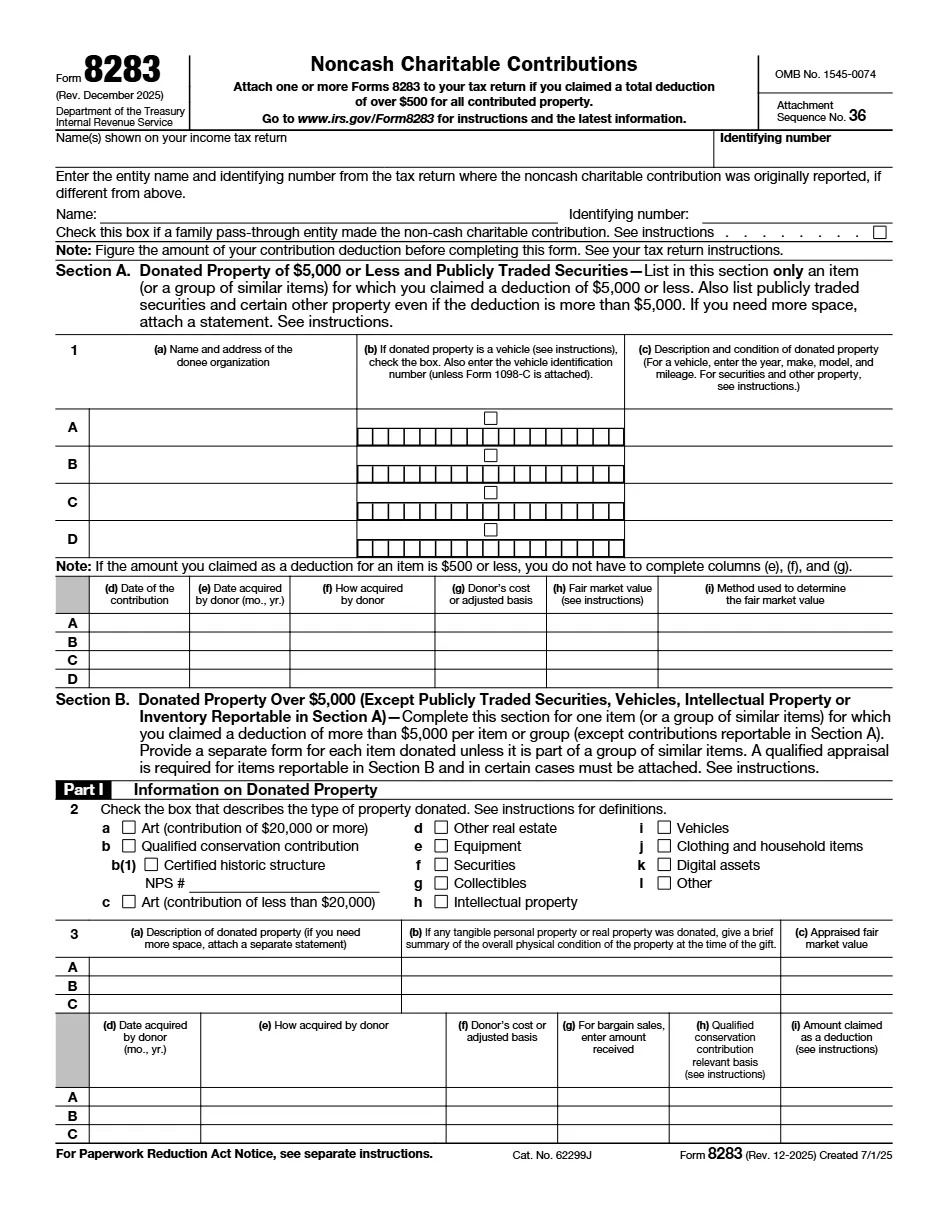
No. Hawaii layers no state valuation filing on top of the federal charitable-deduction framework: no county assessor, probate court, or state tax office receives the appraisal. The qualified appraisal requirement kicks in when the claimed deduction for an item or group of similar items exceeds $5,000, with the full appraisal report attached to the return for artwork valued at $20,000 or more.
How recent must the appraisal be for a Hawaii donation?
Prepared no more than 60 days before the date of the contribution. That timing rule is federal, and Hawaii imposes no different deadline of its own, so a donor in Honolulu planning a year-end gift of art, jewelry, or equipment should schedule the appraisal inside that 60-day window rather than reusing an older valuation.
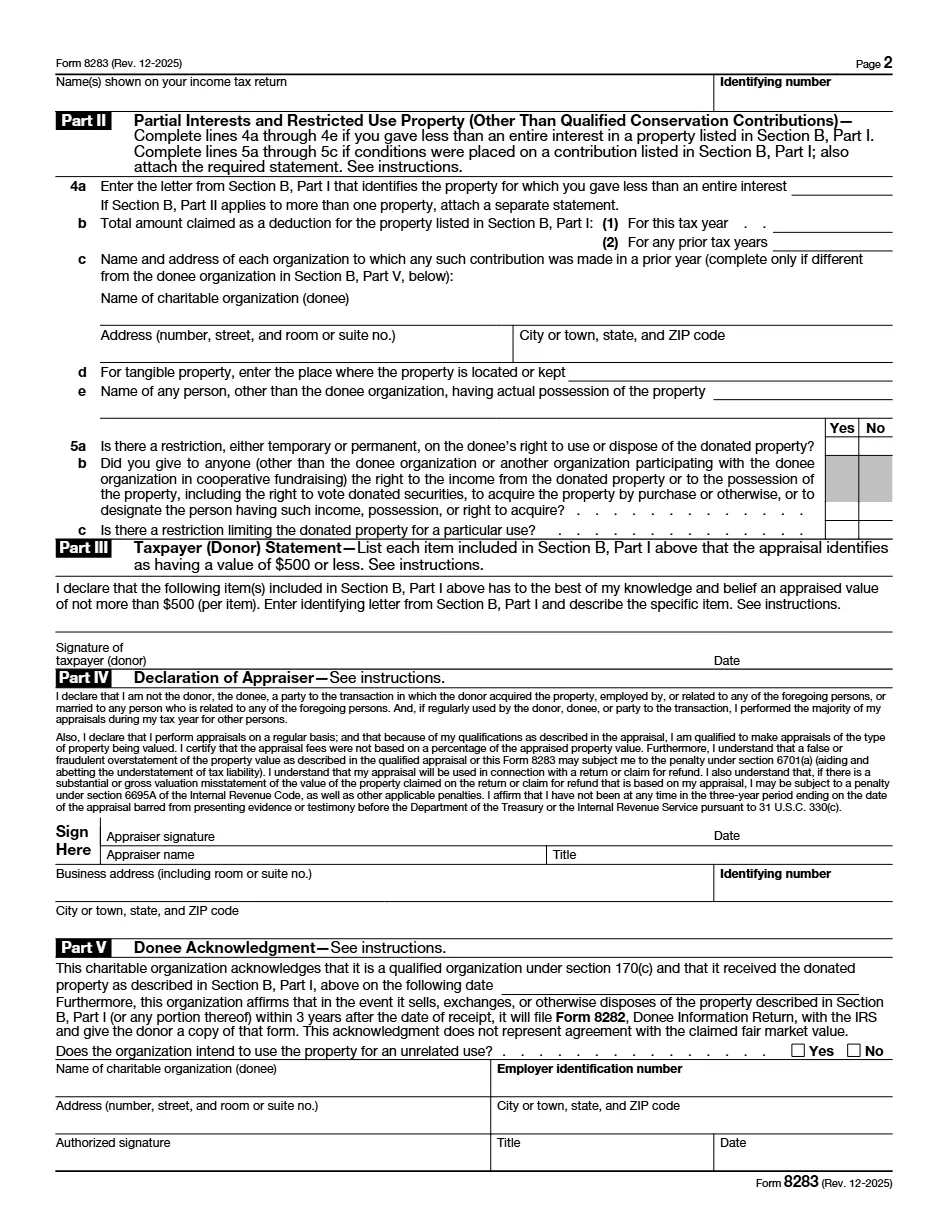
Whose signatures does Form 8283 need for a Hawaii donation over $5,000?
Three: the qualified appraiser, the donor, and the donee organization. Form 8283 is the substantiation document for non-cash contributions above the appraisal threshold, and no Hawaii court or tax form substitutes for it. Missing any of the required signatures is one of the most common reasons these deductions fail on review.
Can Hawaii heirs collect personal property without opening probate?
Yes, when the estate qualifies under Haw. Rev. Stat. § 560:3-1201, which allows collection by affidavit for estates within the $100,000 limit. The shortcut applies to personal property only and excludes real property entirely. Property that passes this way arrives with no court-reviewed value attached, so if an heir later donates it, the federal qualified appraisal requirement above $5,000 does all the valuation work.
What value applies when a Hawaii estate distributes property in kind?
Fair market value as of the date of distribution, under Haw. Rev. Stat. § 560:3-906, with traded securities valued by a special market-price rule. That distribution-date figure can differ meaningfully from the date-of-death value, and from the value on the date the recipient eventually donates the item, which is why each event in the chain gets its own valuation date.

.png)







.jpeg)