
Valuing a Bulk Board Game Donation for the IRS

Board game inventory appraisal for charitable donation substantiation, covering new sealed retail units, single-brand product lines and high-volume bulk transfers. AppraiseItNow appraised a Connecticut donation of more than 3,000 units across five family board game titles, applying a modified cost approach with a blockage consideration for the volume donated.
Valuing a Bulk Board Game Donation for the IRS

Project Overview

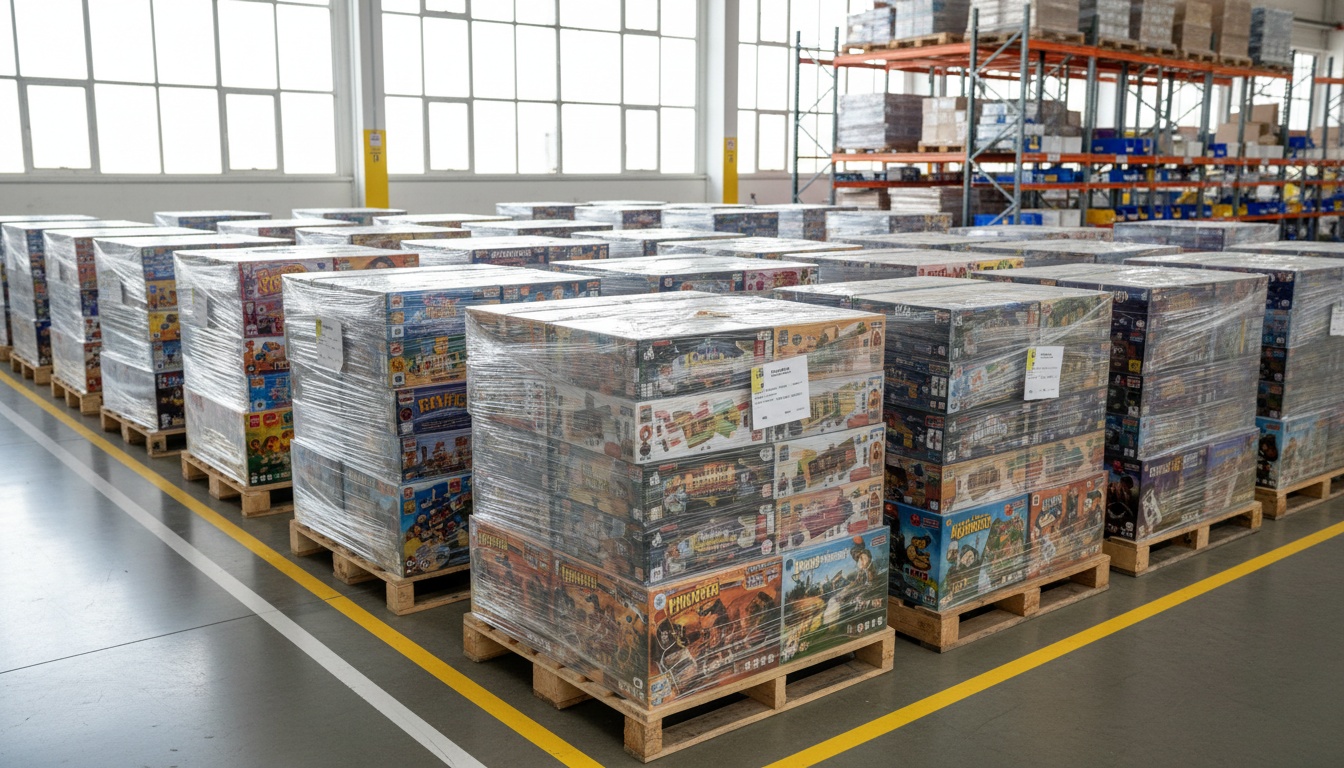
This project involved the appraisal of a large quantity of consumer board game inventory donated to a charitable organization. The appraisal was conducted to support an IRS non-cash charitable contribution deduction, requiring a qualified appraisal prepared in accordance with Treasury Regulations and USPAP standards. The inventory consisted of thousands of units across five distinct board game titles from a single manufacturer, all in new and unopened condition. Because of the sheer scale of the donation, the appraisal required careful thought about which market was most appropriate for determining fair market value.

Assignment Summary

The subject assets consisted of over 3,000 units of family-friendly board games spanning five titles from a single brand — all designed for two to six players and suitable for a range of age groups. All units were new and unopened, and the full inventory was being donated in a single transaction, making this a high-volume bulk inventory appraisal services rather than a standard retail-level personal property appraisal. The standard of value applied was fair market value as defined under Treasury Regulation §1.170A-1(c)(2), and the intended use was to support the donor's IRS Form 8283 filing for a non-cash charitable contribution income tax deduction.

Challenges

One of the primary challenges in this assignment was that no photographs of the actual inventory were available — only stock images were provided, which required the appraiser to operate under an extraordinary assumption that those images were representative of the client's new and unopened inventory. Additionally, wholesale pricing documentation was unavailable for one of the five game titles, meaning the appraiser had to estimate its wholesale price by analyzing the retail-to-wholesale pricing relationships observed across the other four titles in the same product line. Finally, the large scale of the donation — thousands of units transferred in a single transaction — meant that standard retail pricing was not an appropriate measure of fair market value, requiring the appraiser to carefully consider and apply graduated blockage discounts to each product category individually.

Our Approach

Given the bulk nature of the donation, the appraiser determined that the most appropriate market was the wholesale or secondary bulk resale market rather than the individual consumer retail market, and accordingly applied a modified cost approach with blockage discounts. The appraiser began by identifying documented wholesale case pricing for each game title, then estimated the missing wholesale price for one title using internal pricing relationships observed across the product line. These wholesale prices were then adjusted to current dollar values using a CPI inflation factor to account for the gap between the historical pricing data and the effective valuation date. Finally, graduated blockage discounts were applied to each game title individually based on the quantity of units donated, reflecting the economic reality that large-volume inventory transfers typically trade at a discount relative to standard wholesale pricing due to the additional time, storage, and distribution capacity required by the buyer.

Project Outcome

The appraisal produced a well-supported fair market value conclusion for the full inventory, providing the donor with a defensible, USPAP-compliant qualified appraisal suitable for IRS submission alongside Form 8283. By applying a rigorous, methodology-driven approach that accounted for both the wholesale market context and the volume of the donation, AppraiseItNow delivered an accurate and credible valuation that fairly reflected real-world market conditions for bulk inventory transactions.

Ready to start your appraisal?

Tell us the asset and what the value is for, and we will confirm scope, timing, and a fixed fee before any work begins.

Request an Appraisal

Frequently Asked Questions

What is a blockage discount and when does it apply to a donation?

A blockage discount reflects that releasing a large quantity of identical property into a market at once would depress the price a seller could realize. It applies where the donated volume is large relative to normal trading in that product. For thousands of units of a handful of titles, the retail market cannot absorb the quantity, and ignoring that overstates the deduction substantially.

Is retail price ever appropriate for a bulk donation of new goods?

Only where the quantity is small enough that a retail buyer would realistically absorb it. Beyond that point the applicable market shifts to wholesale or bulk resale, and the value follows. The test is not whether the goods are new but whether a retail buyer would take the donated quantity at retail prices, which for a truckload is plainly no.

What happens when only stock photographs of the inventory are available?

The appraisal proceeds under a stated extraordinary assumption that the stock images represent the actual goods, and the assumption is disclosed prominently. It is a real limitation: stock imagery cannot confirm the goods exist, are new, or are the specific edition claimed. Donors who photograph actual pallets before transfer eliminate the issue entirely and strengthen the filing.

Why does the appraisal name the Treasury Regulation defining fair market value?

Because the standard of value has to be stated and matched to the intended use. Treasury Regulation 1.170A-1(c)(2) defines fair market value for charitable contribution purposes, and citing it makes clear which definition governs. A report that reaches a number without naming its standard of value leaves an examiner to guess what was being measured.