
Tracing Value on a Vintage Boat Trailer
Boat trailer appraisal for a title bond application, covering vintage bunk-style trailers, light-duty recreational haulers and units without clear model year documentation. AppraiseItNow appraised a 1989 Craft Trailers CV-5 single-axle bunk trailer in Illinois, researching the light-duty recreational trailer market where age-matched comparables are rarely identified by year.
Project Overview
Assignment Summary
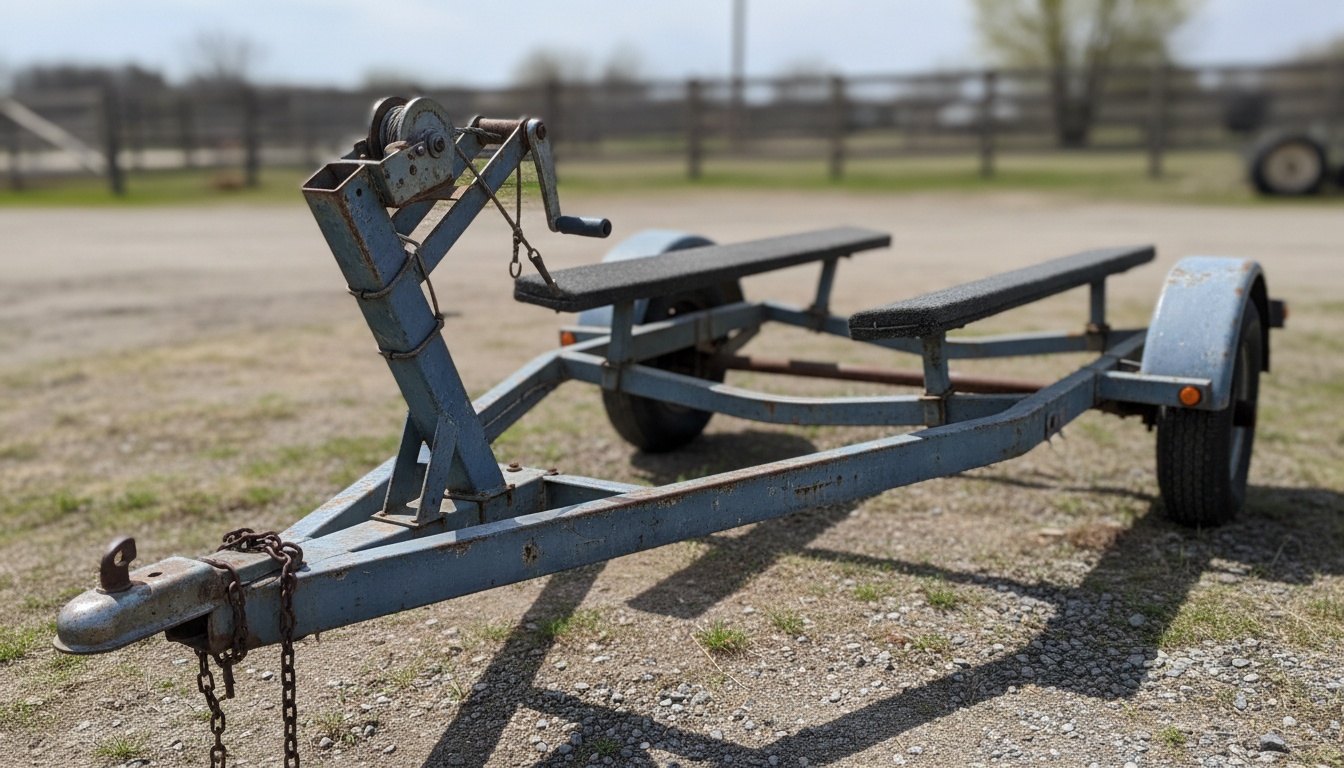
The assignment called for a fair market value opinion of a 1989 Craft Trailers, Inc. CV-5 single-axle bunk-style boat trailer, originally manufactured in Eupora, Mississippi. The trailer features a welded steel frame, adjustable carpeted bunk supports, a manual winch stand with bow stop, and a standard 2-inch coupler — all consistent with trailers designed to haul small fishing boats and light recreational watercraft. With a Gross Vehicle Weight Rating of 2,400 pounds, it sits firmly in the light-duty category. At the time of appraisal, the trailer was in fair overall condition, showing surface corrosion and age-related wear consistent with long-term outdoor storage, though its primary structural components remained intact. The standard of value applied was fair market value — defined as the price at which a willing buyer and seller would agree to transact, with neither acting under compulsion and both possessing reasonable knowledge of the relevant facts. The report was prepared strictly for title bond purposes.
Challenges
Our Approach
Project Outcome
Ready to start your appraisal?
Tell us the asset and what the value is for, and we will confirm scope, timing, and a fixed fee before any work begins.
Request an AppraisalFrequently Asked Questions
Why does a trailer without a title need an appraisal?
Because a state issuing a bonded title needs a documented value before a surety bond can be written. The bond amount is set from the appraised value under the issuing state's formula, so the appraisal is the input that lets the title application proceed. Without it, the applicant has no basis for the bond and the DMV has nothing to work from.
How are comparables found when older trailers are listed without a model year?
By identifying the subject from its construction rather than its paperwork, then matching on specification. Frame type, axle configuration, bunk or roller design, coupler size and gross vehicle weight rating describe a trailer more reliably than a model year that sellers often omit or guess at. Comparables are selected on those characteristics and the report explains the matching basis.
Does the gross vehicle weight rating affect value?
It defines which market the trailer is in. A light-duty rating puts a trailer in the small fishing boat and personal watercraft segment, with a large buyer pool and modest prices; higher ratings move it into a different and generally more valuable segment. Rating is one of the first specifications recorded because it determines the comparable set.
How is surface corrosion assessed on an older steel trailer?
By distinguishing cosmetic rust from structural loss. Surface corrosion on a welded steel frame is expected on a trailer of this age and affects value modestly; pitting at welds, corroded crossmembers or a compromised tongue affect it substantially and raise safety questions. The report describes what was observed and where, rather than reporting a single condition grade.