
Professional Audio Equipment Appraisal for Charitable Donation
Professional audio equipment appraisal for charitable donation substantiation, covering studio microphones, signal processors, mixing control surfaces, isolation booths and broadcast processing hardware. AppraiseItNow appraised a Nevada donation of consolidated studio and broadcast assets, matching each item to recent used-market sales and adjusting active listings toward realized pricing.
Project Overview
Assignment Summary
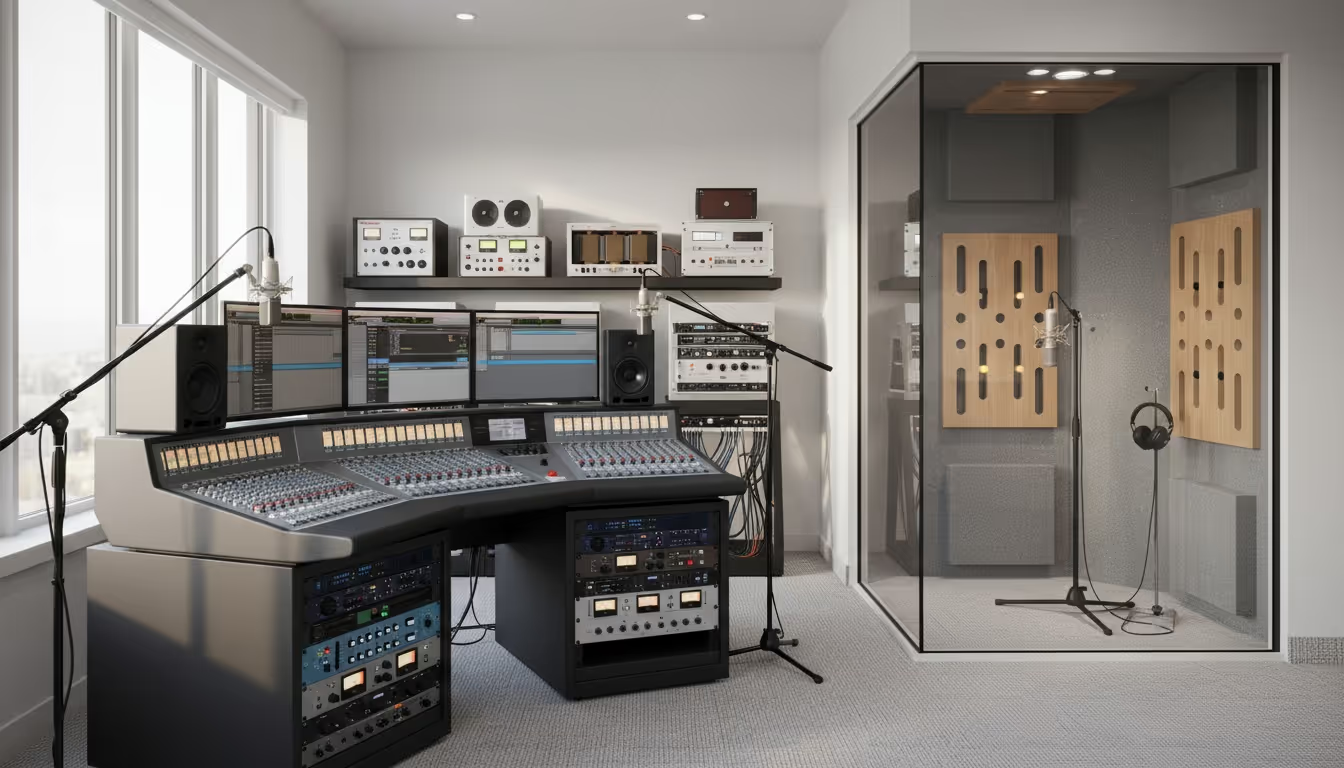
The scope covered identification and valuation of a consolidated group of professional audio and broadcast assets used in production and recording environments. The collection included studio microphones, signal processors, mixing control surfaces, an isolation booth, broadcast processing blades, computers, monitors, and supporting power systems. Items were examined using client-provided photographs and documentation and were appraised as used equipment. The intended use was exclusively to substantiate a non-cash charitable contribution and to provide the required documentation for IRS reporting and the donor's records.
Challenges
Our Approach
Project Outcome
Ready to start your appraisal?
Tell us the asset and what the value is for, and we will confirm scope, timing, and a fixed fee before any work begins.
Request an AppraisalFrequently Asked Questions
Does professional audio gear hold its value?
Unevenly, and the split is predictable. Microphones, outboard analog processors and quality monitoring hold value well and sometimes appreciate, because the designs do not become obsolete. Digital control surfaces, broadcast processing hardware and computers depreciate quickly as platforms and formats change. The analysis prices each category on its own curve rather than applying one depreciation rate to a studio.
How are custom-built isolation booths and enclosures valued?
Cautiously, because most of their cost is not recoverable. A booth built into a specific room is expensive to build, expensive to remove and rarely fits the next space, so secondary demand is thin and heavily discounted. Modular, factory-built booths do better because they are designed to be moved. The report distinguishes the two rather than valuing all enclosures alike.
Why adjust active listings rather than using them directly?
Because asking prices in the used audio market run consistently above realized prices, and unsold listings accumulate. Completed sales are preferred wherever they exist. Where only active listings are available for a specific item, they are used with a documented adjustment derived from the observed gap in that category.
Does obsolescence apply to equipment that still works perfectly?
Yes, and it is the main driver of value loss in this category. Functional obsolescence reflects that a device no longer fits current workflows, formats or integration standards even though it operates as designed. Broadcast and digital equipment can become nearly unsellable while remaining fully functional, and the appraisal has to reflect the market rather than the machine.