
Mixed Fleet Vehicle Appraisal for Probate Court
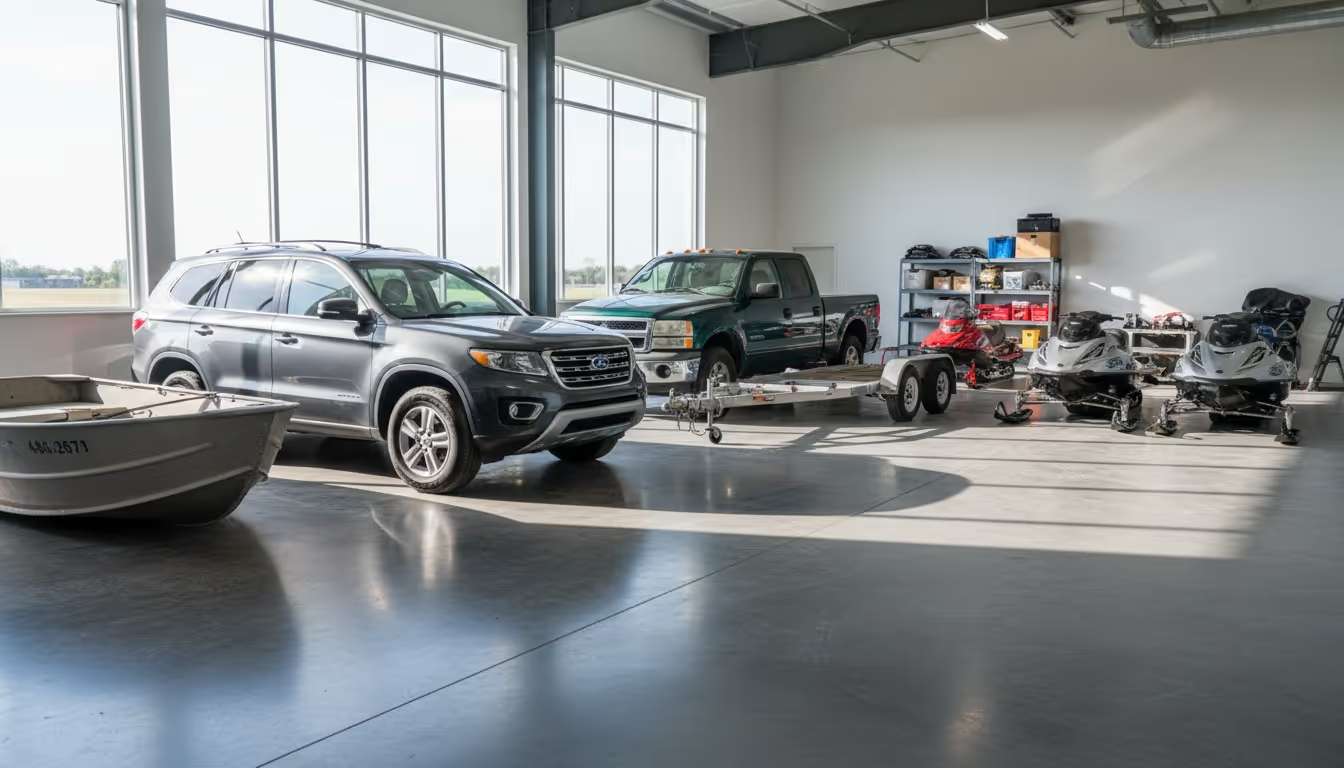
Vehicle fleet appraisal for probate court, covering passenger SUVs, pickup trucks, specialty vans and recreational units held in a single estate. AppraiseItNow appraised an Ohio estate's mixed fleet including an equipment trailer, personal watercraft, snowmobiles and an aluminum boat, setting fair market value for each unit from comparable sales in its own market.
Project Overview
Assignment Summary
The scope of work included identification and description of each vehicle and recreational unit based on client-supplied photographs and information, market research for comparable sales, and analysis to develop fair market value opinions. The subject assets ranged from late-model passenger SUVs and a crossover to older pickup trucks and specialty vans, as well as recreational equipment including a tilt-deck equipment trailer, personal watercraft, snowmobiles, and an aluminum boat. The appraisal was developed using recognized auto appraisal standards, with values determined through the sales comparison approach appropriate for non-income-producing personal property. The intended use was limited to probate court submission and related estate settlement procedures.
Challenges
Our Approach
Project Outcome
Ready to start your appraisal?
Tell us the asset and what the value is for, and we will confirm scope, timing, and a fixed fee before any work begins.
Request an AppraisalFrequently Asked Questions
Does each vehicle in an estate need its own valuation?
Yes, because each trades in its own market. Passenger SUVs, work pickups, snowmobiles and personal watercraft have different buyers, different seasonality and different depreciation curves, and a blanket figure for the group cannot be tested by anyone. An itemized schedule is also what an executor needs to distribute or sell individual units without reopening the whole question.
How is a trailer valued when it has no manufacturer plate?
From its observable specification: deck length, axle configuration, capacity, construction and features, matched against comparable units of similar build. Missing identification plates are common on older trailers and narrow the identification rather than preventing valuation. The report states that the manufacturer could not be confirmed and identifies the comparable class used.
Does seasonality affect the date-of-death value of recreational vehicles?
It can. Snowmobiles, watercraft and boats show clear seasonal price patterns, and a date of death in the off-season sits at a different point in that cycle than one at the peak. The analysis draws comparables from the period around the valuation date rather than annualizing, and notes where seasonality influenced the conclusion.
What does an executor do with vehicles that have pre-existing damage?
Report them as they were, with the damage documented. Fair market value reflects actual condition on the valuation date, so pre-existing dents, mechanical faults and cosmetic wear reduce the reported figure legitimately. Photographs taken before any repair or sale are what allow that reduction to be supported later if a beneficiary or an examiner questions it.