
Leveling Up: Valuing Commercial VR Equipment for Charity
Commercial VR equipment appraisal for charitable donation substantiation, covering multi-player arena systems, headsets, gaming workstations, displays and integration hardware. AppraiseItNow appraised a New Jersey donation built around a FuninVR 4 battle stage with Pico Neo 3 headsets and five RTX 3060 gaming PCs, reconciling a documented purchase order against thin secondary-market evidence.
Project Overview
Assignment Summary
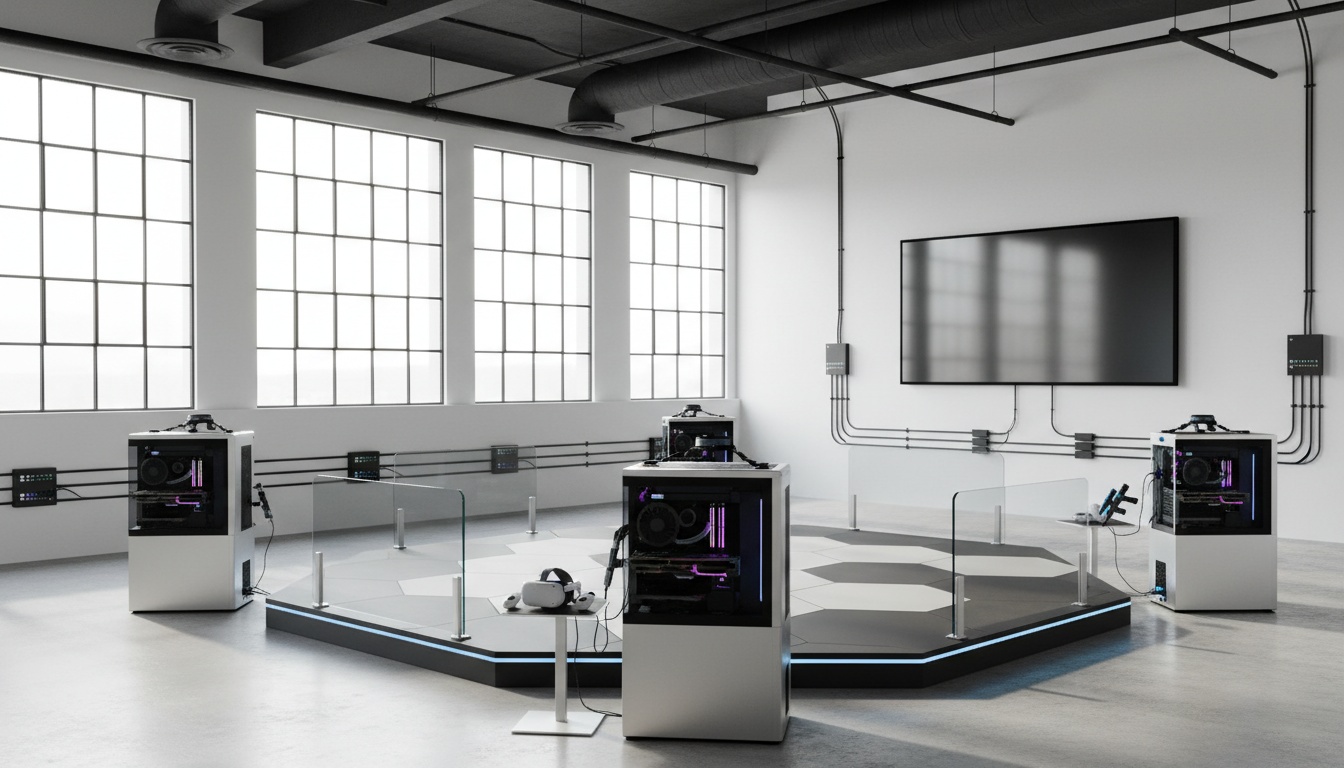
The assignment called for a fair market value appraisal of a commercial VR gaming setup intended for charitable donation. The centerpiece of the collection was a FuninVR 4 battle stage — a multi-player, commercial-grade VR arena system — which represented the largest share of overall value. Supporting assets included a Pico Neo 3 VR headset with controllers and blaster adapters, an 86-inch display, five gaming PCs each equipped with NVIDIA RTX 3060 graphics cards, and an extensive accessories package covering cabling, mounting hardware, networking components, software integration, and safety gear. Fair market value, as defined under Treasury Regulation §1.170A-1(c)(2), was the applicable standard of value, and the report was prepared exclusively to substantiate a non-cash charitable contribution for income tax purposes.
Challenges
Our Approach
Project Outcome
Ready to start your appraisal?
Tell us the asset and what the value is for, and we will confirm scope, timing, and a fixed fee before any work begins.
Request an AppraisalFrequently Asked Questions
How is commercial VR hardware valued when almost none of it resells publicly?
By reconciling two independent indications. The cost approach starts from a verified original purchase price and applies depreciation for age and technological obsolescence; the sales comparison approach uses whatever secondary transactions exist for the platform and its components. Where a system trades in a very thin market, showing both indications and explaining the weighting is more honest than presenting one figure.
Does a purchase order prove fair market value?
No, but it is strong evidence of cost, which is the starting point for a cost approach. What a system cost when new says nothing on its own about what it is worth after years of use and platform turnover. A donation appraisal that reports the purchase order figure as the value skips the entire analysis and is the version most likely to be challenged.
How fast do gaming PCs and headsets lose value?
Very fast. Graphics cards, headsets and workstations turn over on short product cycles, and a generation-old component is worth a fraction of its launch price even in perfect condition. Arena hardware and structural components hold value better than the computing and display elements attached to them, so the analysis prices the parts of the system separately rather than depreciating the whole at one rate.
Are cabling, mounts and safety gear worth valuing?
They are worth identifying, and usually worth little individually. Their contribution is that they make the system deployable: a buyer receiving a complete, integrated setup avoids sourcing dozens of small components. The report lists them so the donee and any reviewer can see the full scope of what transferred, while keeping their value contribution proportionate.