
Fair Market Value Appraisal for Charitable Food Donation
Food inventory appraisal for charitable donation substantiation, covering private-label packaged goods, case-lot quantities and shelf-stable products donated in bulk. AppraiseItNow appraised a Georgia donation of private-label snack bars documented by case and unit count, benchmarking them against wholesale pricing for comparable national-brand products.
Project Overview
Assignment Summary
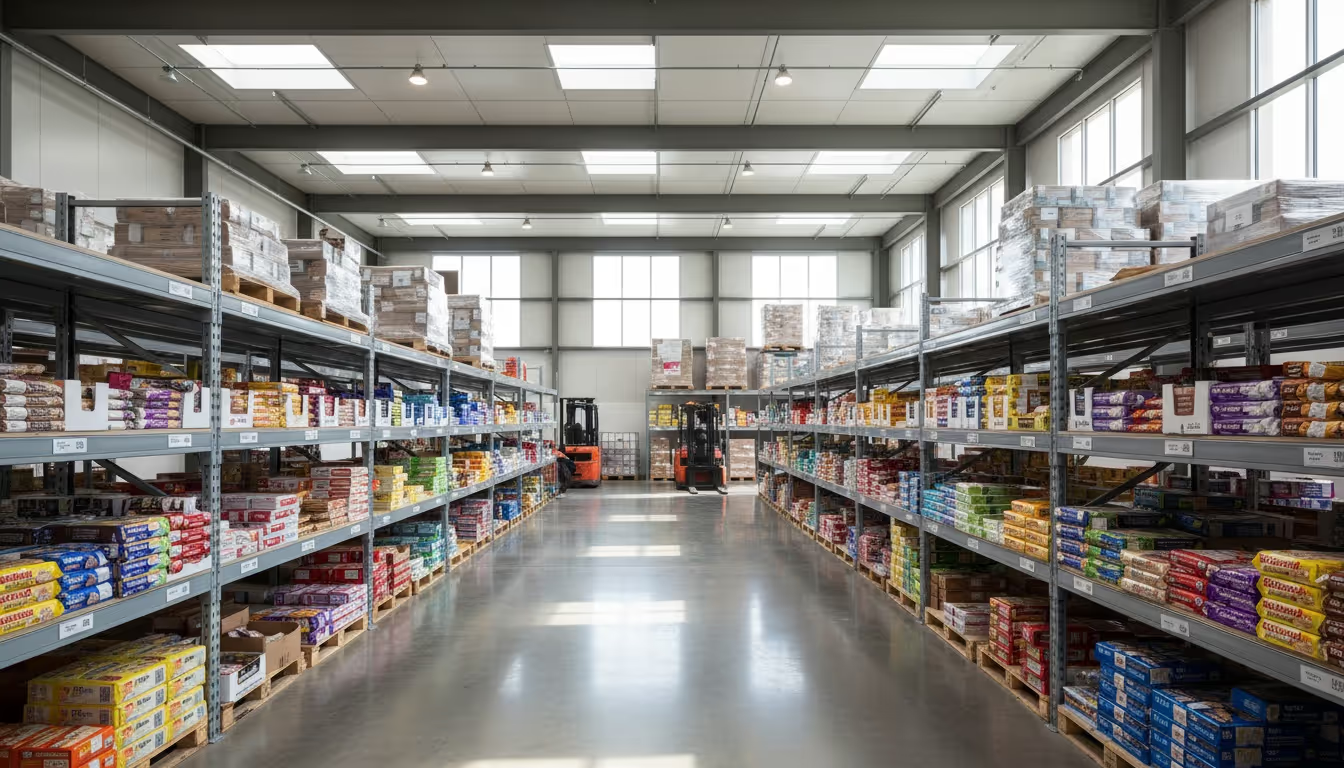
The scope covered a large inventory of private-label packaged snack bars in various formats and sizes, documented through case and unit counts. The appraiser reviewed photographs and client-provided inventory records, then conducted market research on comparable bulk and wholesale pricing for similar national-brand products. The appraisal was prepared in full conformance with USPAP and Treasury regulations governing qualified appraisals for charitable donations. Using the sales comparison approach, the appraiser derived per-unit wholesale values and aggregated them to reach a defensible fair market value conclusion. The deliverable included a complete Appraisal Report and the appraiser's signed declaration for Part IV of IRS Form 8283.
Challenges
Our Approach
Project Outcome
Ready to start your appraisal?
Tell us the asset and what the value is for, and we will confirm scope, timing, and a fixed fee before any work begins.
Request an AppraisalFrequently Asked Questions
How is private-label food valued when no branded comparable exists?
By benchmarking against national-brand products of similar format, size and category, then adjusting downward for the absence of brand equity. Private-label goods reliably clear below their branded equivalents at wholesale, and the size of that gap is observable in the market. The report shows the benchmark products and the adjustment rather than presenting a per-unit figure without support.
Is donated food valued at retail shelf price or wholesale?
At wholesale, in nearly every case. A food donation moves cases and pallets, and the market for that quantity is the wholesale channel, not the grocery shelf. Retail pricing includes the retailer's margin, shrink and merchandising, none of which the donor contributed. Using shelf price on a truckload donation multiplies an error across thousands of units.
Does remaining shelf life affect the value of donated food?
Substantially. Product approaching its best-by date trades at a steep discount because the buyer's window to move it is short, and product past that date may have no legitimate market at all. Dating is a primary value driver for consumables and is documented for each lot, alongside storage conditions and packaging integrity.
How does the inventory basis rule affect a food donation deduction?
Food held as inventory is ordinary income property, so the general rule under Internal Revenue Code section 170(e) limits the deduction to the donor's cost basis. A special rule for contributions of apparently wholesome food to qualifying charities can allow an enhanced deduction above basis. Which applies is a question for the donor's tax advisor; the appraisal establishes the fair market value both rules reference.