
Compact Equipment Appraisal for Charitable Donation Tax Substantiation
Compact equipment appraisal for charitable donation substantiation, covering utility tractors, mini excavators, side-by-sides, and all-terrain vehicles donated as a group. AppraiseItNow appraised a Washington donation of four low-hour powered machines, adjusting comparable sales for operating hours, recent maintenance and the accessories included with each unit.
Project Overview
Assignment Summary
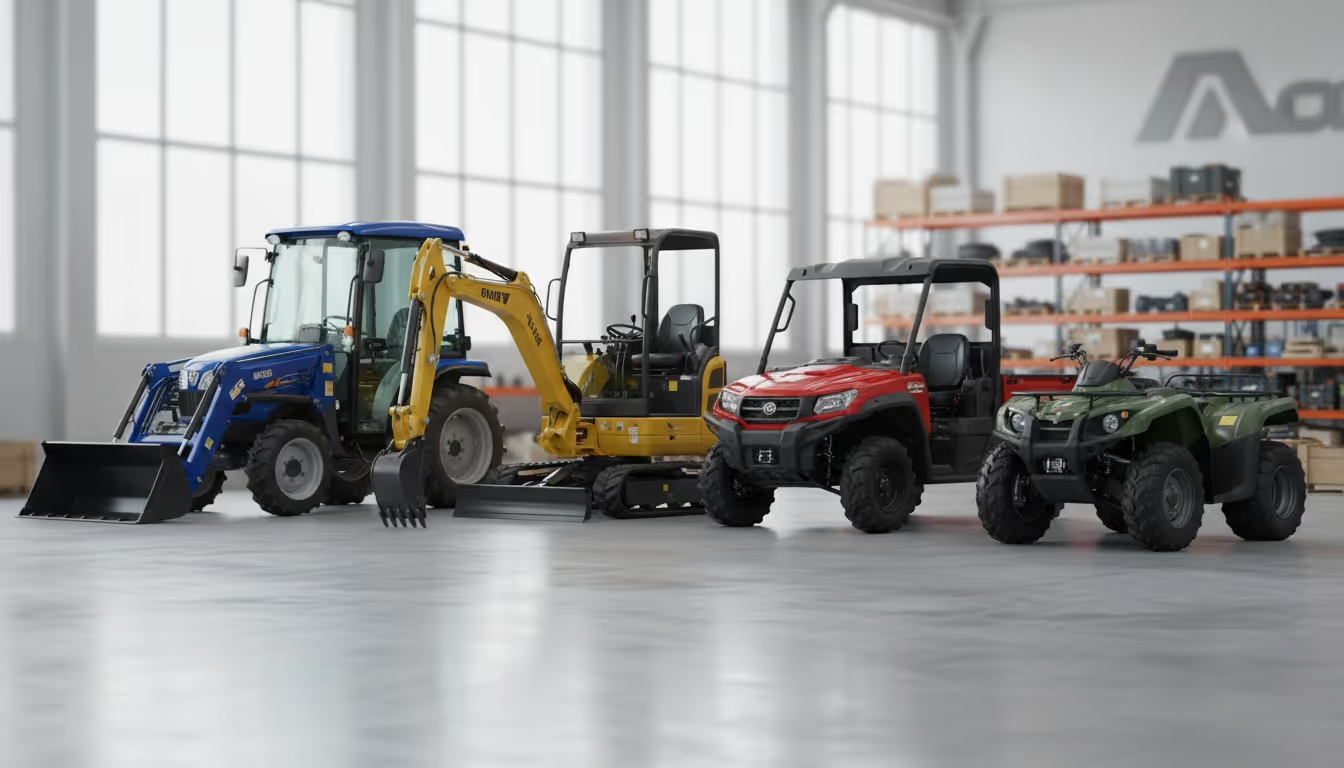
The scope of work included appraising four pieces of powered equipment: a compact utility tractor with cab and loader, a mini excavator, a utility side-by-side, and an all-terrain vehicle. The intended use was tax substantiation for a non-cash charitable donation, requiring adherence to IRS guidance for qualified appraisals and USPAP reporting standards. The sales comparison approach was employed to estimate fair market value, with adjustments made for reported condition, operating hours, recent maintenance items, and included accessories. The deliverable included a written appraisal report and the completed portion of the required IRS form to support the donor's tax filing.
Challenges
Our Approach
Project Outcome
Ready to start your appraisal?
Tell us the asset and what the value is for, and we will confirm scope, timing, and a fixed fee before any work begins.
Request an AppraisalFrequently Asked Questions
Should donated equipment be valued at dealer retail or at auction price?
At the price in the market where that equipment most commonly sells, which for compact machines usually sits between the two. Dealer retail includes reconditioning, warranty and a sales channel the donor is not providing; auction reflects wholesale trade among dealers and resellers. The analysis identifies which channel a private buyer of this specific machine would use and prices into it, showing the reconciliation.
Do operating hours matter more than age on compact equipment?
Generally yes. A five-year-old tractor with very low hours can be worth substantially more than a two-year-old machine that has been worked hard, because hours track actual wear on the drivetrain and hydraulics. Very low-hour examples are also traded infrequently, which thins the comparable pool and requires careful adjustment rather than a straight hours-based formula.
Are attachments and accessories valued separately?
They are identified separately and then valued in the way the market prices them. A loader or a set of new tracks contributes real value, but usually less than its standalone price, because a buyer of the machine is not shopping for the attachment on its own. The report lists what was included so the donee and a reviewer can see exactly what the value covers.
Can several machines donated at once be reported as one item on Form 8283?
Similar items of property are grouped for the $5,000 threshold, but the appraisal should still identify and value each machine individually, with serial or identification numbers where available. A single lump figure for four different machines gives a reviewer nothing to test. Itemizing also protects the donor if one unit's value is later questioned, since the rest of the conclusion stands on its own.