







5-Star Valuation Services, Loved by Hundreds
Frequently Asked
Questions
No Frequently Asked Questions Found.
The work helps management substantiate conclusions, provides documentation for auditors, and supports consistency in ongoing reporting. Assignments are typically developed in accordance with recognized professional standards and structured to withstand third-party review.
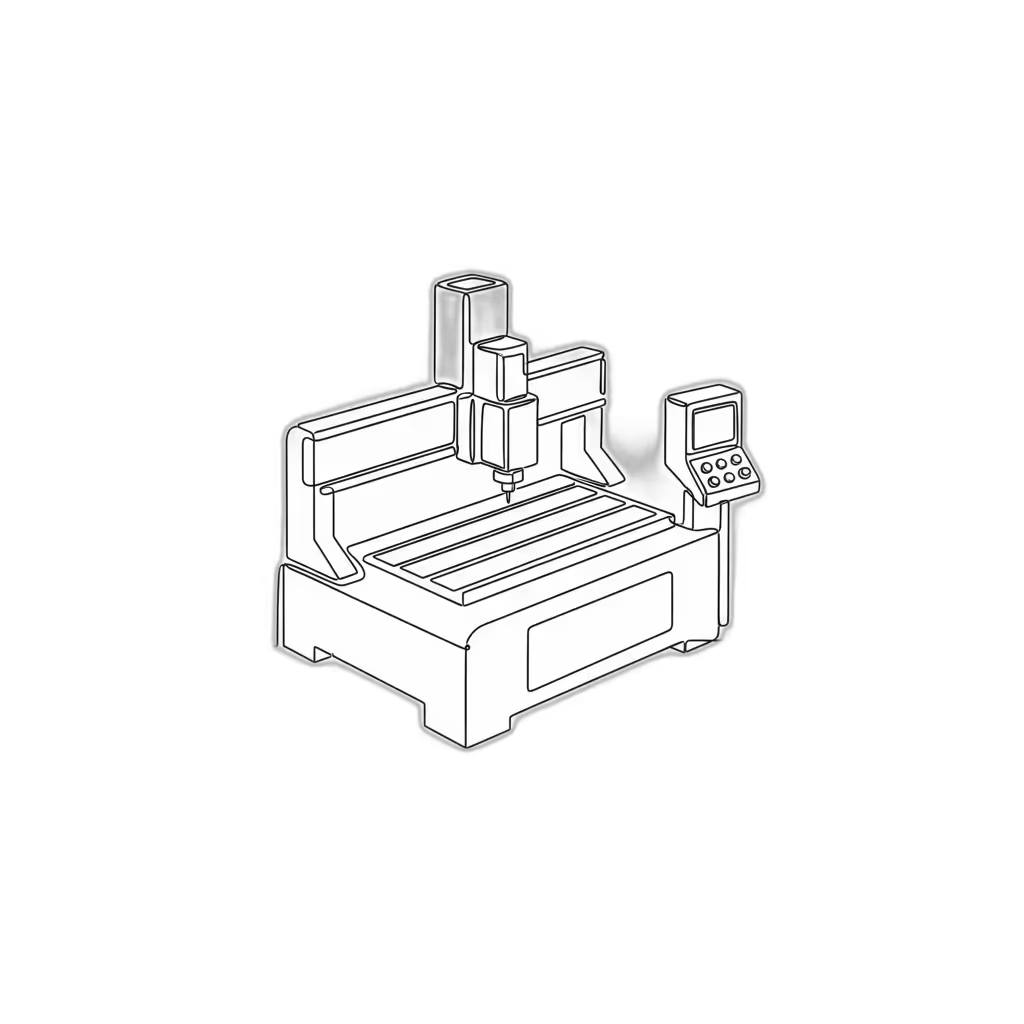
The process encompasses a thorough examination of complex machinery such as precision lathes, advanced CNC machines, drilling equipment, surface grinders, and various fabrication tools. Professional appraisers bring deep technical expertise to analyze these intricate pieces of equipment, considering multiple factors that influence their overall worth and operational effectiveness.
Appraisals deliver critical insights for business decision-makers, offering a detailed perspective on equipment valuation that addresses multiple strategic considerations. These assessments provide comprehensive information about current market value, potential replacement costs, operational condition, and long-term investment potential.
The evaluation process involves sophisticated analytical techniques that examine technical specifications, current market conditions, equipment age, maintenance history, and technological relevance. By integrating detailed mechanical assessment with robust economic analysis, these appraisals create a holistic view of metalworking equipment's true economic value and potential.
Stakeholders leverage these professional assessments for diverse purposes, including financial planning, insurance documentation, potential sale or acquisition strategies, and comprehensive asset management. The nuanced information generated helps organizations make informed decisions about equipment maintenance, replacement, and strategic investment in their manufacturing capabilities.
Most online appraisals begin with detailed documentation collection, where equipment owners submit high-resolution photographs, manufacturer specifications, maintenance records, and operational history. Professional appraisers utilize these digital inputs to conduct thorough initial evaluations of metalworking machinery.
For more complex assessments, live video consultations have emerged as an effective alternative to traditional in-person inspections. Using platforms like Zoom or Google Meet, appraisers can conduct real-time equipment examinations, allowing for interactive discussions and immediate clarification of technical details.
The digital appraisal process offers significant advantages, including enhanced convenience, reduced geographical limitations, and faster turnaround times. Businesses can now obtain professional equipment valuations without disrupting operational workflows or incurring extensive travel expenses.
Qualified appraisers employ standardized methodologies to ensure accuracy and compliance with professional valuation standards. The comprehensive digital approach allows for meticulous assessment of equipment condition, market value, and potential depreciation factors, delivering reliable and detailed valuation reports.
While online appraisals provide remarkable flexibility, they are most effective when equipment owners provide comprehensive and transparent documentation. Clear, detailed information remains crucial to generating precise and credible equipment valuations.
Machinery appraisers focus on large-scale industrial equipment like lathes, mills, and CNC machines. Their comprehensive approach examines equipment functionality, technological sophistication, maintenance history, and market positioning. By analyzing performance metrics and current technological trends, they determine accurate equipment valuations that reflect true economic value.
Tool and die appraisers concentrate on manufacturing precision instruments, evaluating both physical condition and operational capabilities. Their expertise requires understanding intricate manufacturing processes, tool compatibility, and the specific engineering requirements of different production environments. These professionals assess tools' potential for continued productive use and their alignment with current manufacturing standards.
Fabrication equipment specialists evaluate cutting-edge technologies like plasma and laser cutters, press brakes, and specialized manufacturing systems. Their assessments incorporate industry trends, technological advancements, and equipment efficiency metrics. By examining operational history and potential future performance, they provide nuanced valuations that consider both current market conditions and emerging technological landscapes.
Welding equipment experts analyze arc welders, MIG/TIG systems, and plasma welding technologies. Their evaluations explore equipment age, technological capabilities, compliance with industry standards, and potential for continued operational effectiveness. These appraisers understand the critical role welding equipment plays in manufacturing precision and safety.
Specialized appraisers develop deep expertise in niche sectors like automotive, aerospace, and custom fabrication. Their targeted knowledge allows for exceptionally detailed assessments that consider unique technological and operational requirements specific to their respective industries.
Ultimately, these diverse appraisal professionals provide critical insights that help businesses make informed equipment investment and maintenance decisions, bridging technical understanding with economic valuation strategies.
Financial reporting demands precise asset valuation, and metalworking equipment appraisals deliver an objective assessment of current market value. This transparency helps businesses maintain accurate balance sheets, supports equity financing efforts, and provides stakeholders with reliable information about the company's asset portfolio.
Tax compliance represents another crucial dimension of equipment appraisals. When equipment is purchased, sold, or donated, a professional valuation becomes instrumental in navigating complex tax regulations. For significant asset donations or strategic tax planning, a comprehensive appraisal ensures businesses meet regulatory requirements while optimizing potential tax benefits.
Insurance coverage relies heavily on accurate equipment valuation. Without a current, professional appraisal, businesses risk being underinsured, potentially facing substantial financial exposure in case of equipment damage, loss, or unexpected events. A detailed appraisal provides insurers with precise information, enabling appropriate coverage that truly protects the business's economic interests.
During financing and loan negotiations, equipment appraisals serve as a critical credential. Lenders depend on these professional assessments to evaluate collateral value, which directly influences loan terms, eligibility, and overall financing potential. A robust, credible appraisal can significantly streamline the lending process and enhance a business's financial flexibility.
Buy-sell agreements, mergers, and business transitions also benefit tremendously from professional equipment appraisals. These evaluations provide an impartial, comprehensive perspective on asset value, mitigating potential stakeholder disputes and facilitating smoother negotiations. By establishing a clear, defensible value, appraisals support fair and transparent business transactions.
Ultimately, a metalworking equipment appraisal transcends a mere financial exercise. It represents a strategic tool that supports financial integrity, regulatory compliance, and informed business decision-making across multiple critical operational dimensions.
What Makes Metalworking Equipment Appraisals Critical?
Understanding the Significance of Metalworking Equipment Appraisals
Metalworking equipment appraisals are far more than a simple accounting exercise. They represent a critical strategic tool for businesses navigating complex financial landscapes and technological transformations.
Key Dimensions of Equipment Valuation
- Financial Reporting and Compliance
Accurate equipment valuations are essential for:
- Meeting regulatory accounting standards
- Providing transparent financial documentation
- Enabling stakeholders to make informed decisions
- Strategic Investment Planning
Equipment appraisals help organizations:
- Assess current asset performance
- Determine optimal capital allocation
- Guide decisions about equipment retention, upgrade, or replacement
- Risk Management and Insurance
Comprehensive appraisals support:
- Securing appropriate insurance coverage
- Ensuring fair claims settlement
- Protecting organizational financial stability
- Transactional Transparency
During mergers, acquisitions, or business sales, appraisals provide:
- Objective asset valuation
- Enhanced negotiation credibility
- Clear understanding of equipment value
- Tax Strategy Optimization
Precise equipment valuations assist in:
- Accurate depreciation calculations
- Identifying potential tax deductions
- Ensuring regulatory tax compliance
By embracing comprehensive metalworking equipment appraisals, businesses can transform a routine valuation process into a powerful strategic advantage, driving informed decision-making and financial optimization.
Financial Reporting: Why Equipment Valuation Matters
In today's competitive business environment, accurate equipment valuation is critical for comprehensive financial reporting. This strategic process involves determining the precise fair market value of metalworking equipment, which serves as a fundamental tool for multiple key stakeholders.
Why Equipment Valuation Matters for Financial Reporting
- Financial Statement Accuracy: Precise equipment valuation directly impacts financial reporting integrity by ensuring:
- Accurate depreciation calculations
- Transparent representation of asset value
- Correct profit margin reporting
- Strategic Business Decision Making: Valuation provides critical insights for:
- Mergers and acquisitions
- Investment assessments
- Capital allocation strategies
Key Implications of Equipment Valuation
Financial Statement Impact
Depreciation calculations fundamentally depend on accurate equipment valuation. Undervaluing assets can distort depreciation expenses, leading to misleading profit margin representations. Similarly, overvaluation can obscure potential financial challenges, preventing stakeholders from gaining a true understanding of operational efficiency.
Mergers and Acquisitions
During business transactions, independent equipment appraisals play a crucial role by:
- Establishing credible asset value
- Facilitating transparent negotiations
- Building trust between transacting parties
Asset Impairment Assessment
Market fluctuations can significantly impact equipment value. Comprehensive valuation enables organizations to:
- Conduct precise impairment tests
- Recognize potential asset value losses
- Maintain financial statement accuracy
Investor Confidence
Transparent and consistent equipment valuation demonstrates organizational reliability, potentially attracting investors by showcasing:
- Financial reporting integrity
- Strategic operational management
- Long-term growth potential
By prioritizing meticulous equipment appraisals, companies establish a robust financial framework that supports informed decision-making and sustainable strategic planning.
Key Types of Metalworking Equipment in Modern Valuation
Metalworking equipment encompasses a diverse range of sophisticated tools and machines critical for shaping and fabricating metal components. Accurate identification and understanding of these equipment types are essential for precise financial reporting and valuation.
Key Metalworking Equipment Categories
1. Lathes: Precision Rotational Shaping
- Primary function: Rotating workpieces against cutting tools to create cylindrical parts
- Types include:
- Manual lathes
- CNC lathes with advanced precision capabilities
- Critical for producing complex, symmetrical metal components
2. Milling Machines: Versatile Material Removal
- Used for removing material through rotary cutting techniques
- Configurations:
- Manual milling machines
- Advanced CNC milling systems
- Capabilities include drilling, boring, and intricate shaping
3. Presses: Metal Forming and Cutting
- Primary applications in sheet metal manipulation
- Variations include:
- Hydraulic presses
- Mechanical presses
- Essential in industries like automotive manufacturing
4. Metalworking Saws: Precision Cutting Equipment
- Types of metal saws:
- Band saws
- Chop saws
- Critical for accurate stock size reduction
- Used in production and custom fabrication processes
5. Welding Equipment: Structural Joining Technology
- Primary welding technologies:
- MIG welders
- TIG welders
- Stick welders
- Determines weld quality and structural integrity
6. Tooling and Accessories: Precision Enhancement
- Essential components include:
- Drill bits
- End mills
- Work-holding devices
- Directly impacts equipment efficiency and operational precision
Understanding the unique characteristics, market demands, and technological capabilities of each metalworking equipment type is crucial for comprehensive financial reporting and strategic asset management.
How Do Market Conditions Impact Equipment Value?
Market conditions are a critical determinant of metalworking equipment value, significantly impacting pricing and demand dynamics across the manufacturing sector. For financial reporting stakeholders, understanding these nuanced market influences is essential.
Key Market Condition Factors Affecting Equipment Value
Economic Cycles
- Economic growth periods typically increase manufacturing demand, elevating equipment values
- Economic downturns can lead to reduced demand and potential asset depreciation
- Equipment valuation closely tracks broader economic performance indicators
Technological and Industry Trends
- Technological innovations can rapidly diminish older equipment's market value
- Shifts toward automation create differential valuation between traditional and advanced machinery
- Equipment efficiency and technological currency directly influence market pricing
Supply Chain Dynamics
- Material and component shortages can unexpectedly increase existing equipment's value
- Production capability constraints create premium valuations for operational machinery
- Regional manufacturing capabilities significantly impact equipment market prices
External Market Influences
- Global trade policies directly affect equipment availability and pricing
- Tariffs and international trade agreements can create substantial market value fluctuations
- Regional regulatory changes impact equipment desirability and market positioning
A comprehensive equipment appraisal must meticulously evaluate these multifaceted market conditions to ensure accurate financial reporting and asset valuation.
Navigating the Professional Appraisal Process
Key Steps in Professional Metalworking Equipment Appraisal
Professional metalworking equipment appraisal is a strategic process that requires precision, expertise, and a systematic approach to accurately determine fair market value for financial reporting purposes.
1. Selecting a Qualified Appraiser
- Choose a certified professional with specialized metalworking equipment expertise
- Verify credentials and industry-specific knowledge
- Ensure the appraiser understands complex equipment variations and market dynamics
2. Establishing Clear Appraisal Parameters
- Precisely define the equipment to be appraised
- Clarify the appraisal's intended purpose (financial reporting, asset management, etc.)
- Establish timeline and specific reporting requirements
3. Comprehensive Data Collection
- Conduct thorough on-site equipment inspection
- Evaluate equipment condition, age, and operational status
- Review maintenance records and usage history
- Document equipment specifications and unique characteristics
4. Advanced Valuation Methodology
- Apply multiple valuation approaches:
- Cost approach
- Income approach
- Sales comparison approach
- Analyze current market trends and economic indicators
- Consider equipment-specific depreciation factors
5. Comprehensive Reporting
- Prepare detailed valuation report
- Include supporting data and analytical rationale
- Ensure compliance with financial reporting standards
- Provide clear, defensible valuation conclusions
By following a structured appraisal process, organizations can obtain reliable equipment valuations that support informed financial decision-making and maintain high standards of reporting integrity.
Selecting an Expert Appraiser: Essential Criteria
Selecting an Expert Appraiser: Essential Criteria for Metalworking Equipment Valuation
Choosing the right appraiser for metalworking equipment requires careful consideration of several critical factors. The following criteria will help you identify a qualified professional who can deliver an accurate and reliable valuation.
Key Selection Criteria
- Industry Experience
Look for an appraiser with deep expertise in metalworking equipment. Ideal candidates will have:
- Extensive background in metal fabrication
- Proven experience appraising similar industrial machinery
- Comprehensive understanding of manufacturing equipment nuances
- Professional Accreditation
Verify the appraiser's professional credentials, prioritizing those with:
- Certifications from recognized bodies like American Society of Appraisers (ASA)
- Rigorous professional training
- Demonstrated commitment to ethical standards
- Comprehensive Valuation Methodology
A qualified appraiser should employ multiple valuation approaches, including:
- Cost Approach
- Sales Comparison Approach
- Income Approach
Understanding their valuation framework ensures a thorough and credible assessment.
- Industry Network and Insights
An exceptional appraiser brings added value through:
- Strong industry connections
- Current market trend knowledge
- Insights into equipment resale markets
- Exceptional Communication Skills
Prioritize professionals who can:
- Articulate complex valuation concepts clearly
- Provide comprehensive written reports
- Explain technical details in accessible language
By carefully evaluating these criteria, you can select an appraiser who will provide an accurate, reliable assessment of your metalworking equipment, supporting robust financial reporting and strategic decision-making.
Avoiding Costly Valuation Pitfalls
Navigating Critical Challenges in Metalworking Equipment Valuation
Metalworking equipment appraisal for financial reporting demands precision and strategic insight. Understanding potential valuation challenges is essential for maintaining accurate financial statements and making sound investment decisions.
Key Valuation Pitfalls to Avoid
- Emotional Valuation Bias
- Resist overestimating equipment value due to emotional attachment
- Rely exclusively on objective market data and comparable sales
- Recognize that original purchase price does not reflect current market value
- Technology Obsolescence
- Account for rapid technological advancements in metalworking
- Evaluate equipment's utility beyond physical condition
- Consider market demand and technological relevance
- Documentation Gaps
- Maintain comprehensive maintenance and modification records
- Provide detailed equipment history
- Ensure audit compliance through thorough documentation
- Appraiser Selection
- Choose appraisers with specialized metalworking equipment expertise
- Verify industry-specific knowledge and experience
- Prioritize professionals understanding current market trends
- Geographic Market Variations
- Recognize regional value fluctuations
- Incorporate localized market insights
- Understand equipment valuation is not universally consistent
Strategic Approach to Accurate Valuation
By proactively addressing these critical valuation challenges, businesses can develop a more robust and reliable approach to metalworking equipment appraisal. This strategic methodology ensures financial accuracy, mitigates risks, and supports informed decision-making.
Depreciation's Powerful Impact on Equipment Worth
Understanding Depreciation's Role in Metalworking Equipment Valuation
Depreciation serves as a critical financial mechanism that systematically tracks the declining value of metalworking equipment over time. By comprehensively understanding its nuances, businesses can make more informed strategic decisions about their industrial assets.
Key Factors Driving Equipment Depreciation
- Physical Wear and Tear: Continuous operational stress causes gradual equipment degradation, directly impacting functional capacity and market value
- Technological Obsolescence: Rapid manufacturing innovations can rapidly diminish the relevance and worth of older machinery models
- Market Demand Fluctuations: Industrial sector trends significantly influence equipment valuation, potentially accelerating value reduction
Comprehensive Depreciation Calculation Approaches
- Straight-Line Depreciation: Evenly distributes equipment cost reduction across its anticipated useful lifecycle
- Declining Balance Method: Recognizes more substantial value reduction during initial operational years
Strategic Implications for Financial Management
Precise depreciation assessment offers multifaceted benefits for organizational financial strategies:
- Enables accurate tax planning through non-cash expense documentation
- Provides transparent asset valuation for comprehensive financial reporting
- Supports intelligent capital investment decision-making
By implementing robust depreciation tracking, manufacturing enterprises can maintain financial clarity and optimize resource allocation strategies.
Industry Standards That Drive Accurate Assessments
Understanding Industry Standards for Metalworking Equipment Valuation
Accurate assessments of metalworking equipment are critical for robust financial reporting and regulatory compliance. Multiple organizations establish comprehensive guidelines that ensure precise and trustworthy equipment valuations.
Key Valuation Standards
- Uniform Standards of Professional Appraisal Practice (USPAP)
- Ensures ethical and objective appraisal practices
- Provides credibility for financial institutions and regulatory agencies
- Maintains professional integrity in valuation processes
- International Valuation Standards (IVS)
- Offers global perspective on valuation methodologies
- Emphasizes transparency in reporting
- Enables informed investment decision-making
- American Society of Appraisers (ASA) Guidelines
- Provides industry-specific appraisal frameworks
- Addresses unique characteristics of machinery and equipment
- Considers market conditions and economic contexts
Critical Valuation Considerations
Professional equipment appraisals incorporate multiple complex factors:
- Depreciation assessment
- Remaining useful life
- Historical performance tracking
- Current market trends
Valuation Approaches
Appraisers typically utilize three primary valuation methodologies:
- Cost Approach: Evaluates replacement or reproduction costs
- Market Approach: Compares similar equipment transactions
- Income Approach: Assesses potential revenue generation capabilities
By adhering to established industry standards, businesses can ensure transparent, reliable, and defensible equipment valuations that support strategic asset management and financial reporting.
Strategic Benefits of Regular Equipment Evaluations
Strategic Benefits of Regular Equipment Evaluations
Regular equipment evaluations are critical for metalworking businesses seeking to maintain financial integrity, optimize asset management, and ensure regulatory compliance. These assessments provide strategic advantages that extend far beyond simple asset valuation.
Financial Reporting Accuracy
- Ensures financial statements reflect true equipment value
- Enhances transparency for investors and lenders
- Supports accurate cash flow management and budgeting
Strategic Planning and Decision Making
- Provides precise data for asset acquisition and divestment
- Reveals equipment depreciation rates
- Enables proactive technology upgrades and machinery replacement
- Prevents unexpected operational costs
Risk Management
- Identifies current asset values in volatile market conditions
- Supports comprehensive asset insurance strategies
- Helps predict potential financial vulnerabilities
- Minimizes risks associated with equipment value fluctuations
Regulatory Compliance
- Meets industry-specific asset valuation standards
- Ensures adherence to financial reporting regulations
- Prevents potential penalties from non-compliance
- Maintains organizational credibility
By prioritizing regular equipment evaluations, metalworking businesses can strengthen their competitive position, drive informed decision-making, and support sustainable long-term growth.
Real-World Success: Metalworking Equipment Valuation Insights
Metalworking equipment appraisal is a critical process for businesses seeking accurate financial reporting and strategic insights. Proper valuation of these assets can significantly impact a company's financial statements and operational decision-making.
Key Factors in Metalworking Equipment Valuation
1. Equipment Condition
The physical state of machinery is fundamental to determining its value. A comprehensive appraisal should include:
- Detailed assessment of wear and tear
- Complete maintenance history review
- Evaluation of modifications and upgrades
- Thorough inspection by qualified professionals
2. Market Demand Dynamics
Market conditions play a crucial role in equipment valuation. Critical considerations include:
- Current industry demand for specific machinery
- Technological advancements in metalworking equipment
- Supply and demand fluctuations
- Regional and global economic trends
3. Age and Depreciation Analysis
Equipment age directly impacts its value through various depreciation methods:
- Income Approach for value assessment
- Cost Approach to determine current worth
- Consideration of technological obsolescence
- Evaluation of remaining useful life
4. Economic Factors
Broader economic conditions significantly influence equipment valuation:
- Impact of inflation rates
- Interest rate fluctuations
- Industry-specific economic cycles
- Potential future market projections
Strategic Importance of Accurate Valuation
Comprehensive metalworking equipment appraisal goes beyond simple number-crunching. It provides businesses with:
- Precise financial reporting
- Enhanced strategic decision-making
- Improved resource allocation
- Better understanding of asset portfolio
By meticulously examining these critical elements, businesses can develop a nuanced and accurate financial representation of their metalworking assets. This approach ensures not just compliance, but strategic insight into the true value of industrial equipment.
Your Path Forward: Precision Appraisal Solutions
When it comes to financial reporting, accurately assessing the value of metalworking equipment is crucial for businesses across various industries. A precise appraisal not only ensures compliance with accounting standards but also provides critical insights for decision-making related to asset management, investment, and risk assessment.
Metalworking equipment encompasses a wide range of machinery used in manufacturing processes, including:
- Lathes
- Milling machines
- Welding equipment
- CNC machines
Key Components of Metalworking Equipment Appraisal
Market Analysis
A comprehensive market analysis evaluates recent sales data, trends in metalworking equipment, and the financial health of relevant sectors. This crucial step helps appraisers determine:
- Fair market value
- Potential depreciation rates
- Current industry benchmarks
Condition Assessment
The physical condition of machinery is essential to accurate valuation. Detailed inspections focus on:
- Operational status
- Maintenance history
- Required repairs
- Overall equipment functionality
Compliance and Regulatory Considerations
Adhering to financial reporting guidelines is critical. Appraisers must ensure their methods align with:
- Generally Accepted Accounting Principles (GAAP)
- International Financial Reporting Standards (IFRS)
- Industry-specific regulatory requirements
Documentation Importance
Comprehensive and clear documentation serves as the foundation of a credible appraisal. Effective documentation:
- Enhances valuation credibility
- Provides transparent assessment methods
- Supports stakeholder and auditor review
- Ensures long-term record keeping
Precision in metalworking equipment appraisal is indispensable for effective financial reporting. By prioritizing a thorough and objective appraisal process, businesses can confidently develop strategic insights, accurately represent asset values, and support informed decision-making.
.svg)
View all Locations



APPRAISEITNOW APPRAISERS ARE BEST-IN-CLASS & CREDENTIALED BY LEADING APPRAISAL ORGANIZATIONS LIKE THE ISA, ASA, & MORE.




