About Charitable Donation Appraisals in Wisconsin
AppraiseItNow provides qualified charitable donation appraisals for Wisconsin donors contributing non-cash property valued over $5,000, the IRS threshold requiring a qualified appraisal and completion of IRS Form 8283. Wisconsin's active conservation and land trust sector, agricultural community, and robust nonprofit economy make charitable donation appraisals a frequent need across the state. Our appraisers produce USPAP-compliant reports that satisfy IRS documentation requirements and hold up to scrutiny.
AppraiseItNow offers both remote and onsite appraisal services, making it easy to get a qualified valuation regardless of where your assets are located. Our appraisers in Wisconsin serve donors in Milwaukee, Madison, Green Bay, and communities statewide.
What Does AppraiseItNow Appraise for Charitable Donation in Wisconsin?
AppraiseItNow covers all major asset classes commonly donated to qualifying organizations in Wisconsin, including:
- Personal Property, including jewelry, antiques, furniture, coins, collectibles, and household goods
- Equipment & Machinery, including medical equipment, restaurant equipment, manufacturing machinery, and technology assets
- Fine Art, including paintings, prints, sculpture, photography, and mixed media
- Business Interests, including LLCs, S-corps, partnerships, fractional interests, and privately held stock
- Boats & Watercraft, including sailboats, powerboats, yachts, jet skis, and personal watercraft
- Automobiles & Vehicles, including cars, trucks, motorcycles, RVs, trailers, and classic vehicles
- Inventory, including retail inventory, wholesale stock, raw materials, and finished goods
Who Does AppraiseItNow Serve in Wisconsin for Charitable Donation?
AppraiseItNow serves individual donors, farmers, business owners, and nonprofit organizations across Wisconsin who need qualified appraisals to substantiate non-cash charitable contributions for IRS purposes. We work with clients donating everything from manufacturing equipment and fine art to business interests and watercraft to qualifying charitable organizations throughout the state.
IRS Requirements for Charitable Donation Appraisals in Wisconsin
Wisconsin donors follow federal IRS rules when claiming deductions for non-cash charitable contributions. Understanding the key thresholds and deadlines helps ensure your deduction is fully defensible.
IRS Form 8283 and Appraisal Thresholds
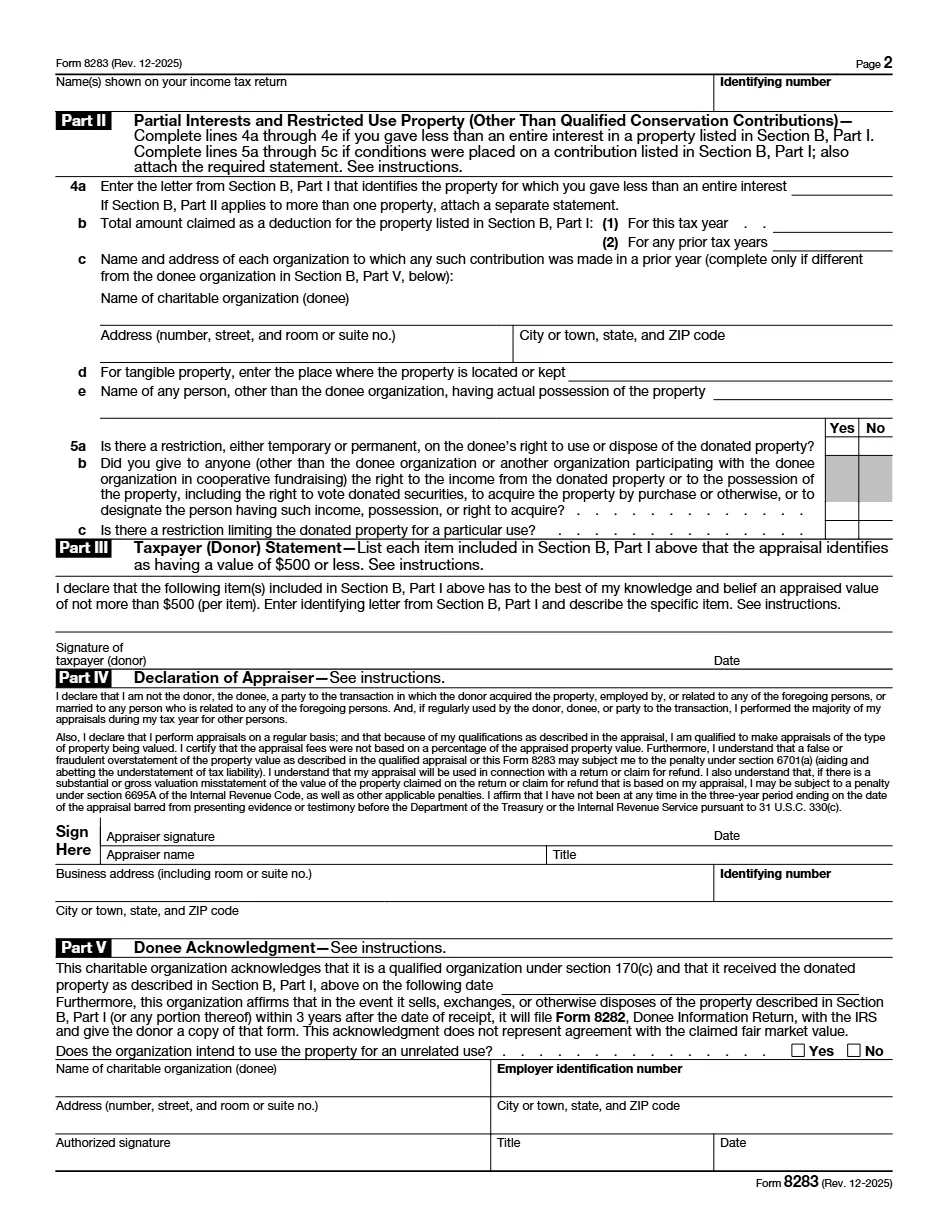
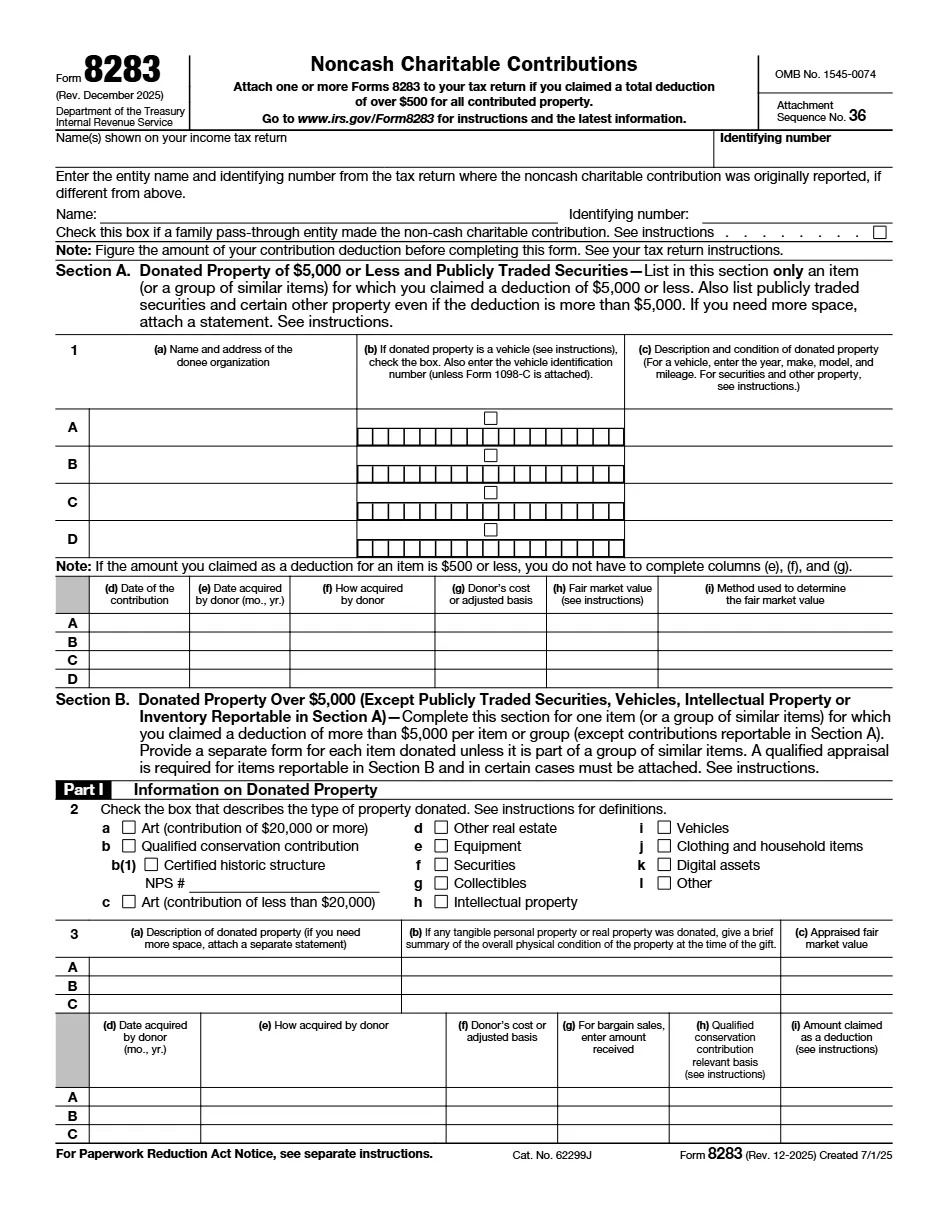
For non-cash donations exceeding $500, donors must file IRS Form 8283. Donations of a single item or group of similar items valued over $5,000 require a qualified appraisal and a completed Section B of IRS Form 8283, signed by both the appraiser and the donee organization. For art valued over $20,000 or total donated property exceeding $500,000, the full appraisal must be attached to the return.
Appraisal Timing Rules
The qualified appraisal must be completed no earlier than 60 days before the donation date. It must also be completed no later than the due date of the tax return, including extensions. Missing this window can result in a disallowed deduction.
Appraiser Qualification Requirements
The appraiser must meet IRS qualification standards and cannot charge a fee based on a percentage of the appraised value. Appraisers who were involved in acquiring the donated property are generally disqualified unless the donation occurs within two months of acquisition at or below cost. All AppraiseItNow appraisals are USPAP-compliant and prepared by qualified appraisers.
Wisconsin-Specific Considerations for Charitable Donation Appraisals
Wisconsin's conservation sector creates unique appraisal demands that go beyond standard IRS requirements. Donors contributing assets to organizations like the Natural Resources Foundation of Wisconsin often need appraisals that confirm not only fair market value but also that a resale market exists, enabling the charity to sell the asset within 12 months of receipt.
Wisconsin's agricultural economy also drives significant charitable donation activity, as farmers and rural landowners frequently donate equipment, inventory, and other assets to qualifying organizations. These donations require the same qualified appraisal standards as any other non-cash contribution, and AppraiseItNow's appraisers are experienced with the asset types most common in Wisconsin's rural and agricultural communities.
Recipient charities in Wisconsin that receive over $500,000 in annual contributions must file reviewed financial statements with the state under Wisconsin Statutes Chapter 202. While this requirement applies to the organization rather than the donor, it reflects the high level of charitable activity in Wisconsin and the importance of accurate, well-documented appraisals throughout the donation process.

.png)







.jpeg)