Charitable Donation appraisals in Texas for personal property, equipment and machinery, fine art, business interests, boats and watercraft, automobiles and vehicles, and inventory. AppraiseItNow provides credentialed, USPAP-compliant Charitable Donation appraisals online and onsite across Texas, including Houston, Dallas, and San Antonio.
.png)


No Frequently Asked Questions Found.
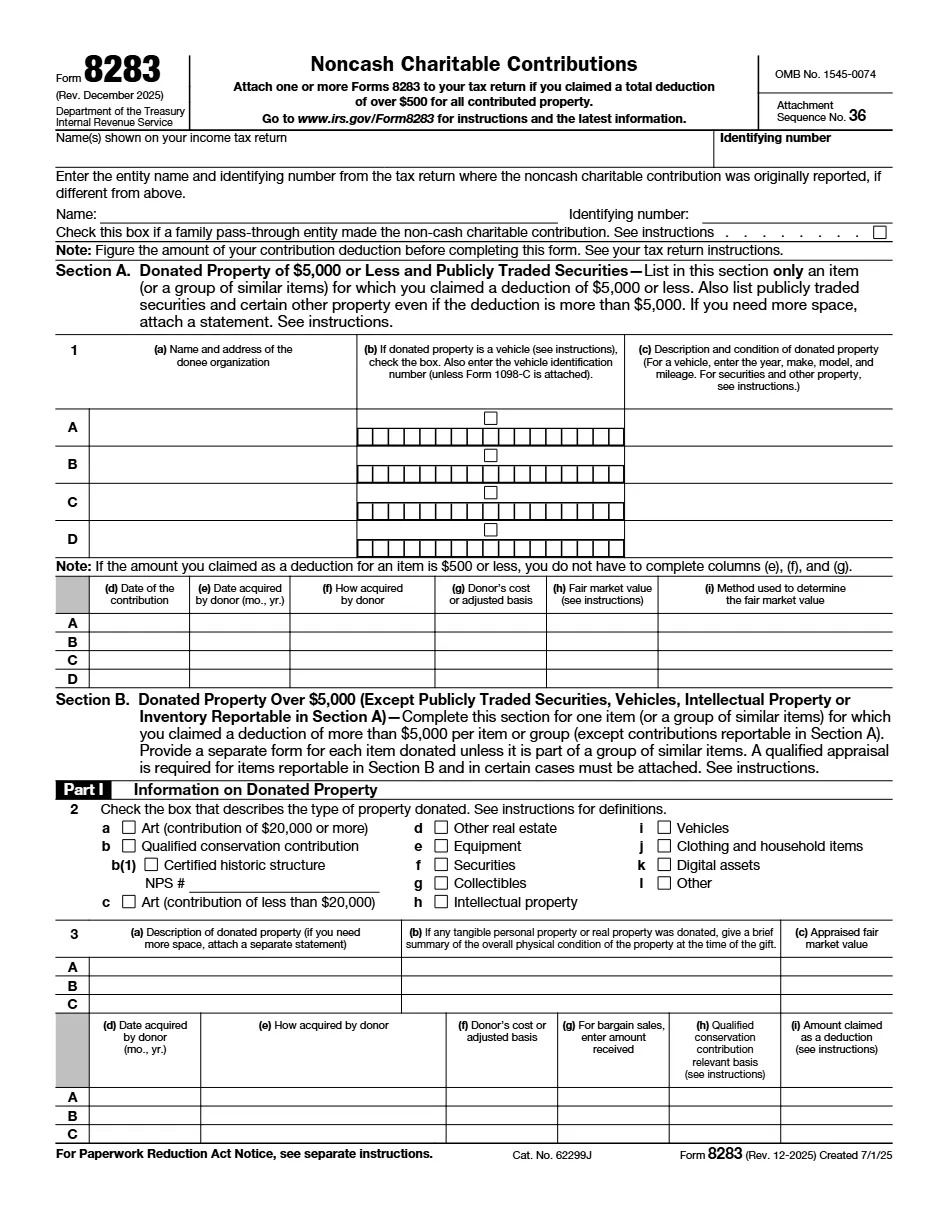
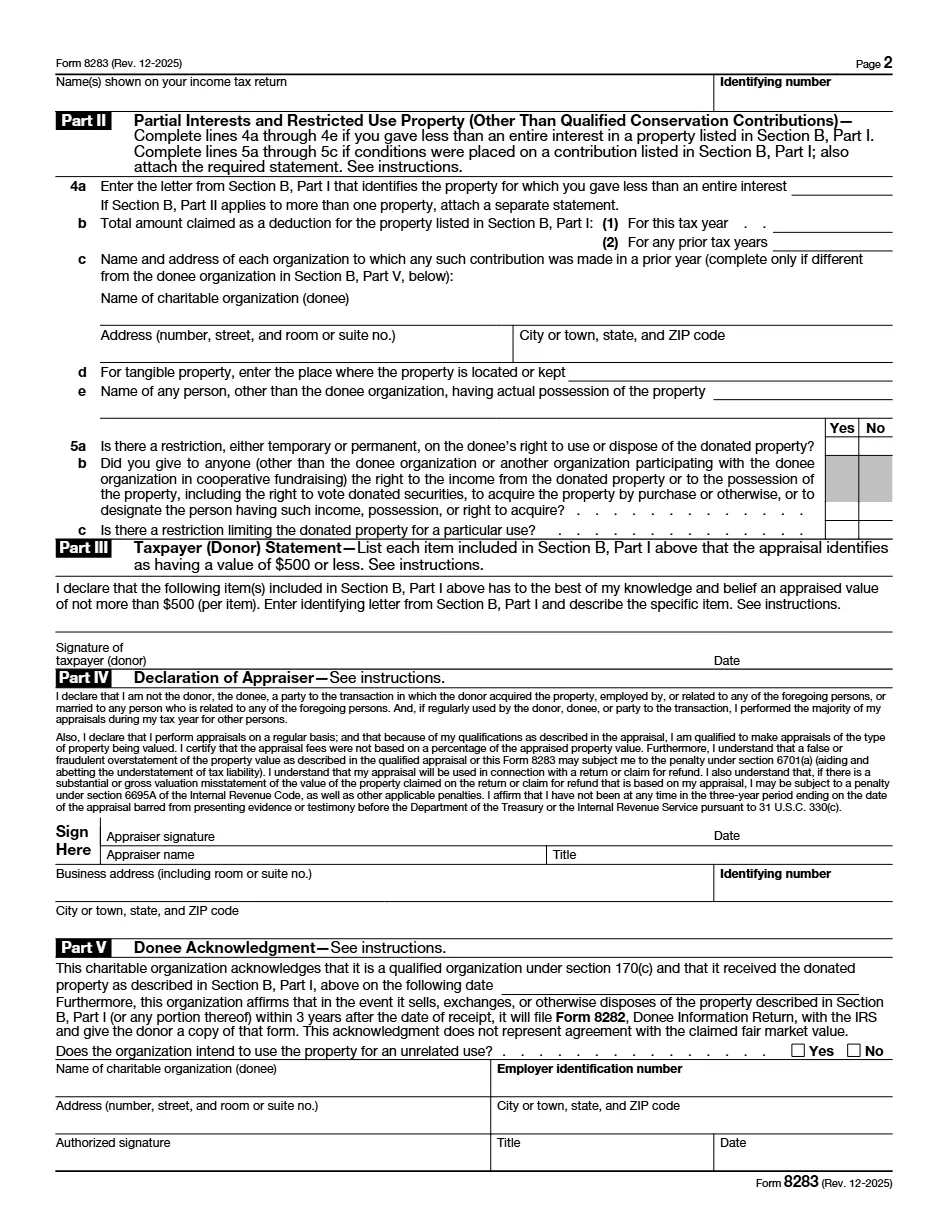
AppraiseItNow provides IRS-qualified charitable donation appraisals for Texas donors contributing noncash property to 501(c)(3) organizations. The IRS requires a qualified appraisal for noncash contributions exceeding $5,000 per item or group of similar items, with IRS Form 8283 completed and signed by both the appraiser and the donee organization. Texas donors giving art, collectibles, equipment, vehicles, or business interests frequently need these appraisals to substantiate federal income tax deductions. Our mission is to deliver defensible, USPAP-compliant valuations with exceptional speed, professionalism, and client service.
AppraiseItNow serves clients throughout the state with both online and onsite appraisal options, making the process straightforward regardless of your location. Our appraisers in Texas are credentialed through recognized professional organizations and deliver reports that meet IRS timing and documentation requirements.
We appraise a wide range of noncash assets commonly donated by Texas individuals and organizations, including:
We serve Texas individuals, families, business owners, and nonprofit advisors who need qualified appraisals to support noncash donation deductions, including high-net-worth donors in Houston, Dallas, Austin, and San Antonio who regularly contribute art, equipment, vehicles, and business interests to charitable organizations.
Yes, AppraiseItNow provides charitable donation appraisals throughout Texas. Our qualified appraisers are experienced with IRS requirements and can support donors across the state, from major metros like Houston and Dallas to rural areas.
We appraise a wide range of assets for charitable donation purposes, including vehicles, artwork, antiques, jewelry, collectibles, business interests, equipment, and inventory. Each appraisal is tailored to meet IRS documentation standards for noncash contributions.
Yes, all of our charitable donation appraisals follow the Uniform Standards of Professional Appraisal Practice (USPAP). USPAP compliance is required by the IRS for qualified appraisals supporting noncash deduction claims.
Texas donors frequently contribute high-value assets, including ranch equipment, livestock, artwork, and business assets, to 501(c)(3) organizations. A qualified appraisal is required by the IRS to substantiate deductions on noncash donations exceeding $5,000, and without one, the deduction can be disallowed entirely.
Yes, many charitable donation appraisals can be completed remotely using photographs, documentation, and digital records you submit online. AppraiseItNow offers remote appraisal services across Texas, making the process straightforward regardless of your location.
Fees depend on the asset type and scope of the appraisal. Visit our pricing page for ranges or contact us.
Turnaround times vary by asset type:
Reports are prepared by qualified appraisers with relevant expertise in the asset category being valued. Each appraiser meets IRS criteria for a "qualified appraiser," including education, credentials, and demonstrated competency in the specific asset type.
Texas does not impose additional state-level requirements beyond federal IRS rules for charitable donation appraisals. All appraisals follow USPAP standards and IRS guidelines, including the qualified appraisal and qualified appraiser requirements for noncash donations above applicable thresholds.
You will need to provide a description of the asset, any available purchase records or provenance documentation, photographs where applicable, and the intended donation date. The more detail you can share upfront, the faster we can complete your appraisal.
Yes, our appraisals are prepared to meet IRS standards for qualified appraisals, including all required content elements and appraiser qualifications. Texas donors can attach our reports to their tax returns with confidence that the documentation supports their claimed deductions.
Texas donors contributing noncash property valued over $5,000 must obtain a qualified appraisal and complete Section B of IRS Form 8283, which includes the appraiser's signature and declaration. The appraisal must be dated no earlier than 60 days before the donation and received before the tax return due date, including extensions.
When a Texas charity sells donated property valued over $5,000 within three years, it is required to file IRS Form 8282 to report the sale. This filing notifies the IRS and the donor, and any discrepancy between the reported sale price and the donor's claimed fair market value can trigger scrutiny of the original deduction.
Yes, donors in Houston contributing art or antiques valued over $20,000 must attach a complete copy of the qualified appraisal to their tax return, in addition to the completed IRS Form 8283 with the appraiser's signature in Section B. This threshold applies uniformly under federal IRS rules.
Appraisals for tangible personal property, such as antiques or collectibles, must include a thorough description of the item's physical condition, along with the donation date, provenance, rarity, and relevant market comparisons. These elements are essential for USPAP-compliant reports and help prevent IRS denials of the claimed deduction.
Yes, charitable remainder trusts funded with qualifying Texas assets require a full fair market value appraisal of the contributed property. IRS deduction factors are then applied to that appraised value to calculate the donor's allowable charitable contribution.