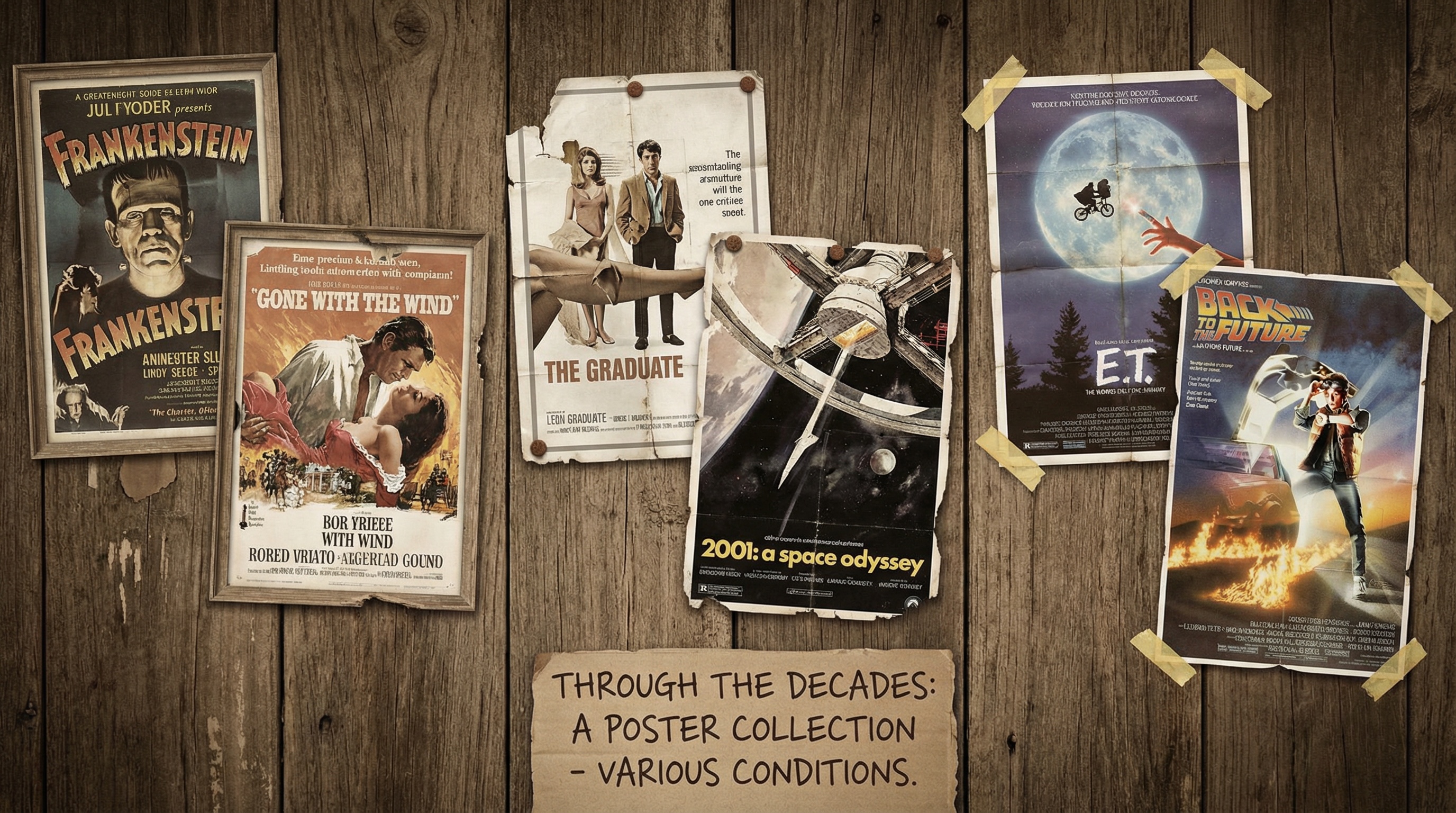
If you've discovered a vintage movie poster, concert flyer, or old advertisement tucked away in an attic and you're wondering what it's really worth, you're not alone. Many people stumble upon these pieces of ephemera without realizing they might be holding something valuable.
Quick answer: The value of vintage posters and ephemera depends on age, condition, rarity, subject matter, and market demand. Original movie posters from the 1960s-80s in excellent condition can range from $50 to several thousand dollars, while rare concert posters or travel advertisements may command even higher prices.
Pro tip: Before attempting any cleaning or restoration, get a professional assessment. Well-meaning attempts to "fix" a poster often reduce its value significantly.
At AppraiseItNow, our USPAP-compliant, IRS-qualified appraisers have evaluated thousands of vintage posters and ephemera pieces for insurance, estate, donation, and sale purposes. In this guide, you'll learn how to identify value factors, assess condition, understand market trends, and determine when you need a formal appraisal.
Key factors that drive poster and ephemera values
Understanding what makes one poster worth $50 and another worth $5,000 comes down to several critical factors working together. Think of it like evaluating a used car - age matters, but condition, rarity, and demand determine the final price.
Age and historical period play a significant role, but newer doesn't always mean less valuable. Original movie posters from the 1970s-80s often outperform pieces from the 1940s-50s due to higher collector demand. Concert posters from iconic venues like the Fillmore in the 1960s command premium prices regardless of the band's current popularity.
Condition and preservation can make or break a poster's value. A mint condition piece might sell for 10 times more than the same poster with tears, stains, or tape damage. Professional grading considers factors like fading, creases, pin holes, and whether the poster has been trimmed or restored.
Rarity and print runs separate valuable originals from worthless reproductions. First-run movie posters printed for theater display are worth significantly more than later reprints or modern reproductions. Limited edition concert posters with small print runs naturally command higher prices.
Subject matter and cultural significance drive collector interest. Movie posters for cult classics, blockbuster franchises, or films featuring deceased stars tend to appreciate over time. Similarly, concert posters for legendary bands or historic venues maintain strong demand.
| Value Factor | High Impact | Medium Impact | Low Impact |
|---|---|---|---|
| Condition | Mint/Near Mint | Very Fine/Fine | Good/Poor |
| Rarity | Original print run <500 | Limited edition <5,000 | Mass produced |
| Subject | Iconic films/bands | Popular entertainment | Generic advertising |
| Age | 1960s-1980s peak eras | Pre-1960s or 1990s+ | Recent productions |
How to evaluate condition like a professional
Learning to assess condition accurately helps you understand your poster's potential value before seeking professional appraisal. Most collectors and appraisers use a standardized grading system similar to comic book or trading card evaluation.
Start by examining your poster under good lighting, looking for common condition issues. Tears and creases are the most obvious problems - even small tears at edges can significantly impact value. Staining and discoloration from age, moisture, or contact with acidic materials often cannot be reversed. Fading typically affects colors unevenly, with reds and blues fading faster than other colors.
Check for pin holes in corners, which indicate theater display but are generally acceptable for movie posters. However, tape residue or mounting damage from improper framing can severely reduce value. Trimming is particularly problematic - posters cut down from their original size lose substantial value even if the image remains intact.
Important note: Professional restoration can sometimes improve a poster's appearance, but it also changes its status from "original condition" to "restored," which affects collector perception and value differently depending on the piece.
The industry standard grading scale runs from Mint (perfect condition, no flaws) down to Poor (major damage affecting display quality). Most valuable posters fall in the Very Fine to Near Mint range, showing minimal wear consistent with age and original use.
Understanding originality, reprints, and reproductions
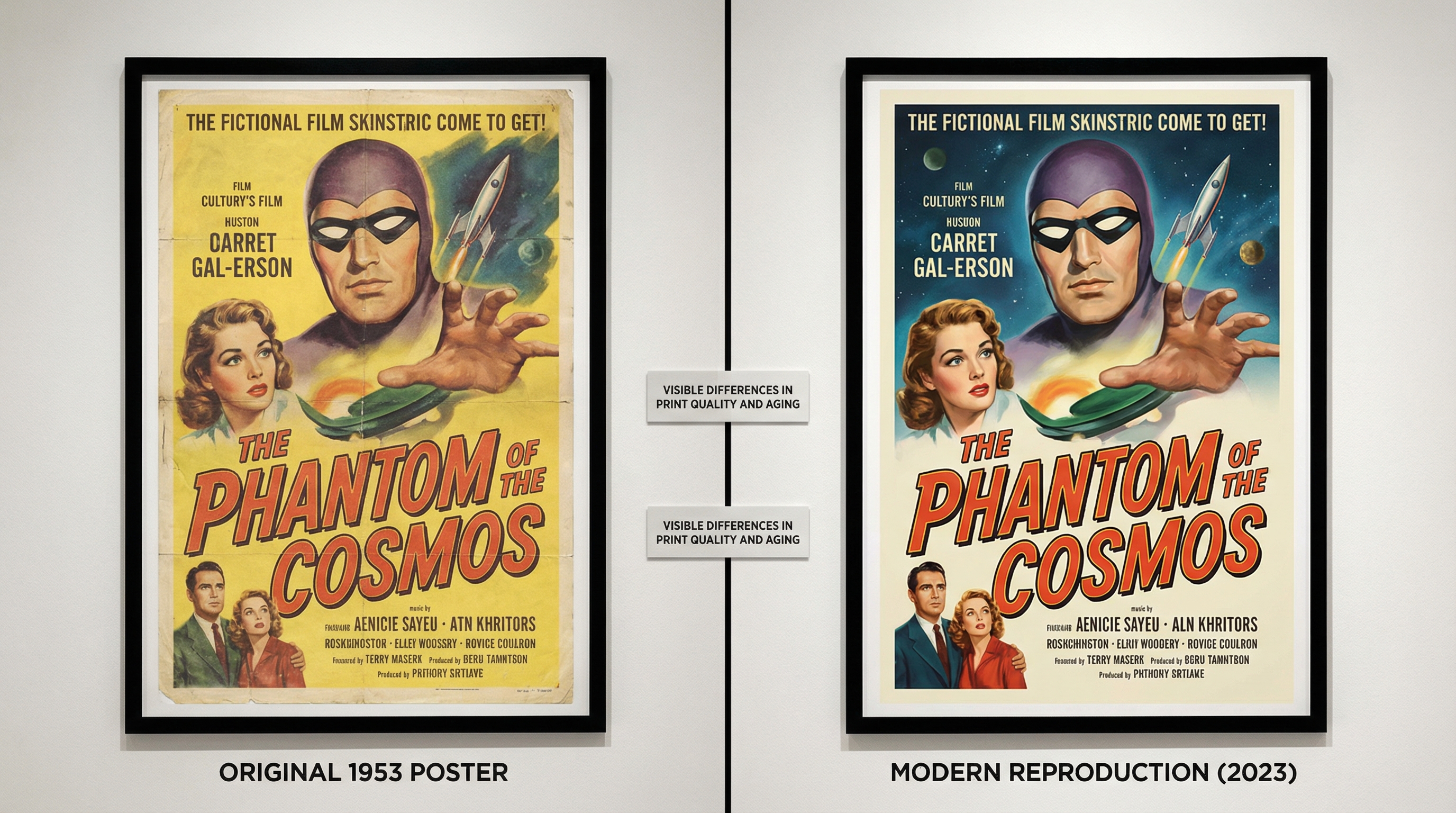
One of the biggest challenges in poster collecting involves distinguishing valuable originals from worthless reproductions. This skill becomes crucial when you're considering whether a piece merits professional appraisal.
Original movie posters were printed for specific theatrical releases and distributed to theaters. They typically feature studio logos, copyright information, and specific printer marks. The paper quality, printing process, and even the size can help identify authenticity. For example, original one-sheet movie posters measure 27" x 41", while many reproductions use different dimensions.
Concert poster originals often include venue information, ticket prices, and specific design elements that reproductions omit or alter. Many original rock posters were printed on heavier paper stock with specific printing techniques that modern reproductions struggle to replicate exactly.
Reprint identification requires examining printing quality, paper type, and copyright information. Modern reproductions often have sharper, more saturated colors than originals, and may include updated copyright dates or licensing information that didn't exist when the original was created.
Even some newer limited edition posters can hold significant value. Artist-signed prints, numbered editions, or posters from significant events (like farewell tours or movie premieres) may appreciate over time, especially if the print run was small.
When professional appraisal becomes necessary
While you can estimate your poster's general value range through online research, certain situations require formal, certified appraisal. Understanding when to invest in professional evaluation can save you money and ensure proper protection of valuable pieces.
Insurance coverage represents the most common reason for poster appraisal. Standard homeowner's policies typically limit coverage for collectibles, and without proper documentation, you might receive only a fraction of replacement value after a loss. Insurance companies require USPAP-compliant appraisals for scheduled coverage of high-value items.
Estate planning and inheritance situations often involve multiple posters or collections where beneficiaries need accurate valuations for fair distribution. Professional appraisals provide legally defensible values that help prevent family disputes and ensure proper tax reporting.
Charitable donations offer significant tax benefits, but the IRS requires qualified appraisals for non-cash donations valued over $5,000. A certified appraisal ensures you can claim the full deductible value while meeting federal requirements.
Cost consideration: Professional appraisals typically cost $300-800 depending on complexity, but this investment often pays for itself through proper insurance coverage or tax benefits. For collections worth over $2,000, formal appraisal usually makes financial sense.
Sale preparation benefits from professional valuation when you're dealing with rare or potentially high-value pieces. An appraisal provides credible documentation that supports your asking price and builds buyer confidence.
At AppraiseItNow, we offer both online and onsite appraisal options nationwide. Our certified appraisers examine your pieces thoroughly, research comparable sales, and provide detailed reports accepted by insurance companies, courts, and the IRS. The process typically takes 5-10 business days from submission to final report delivery.
Understanding your vintage posters' true value protects your investment and helps you make informed decisions about insurance, sale, or donation. Whether you're dealing with a single movie poster or an entire collection, professional appraisal ensures you have the documentation needed for any situation that might arise.