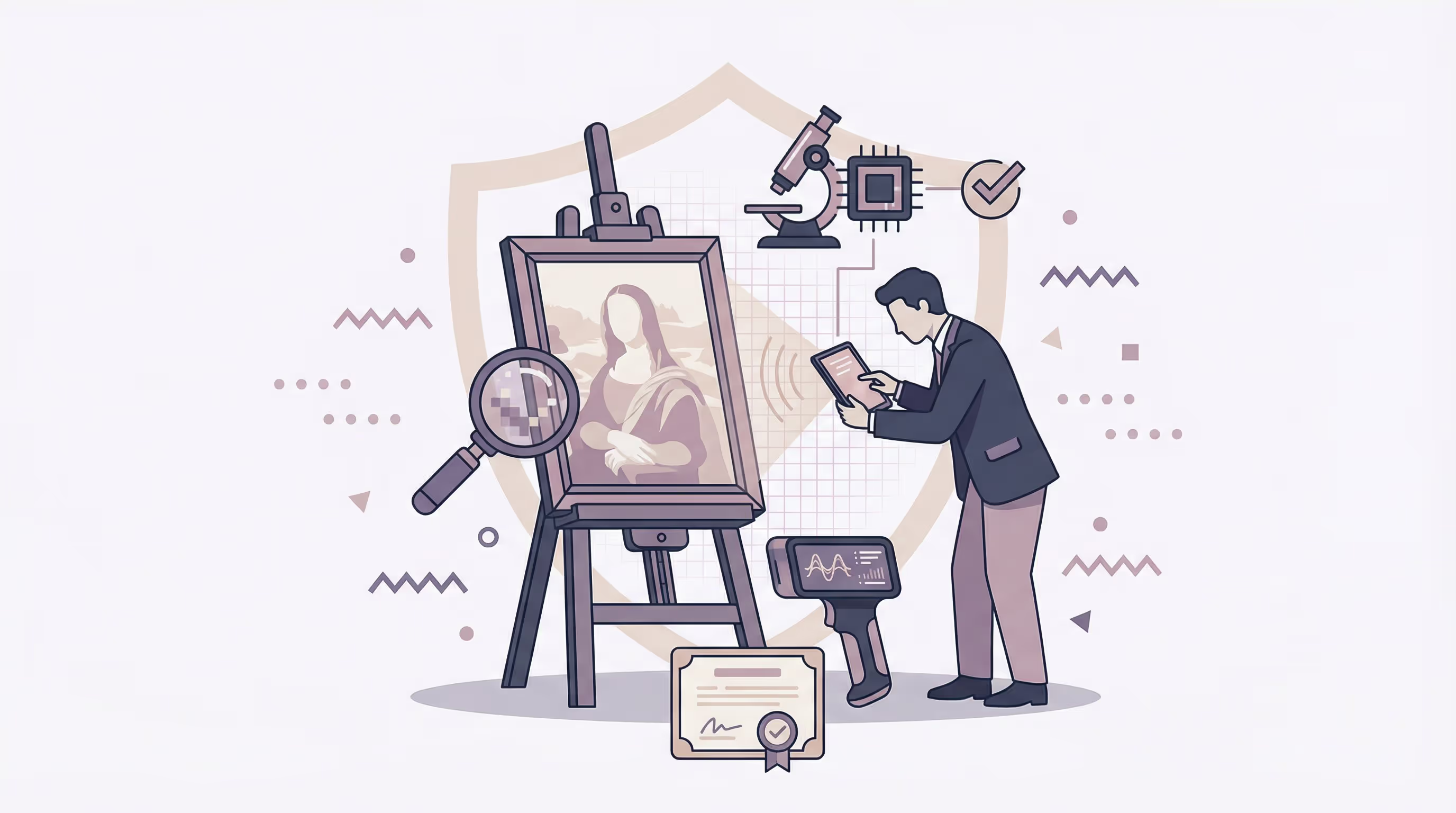
Technology in Art Authentication Advanced Appraisal Techniques Guide

Last Updated on Dec 26, 2025
Originally Published on Dec 26, 2025
Thank you! Your submission has been received!
Oops! Something went wrong while submitting the form.
Nationwide Service
Onsite or Online
USPAP-Compliant
IRS Qualified
DEFENSIBLE, USPAP-COMPLIANT APPRAISAL REPORTS — QUALIFIED FOR THE IRS, INSURANCE AGENGIES, LENDERS, AND MORE.
Advanced technology equipment analyzing artwork in a modern laboratory setting

The global art forgery market costs collectors and institutions over $6 billion annually, but breakthrough technologies are changing how we authenticate artwork forever. From AI-powered analysis to sophisticated imaging techniques, modern art authentication has evolved far beyond traditional visual inspection methods.

Technology now enables appraisers to detect forgeries invisible to the naked eye, analyze materials at the molecular level, and compare artworks against vast databases in minutes rather than months. These advancements are making art authentication faster, more accurate, and surprisingly more affordable for collectors and institutions alike.

Quick fact: Digital imaging combined with AI can now detect subtle brushstroke patterns unique to individual artists with 95% accuracy, revolutionizing how we verify authenticity.

This guide explores the cutting-edge technologies transforming art authentication, their practical benefits, and what you need to know about modern appraisal techniques. Whether you're a collector, dealer, or simply curious about how technology protects the art world from fraud, you'll discover actionable insights that matter today.

How technology revolutionizes artwork authentication

Modern authentication technology works by revealing details completely invisible during traditional visual examination. Digital imaging captures artwork at resolutions far exceeding human vision, while specialized lighting reveals hidden layers, alterations, and underlying compositions that tell the true story of a piece's creation.

X-ray analysis penetrates surface layers to expose the artist's original sketches, changes made during creation, and any later modifications. This technique recently helped authenticate a disputed Picasso by revealing his characteristic underdrawing style beneath the final paint layers.

Infrared and ultraviolet light expose different aspects of artwork creation. Infrared reveals carbon-based sketches and pentimenti (artist's changes), while UV light shows restoration work, modern materials, and age-related changes in varnishes and pigments. Understanding the impact of restoration and conservation on art appraisals is crucial when evaluating these technological findings.

Split-screen comparison showing artwork under normal light versus infrared analysis revealing hidden details

Database comparison represents perhaps the most powerful advancement in authentication technology. Sophisticated algorithms can now compare brushstroke patterns, color palettes, and compositional elements against verified works by the same artist, identifying subtle inconsistencies that might indicate forgery.

Machine learning systems continuously improve their accuracy by analyzing thousands of authenticated works, learning to recognize the unique "fingerprints" that distinguish genuine pieces from sophisticated fakes. This technological evolution is particularly relevant when appraising modern and contemporary art, where authentication challenges can be especially complex.

Essential technologies transforming art appraisals

Digital imaging forms the foundation of modern art authentication, creating ultra-high-resolution records that preserve every detail of an artwork's surface. These images serve as permanent documentation and enable remote consultation with experts worldwide, dramatically expanding access to specialized knowledge.

Spectroscopy analyzes the chemical composition of pigments and binding agents, revealing whether materials match those available during the supposed period of creation. This technique recently exposed a "17th-century" painting that contained titanium white, a pigment not invented until 2026.

Artificial intelligence now processes visual data faster and more consistently than human experts. AI systems can identify subtle patterns in brushwork, detect anomalies in aging patterns, and flag potential concerns for human review. However, these systems supplement rather than replace human expertise, as discussed in our guide on appraising fine art.

TechnologyPrimary UseAccuracy RateTime RequiredDigital ImagingSurface documentation98%1-2 hoursX-ray AnalysisHidden layer detection95%2-4 hoursAI Pattern RecognitionStyle verification93%MinutesSpectroscopyMaterial analysis99%1-3 hours

Blockchain technology is emerging as a powerful tool for provenance tracking, creating immutable records of ownership and transaction history. This technology addresses one of authentication's biggest challenges by providing verifiable documentation of an artwork's journey from creation to current ownership. Learn more about the role of provenance in art appraisals and how it affects valuation.

Key insight: Combining multiple technologies provides exponentially better results than relying on any single method, with comprehensive tech-enhanced appraisals achieving over 99% accuracy in detecting forgeries.

Benefits and limitations of tech-enhanced authentication

Technology delivers three primary advantages that transform the authentication process. Speed represents the most immediate benefit, with comprehensive analysis now possible in hours rather than the weeks or months traditional methods required. This acceleration enables faster transactions and reduces uncertainty for buyers and sellers.

Accuracy improvements are equally significant. While human experts might disagree on attribution, technological analysis provides objective data that supports or challenges subjective assessments. The combination of human expertise with technological precision creates more reliable authentication than either approach alone.

Cost reduction occurs through several mechanisms. Remote analysis capabilities eliminate travel expenses for expert consultation. Automated data collection reduces labor costs. Early detection of potential issues prevents expensive mistakes and lengthy legal disputes. Understanding factors that influence artwork appraisal costs helps collectors budget appropriately for these services.

However, technology also introduces new challenges. Sophisticated forgers increasingly understand these detection methods and develop countermeasures. Some authentication technologies require expensive equipment and specialized training, potentially creating barriers for smaller appraisal firms.

The human element remains irreplaceable for interpreting technological findings within historical and artistic context. Technology provides data, but experienced appraisers must evaluate that data alongside traditional knowledge about artistic techniques, historical periods, and market factors. This is why hiring a professional for artwork appraisals remains essential even in the digital age.

Professional appraiser using tablet to analyze digital imaging results while examining physical artwork

Future developments in art authentication technology

Emerging technologies promise even more sophisticated authentication capabilities. Quantum sensors may soon detect minute variations in material composition that current methods cannot measure. Advanced AI systems are learning to recognize individual artist's techniques with unprecedented precision.

Portable authentication devices are becoming smaller and more powerful, enabling on-site analysis that previously required laboratory conditions. These developments will make advanced authentication accessible to smaller galleries, auction houses, and private collectors. The evolution of art appraisals in the digital age continues to reshape how we approach valuation and authentication.

Collaborative databases are expanding globally, creating comprehensive reference libraries that improve authentication accuracy across all periods and styles. As these databases grow, pattern recognition becomes more reliable and forgery detection more sophisticated.

Looking ahead: Integration of multiple emerging technologies suggests that within five years, comprehensive authentication analysis may be possible using handheld devices, democratizing access to advanced authentication capabilities.

The authentication landscape continues evolving rapidly, but the fundamental principle remains constant. Technology enhances human expertise rather than replacing it, creating more reliable, efficient, and accessible authentication services for everyone in the art world. For collectors seeking to understand their pieces better, reviewing what to expect during an artwork appraisal can help prepare for the modern authentication process.

Technology has transformed art authentication from a subjective art into an objective science, providing unprecedented accuracy and accessibility. Whether you're considering a significant art purchase, need insurance documentation, or want to verify family heirlooms, modern tech-enhanced appraisals offer the reliability and speed today's art market demands. AppraiseItNow combines cutting-edge authentication technology with certified expertise to deliver comprehensive, USPAP-compliant appraisals that protect your investments and provide peace of mind.

FAQ

What is the importance of technology in art authentication?

Technology is crucial in art authentication because it reveals details completely invisible to the naked eye, providing objective data to support or challenge subjective assessments. Modern tech can detect forgeries with up to 99% accuracy when multiple methods are combined, analyze materials at the molecular level, and compare artworks against vast databases in minutes rather than months. This technological revolution has made authentication faster, more accurate, and more affordable while helping protect the art world from the $6 billion annual losses due to forgery.

How can AI and machine learning help authenticate artwork?

AI and machine learning systems can detect subtle brushstroke patterns unique to individual artists with 95% accuracy by analyzing thousands of authenticated works to learn the unique "fingerprints" that distinguish genuine pieces from sophisticated fakes. These systems process visual data faster and more consistently than human experts, identifying anomalies in aging patterns and flagging potential concerns for human review. However, AI supplements rather than replace human expertise, as experienced appraisers must still interpret technological findings within historical and artistic context.

What types of technology are commonly used to evaluate artwork?

The most commonly used technologies include digital imaging for ultra-high-resolution surface documentation (98% accuracy), X-ray analysis for detecting hidden layers and underdrawings (95% accuracy), infrared and ultraviolet light to reveal carbon-based sketches and restoration work, spectroscopy for chemical analysis of pigments and binding agents (99% accuracy), and AI pattern recognition for style verification (93% accuracy). Blockchain technology is also emerging for provenance tracking, creating immutable records of ownership and transaction history.

Are there any risks associated with using technology to authenticate artwork?

Yes, there are several risks including sophisticated forgers who increasingly understand detection methods and develop countermeasures, expensive equipment requirements that may create barriers for smaller appraisal firms, and the potential for over-reliance on technology without proper human interpretation. Additionally, some authentication technologies require specialized training, and the human element remains irreplaceable for interpreting technological findings within historical and artistic context. Technology provides data, but experienced appraisers must evaluate that data alongside traditional knowledge about artistic techniques and historical periods.

Related Appraisals We Offer

Related Articles

APPRAISEITNOW APPRAISERS ARE BEST-IN-CLASS & CREDENTIALED BY LEADING APPRAISAL ORGANIZATIONS LIKE THE ISA, ASA, & MORE.