Insurance coverage and claims create another critical need. When you're setting coverage limits or filing a claim after damage or theft, insurance companies require documented proof of value. Without proper appraisals, you risk being underinsured or having claims denied.
Estate planning, divorce proceedings, and partner buyouts also trigger appraisal requirements. Courts and attorneys need objective, third-party valuations to ensure fair asset division. Your ex-partner's opinion of equipment value won't hold up in legal proceedings.

A certified restaurant equipment appraiser performs four main functions that distinguish their work from informal estimates or broker opinions.
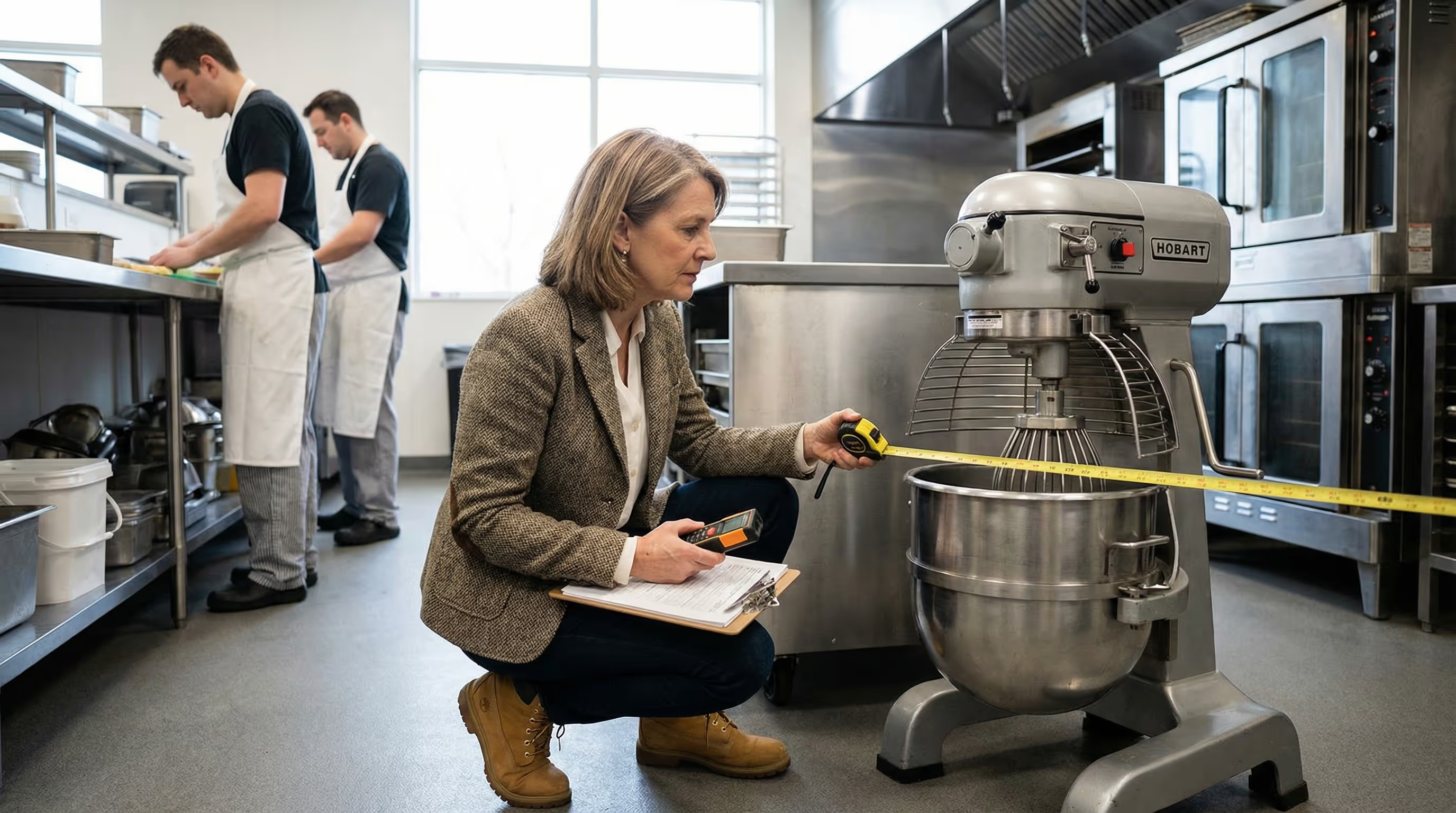
Inspecting and documenting equipment forms the foundation of every appraisal. Appraisers examine each piece of equipment, noting its condition, age, manufacturer, model, and serial number. They photograph equipment and document any modifications, damage, or unusual wear patterns that affect value.
Researching market data and comparable sales provides the evidence base for valuations. Professional appraisers maintain databases of recent sales, auction results, and dealer pricing for restaurant equipment. They don't rely on asking prices from online listings – they track actual transaction data.
Applying valuation methods and professional standards ensures consistency and defensibility. Appraisers use established approaches like cost, market comparison, and income methods. They follow Uniform Standards of Professional Appraisal Practice (USPAP), which courts, lenders, and government agencies recognize. These same standards apply whether you're getting food processing equipment appraised or commercial kitchen equipment valued.
Preparing a defensible written report delivers the final product. Professional appraisal reports include detailed descriptions, photographs, market analysis, and clear explanations of how values were determined. These reports stand up to scrutiny from lenders, attorneys, and insurance companies.
The key difference between professional appraisers and equipment dealers or brokers is independence and training. Appraisers have no financial interest in buying or selling your equipment – their job is providing objective opinions of value based on established standards.
Not all appraisals serve the same purpose. Understanding different types of value helps you request the right appraisal for your specific needs.
Fair Market Value (FMV) represents the price a willing buyer would pay a willing seller in an open market. This assumes both parties are knowledgeable, neither is under pressure to buy or sell, and the equipment remains in its current location and use. FMV works well for estate planning, tax reporting, and some financing situations.
Orderly Liquidation Value estimates what equipment would sell for if the business had reasonable time to market and sell assets. This scenario assumes a closing business with 6-12 months to find buyers. Banks often prefer orderly liquidation values for loan collateral because it reflects a more conservative, realistic selling scenario.
Forced Liquidation Value represents quick-sale prices under time pressure, like bankruptcy auctions. Values are typically 20-40% lower than orderly liquidation because buyers know sellers must move equipment quickly.
Replacement Cost New calculates what it would cost to replace equipment with new, similar items today. Insurance companies often use this standard for coverage purposes, though they may apply depreciation factors.
Your appraiser will recommend the appropriate value standard based on your intended use. SBA loans typically require orderly liquidation values, while insurance may need replacement cost figures. Similar considerations apply to beverage equipment appraisals and other specialized commercial equipment.
The type of value you need depends entirely on your purpose – using the wrong standard can result in financing denials or inadequate insurance coverage.
Professional appraisers use three established approaches to determine equipment values, often combining methods for more accurate results.
The cost approach starts with the current replacement cost of new equipment and applies depreciation for age, wear, and obsolescence. For a five-year-old convection oven that originally cost $8,000, an appraiser might apply 50% depreciation, arriving at a $4,000 value. This method works well for newer equipment with clear replacement costs.
The market approach compares your equipment to recent sales of similar items. Appraisers analyze auction results, dealer sales, and private transactions to establish value ranges. A 2018 Hobart mixer might be valued based on what similar mixers sold for in recent months, adjusted for condition differences.
The income approach considers how much revenue specific equipment generates, though this method is less common for individual pieces. It might apply to complete pizza production lines or specialized brewing equipment where the equipment directly drives measurable income.
Most appraisers combine approaches for better accuracy. They might use cost approach for newer items, market approach for common equipment with good sales data, and weight the results based on which method provides the most reliable indication of value for each piece.

Valuation MethodBest ForTypical UseCost ApproachNewer equipment, specialized itemsInsurance, replacement planningMarket ApproachCommon equipment, good sales dataMost appraisal purposesIncome ApproachRevenue-generating systemsSpecialized equipment analysis
Restaurant equipment appraisal costs vary significantly based on several factors, but understanding typical ranges helps you budget appropriately.
Most single-location appraisals cost between $1,500 and $5,000, depending on equipment volume and complexity. A small café with basic equipment might cost $1,500-2,500, while a full-service restaurant with extensive kitchen equipment could reach $4,000-5,000. Multi-unit operations or complex facilities like breweries often cost more.
Fee structures typically follow hourly rates ($150-300 per hour) or flat project fees. Many appraisers prefer flat fees for straightforward assignments because it provides cost certainty for clients. Hourly billing usually applies to complex or unusual situations where scope is difficult to predict upfront.
Additional costs can include travel expenses for locations outside the appraiser's normal service area, rush fees for expedited reports (usually 25-50% premium), and charges for complex custom installations that require additional research.
The investment often pays for itself through better outcomes. A professional appraisal might help you negotiate $10,000 more in a restaurant sale, secure financing that wouldn't be approved with informal estimates, or receive full insurance claim payments instead of settlements based on guesswork. Learning how to select the right restaurant equipment appraiser ensures you get the best value for your investment.
When choosing an appraiser, focus on qualifications and experience rather than just price. The cheapest option often lacks proper credentials or restaurant-specific knowledge, potentially creating problems when lenders or insurers review the report.
A quality appraisal can save or make you significantly more money than it costs through better negotiations, financing approvals, and insurance settlements.
Professional restaurant equipment appraisals provide the objective, defensible valuations you need for major business decisions. Whether you're buying, selling, financing, or protecting your investment through insurance, working with qualified appraisers ensures you have the documentation that lenders, insurers, courts, and other parties will accept. Understanding the basics of restaurant equipment appraisals and what you need to know about restaurant equipment appraisals positions you to make informed decisions about when and how to obtain professional valuations.
At AppraiseItNow, we provide USPAP-compliant restaurant equipment appraisals nationwide, with certified appraisers who understand the unique challenges of valuing commercial kitchen equipment. Our reports are accepted by major lenders, insurance companies, and courts, giving you confidence in your equipment valuations when it matters most.
A restaurant equipment appraisal is a formal, written opinion of value prepared by a qualified appraiser for specific equipment on a specific date. You need one for financing applications, insurance coverage, buying or selling a restaurant, legal proceedings like divorce or estate planning, and tax reporting. Unlike informal estimates, professional appraisals follow USPAP standards and produce defensible reports that lenders, insurers, courts, and the IRS accept.
Restaurant equipment appraisals typically range from $1,500 to $5,000 for single locations, depending on equipment volume and complexity. Costs vary based on the number of items, locations, need for on-site visits, travel requirements, and timeline. Appraisers may charge hourly rates ($150-300 per hour) or flat project fees, with additional costs for rush jobs or extensive travel.
Fair Market Value represents the price a willing buyer would pay a willing seller in an open market with no pressure to buy or sell. Orderly Liquidation Value estimates what equipment would sell for if the business had reasonable time (6-12 months) to market assets. Forced Liquidation Value reflects quick-sale prices under time pressure, typically 20-40% lower than orderly liquidation. The type you need depends on your purpose - FMV for estate planning, liquidation values for loan collateral.
Prepare a complete equipment inventory with item descriptions, make, model, serial numbers, purchase dates, and original costs. Gather invoices, receipts, maintenance records, warranty documents, and any prior appraisals. Take photos of equipment and ensure the appraiser has access during non-service hours. Organized preparation speeds the process, reduces costs, and ensures more accurate valuations.