Professional Laboratory Equipment Appraisal: Expert Valuation Process and Fair Market Value

Last Updated on Aug 23, 2025
Originally Published on Aug 23, 2025
Thank you! Your submission has been received!
Oops! Something went wrong while submitting the form.
Nationwide Service
Onsite or Online
USPAP-Compliant
IRS Qualified
DEFENSIBLE, USPAP-COMPLIANT APPRAISAL REPORTS — ACCEPTED BY 10,000+ ORGANIZATIONS
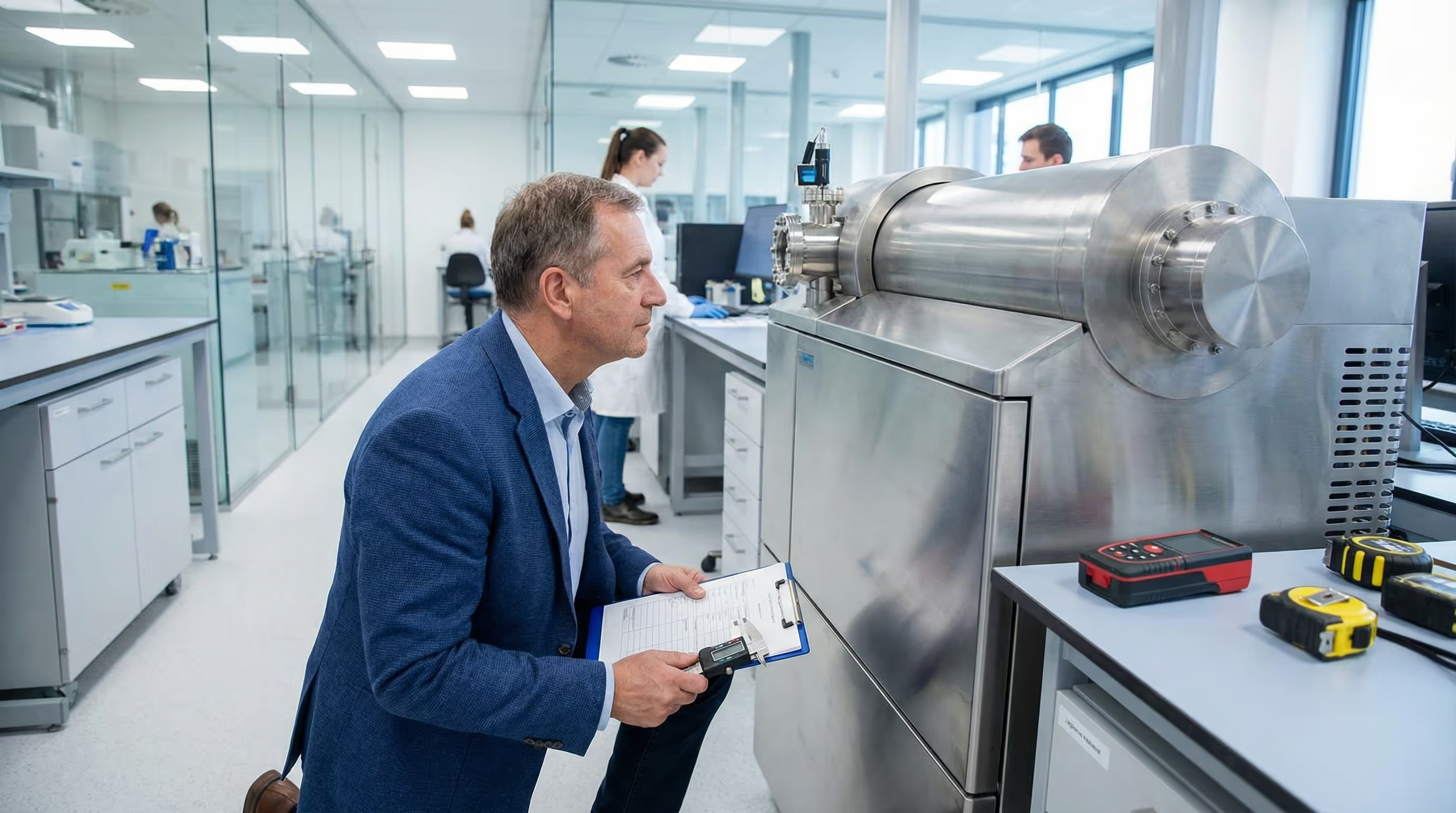
Professional appraiser inspecting laboratory equipment with clipboard and measuring tools in a modern scientific facility

If your lab had to prove the value of its equipment tomorrow—to an insurer, auditor, buyer, or the IRS—could you defend your numbers? Professional laboratory equipment appraisers exist to answer that question with documentation that stands up to scrutiny.

When you're managing expensive scientific instruments worth hundreds of thousands or millions of dollars, guessing at values or relying on outdated spreadsheets puts your organization at serious financial risk. A certified appraisal provides the defensible, USPAP-compliant documentation that insurers, lenders, auditors, and tax authorities require.

Key insight: Professional lab equipment appraisals typically cost 0.1% to 0.5% of the total equipment value but can prevent losses of 20-50% when insurance claims or tax deductions are challenged.

This guide explains exactly what professional lab equipment appraisers do, how they determine fair market value, what information they need from you, and how an appraisal helps with insurance, financial reporting, compliance, and resale decisions.

What is a professional laboratory equipment appraisal?

A professional laboratory equipment appraisal is an unbiased, USPAP-compliant opinion of value for scientific instruments and lab equipment. Unlike vendor quotes or internal estimates, these appraisals follow strict professional standards and provide documentation that holds up under legal and regulatory scrutiny.

Labs typically need professional appraisals for several critical situations. Insurance coverage requires accurate values to ensure adequate protection after theft, damage, or loss. Tax purposes demand certified appraisals for equipment donations, write-offs, or depreciation schedules that comply with IRS requirements. Mergers and acquisitions rely on defensible valuations to negotiate fair purchase prices and allocate assets properly.

Financial reporting and audits often require independent verification of fixed asset values, especially for publicly traded companies or organizations receiving federal grants. Litigation support becomes necessary when equipment values are disputed in lawsuits, divorce proceedings, or partnership dissolutions.

Professional appraisers can determine different types of value depending on your specific needs. Fair market value represents what a willing buyer would pay a willing seller in an open market. Orderly liquidation value estimates what equipment would bring if sold within a reasonable timeframe. Replacement cost new calculates what it would cost to replace equipment with similar functionality today.

Close-up of various laboratory instruments including microscopes, centrifuges, and analytical equipment with value assessment tags

The laboratory equipment appraisal process

Understanding the appraisal process helps you prepare effectively and ensures accurate results. The process typically follows seven structured steps that professional appraisers use to deliver reliable valuations.

Step 1: Define purpose and scope. Your appraiser will clarify why you need the appraisal—insurance, tax compliance, sale preparation, or financial reporting. This determines which valuation standards apply and what level of detail the report requires.

Step 2: Compile asset documentation. You'll provide equipment lists with make, model, serial numbers, purchase dates, and original costs. Maintenance records, calibration certificates, and warranty information help establish condition and remaining useful life.

Step 3: Conduct equipment inspection. The appraiser examines each piece of equipment, either onsite or through detailed virtual assessment. They document physical condition, functionality, configuration, and any modifications or accessories that affect value.

Step 4: Research market data. Professional appraisers access multiple data sources including dealer networks, auction results, manufacturer pricing, and secondary market transactions to establish current market conditions for similar equipment.

Step 5: Apply valuation methods. Depending on the equipment type and purpose, appraisers use cost approach (replacement cost less depreciation), market approach (comparable sales), or income approach (economic benefit generated) to determine value.

Important note: The entire appraisal process typically takes 2-4 weeks from initial contact to final report delivery, depending on the number of assets and complexity of the assignment.

How appraisers determine fair market value

Fair market value represents the price that laboratory equipment would sell for between knowledgeable parties in an open market, with neither buyer nor seller under pressure to complete the transaction quickly.

Professional appraisers use three primary approaches to establish fair market value, often combining multiple methods for accuracy. The cost approach calculates what it would cost to replace the equipment today, then subtracts depreciation for age, wear, and technological obsolescence. This works well for newer equipment or items with active manufacturing support.

The market approach compares your equipment to recent sales of similar instruments, adjusting for differences in age, condition, configuration, and market conditions. This approach works best when sufficient comparable sales data exists, which can be challenging for highly specialized or custom laboratory instruments.

The income approach estimates value based on the economic benefit the equipment generates through increased productivity, cost savings, or revenue generation. This method applies mainly to equipment that directly contributes to billable services or research outcomes.

For example, a five-year-old mass spectrometer might have a replacement cost of $200,000 new, but market data shows similar used units selling for $120,000-$140,000. The appraiser would consider the specific model's reputation, maintenance history, and remaining manufacturer support to conclude a fair market value within that range.

Key factors that influence laboratory equipment value

Several critical factors determine how much your laboratory equipment is worth in today's market. Understanding these helps you maintain value and prepare for appraisals more effectively.

Physical condition and functionality top the list of value drivers. Equipment that operates within manufacturer specifications and shows minimal wear commands premium pricing. Calibration status matters significantly—instruments with current calibration certificates and documented maintenance histories retain more value than neglected equipment.

Technology relevance and obsolescence heavily impact modern laboratory instruments. Rapidly evolving fields like genomics and proteomics see equipment values decline quickly as newer technologies emerge. Conversely, proven technologies with stable applications hold value better over time.

Brand reputation and service support influence both current value and future marketability. Equipment from manufacturers with strong service networks and parts availability maintains higher values than orphaned products from companies that no longer support older models.

Configuration and accessories can significantly affect value. Complete systems with all original accessories, software licenses, and documentation command higher prices than incomplete units. Custom modifications may increase or decrease value depending on their utility to potential buyers.

Professional appraiser using tablet to document laboratory equipment specifications while standing next to high-tech analytical instruments

When professional appraisals become essential

While internal estimates might seem sufficient for routine purposes, certain situations absolutely require professional appraisals to protect your organization from financial and legal risks.

Insurance claims represent the most common scenario where professional appraisals prove their worth. When equipment is stolen, damaged, or destroyed, insurance companies often challenge internal valuations, especially for high-value instruments. A professional appraisal provides the documentation needed to secure full compensation without lengthy disputes.

IRS compliance demands certified appraisals for non-cash charitable donations exceeding $5,000 and equipment write-offs that might face scrutiny. Tax authorities regularly challenge unsupported valuations, and penalties for overstatement can be severe. Professional appraisals provide the credible documentation that satisfies IRS requirements.

Financial reporting and audits increasingly require independent verification of fixed asset values, particularly for organizations with significant equipment holdings. Auditors look for defensible support for balance sheet values, and professional appraisals provide the third-party validation they need.

Risk consideration: Organizations that rely on internal estimates for insurance coverage often discover they're underinsured by 30-60% when claims occur, resulting in substantial out-of-pocket losses.

Litigation support becomes crucial when equipment values are disputed in partnership dissolutions, divorce proceedings, or business valuations. Courts require credible expert testimony backed by professional standards, which only certified appraisers can provide.

The cost of professional appraisals—typically a small fraction of equipment value—provides significant protection against much larger potential losses from inadequate insurance coverage, tax penalties, or unfavorable legal settlements. Understanding what you need to know about lab equipment appraisal helps you make informed decisions about when to engage professional services.

Professional laboratory equipment appraisals provide the credible documentation your organization needs to make confident financial decisions and protect valuable assets. Whether you're dealing with insurance coverage, tax compliance, financial reporting, or strategic planning, working with qualified appraisers ensures you have defensible values that stand up to scrutiny.

Before scheduling your appraisal, it's important to prepare your lab equipment properly and understand common mistakes to avoid during the process. Additionally, knowing how to choose the right appraiser ensures you work with qualified professionals who understand your specific industry requirements.

At AppraiseItNow, our certified appraisers specialize in laboratory equipment valuation across clinical, research, and industrial settings. We provide USPAP-compliant reports that meet IRS, insurance, and audit requirements while helping you understand your equipment's true market value. Contact us today to discuss your specific appraisal needs and receive a detailed proposal for your laboratory equipment valuation project.

Frequently Asked Questions About Professional Laboratory Equipment Appraisals

What is a laboratory equipment appraisal and why do I need one?

A laboratory equipment appraisal is a formal, USPAP-compliant valuation of scientific instruments and lab equipment performed by a qualified professional appraiser. You need one to ensure accurate insurance coverage, comply with IRS requirements for tax purposes, support financial reporting and audits, or provide defensible documentation for mergers, acquisitions, and legal proceedings.

How do professional appraisers determine the fair market value of laboratory equipment?

Professional appraisers determine fair market value by conducting physical inspections, researching comparable sales data, analyzing replacement costs, and considering factors like age, condition, technology relevance, and market demand. They apply recognized valuation approaches—market, cost, and income methods—to develop a supported value conclusion that meets professional standards.

What factors most significantly affect laboratory equipment value?

Key factors include physical condition and functionality, calibration status, maintenance history, technological obsolescence, brand reputation and service support, configuration completeness with original accessories, and compliance with regulatory requirements. Equipment from reputable manufacturers with current calibration certificates and documented maintenance typically retains higher value.

When should I get my laboratory equipment professionally appraised?

You should get professional appraisals when filing insurance claims, preparing for mergers or acquisitions, complying with IRS requirements for donations or tax reporting, facing financial audits, involved in litigation or disputes, or when internal estimates put your organization at risk of being underinsured or facing regulatory challenges.

Related Appraisals We Offer

Related Articles

BEST-IN-CLASS APPRAISERS, CREDENTIALED BY: