Professional Artifact and Antiquity Appraisal Guide

Last Updated on Oct 31, 2025
Originally Published on Oct 31, 2025
Thank you! Your submission has been received!
Oops! Something went wrong while submitting the form.
Nationwide Service
Onsite or Online
USPAP-Compliant
IRS Qualified
DEFENSIBLE, USPAP-COMPLIANT APPRAISAL REPORTS — ACCEPTED BY 10,000+ ORGANIZATIONS
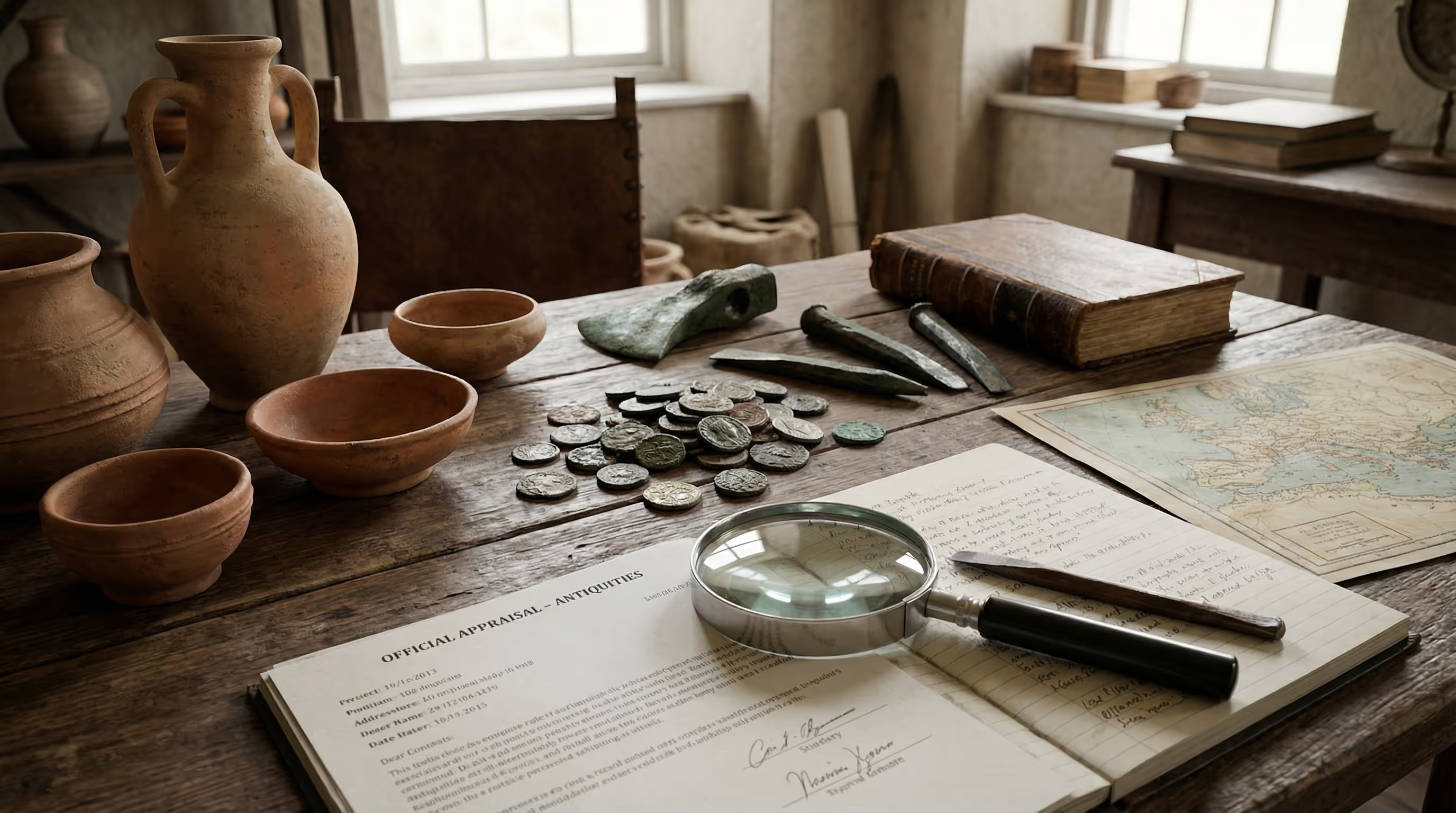
ancient artifacts including pottery, coins, and tools displayed on an appraisal table with magnifying glass and documentation

Introduction

Finding yourself with a potential historical artifact can be both exciting and overwhelming. Whether you've inherited a mysterious ancient piece, discovered something while renovating your home, or purchased what might be a valuable antiquity, determining its true worth requires professional expertise. Artifact and antiquity appraisals involve specialized knowledge of history, materials, and market values that go far beyond typical antique evaluations.

Professional appraisers use scientific methods, historical research, and market analysis to determine accurate values while ensuring legal compliance. The process typically takes 1-3 weeks and costs between $300-800 per item, depending on complexity and required testing.

Key insight: Professional artifact appraisals protect you from three major risks: underinsuring valuable pieces, unknowingly violating cultural property laws, and accepting lowball offers from uninformed buyers.

Understanding artifacts vs antiquities

The terms "artifact" and "antiquity" are often used interchangeably, but they have distinct meanings that affect both valuation and legal status. An artifact is any object made or modified by humans that provides evidence of past cultures or activities. This includes everything from ancient pottery shards to colonial-era tools. Antiquities, however, specifically refer to objects from ancient civilizations, typically those predating the medieval period.

This distinction matters because antiquities often face stricter legal restrictions and require more specialized expertise to authenticate. For example, a Civil War-era button would be considered an artifact, while a Roman coin would be classified as an antiquity. Both require professional appraisal, but antiquities may need additional documentation regarding their legal acquisition and export status.

comparison chart showing different types of historical items categorized as artifacts vs antiquities

The age threshold isn't the only factor. Cultural significance, archaeological context, and legal protections all influence how items are classified and valued. Items from indigenous cultures, regardless of age, may have special legal protections under laws like the Native American Graves Protection and Repatriation Act.

The professional appraisal process

Professional artifact appraisal follows a systematic approach that combines traditional expertise with modern scientific methods. The process begins with detailed documentation, including high-resolution photography from multiple angles, precise measurements, and weight recording. Appraisers examine the item's condition, noting any damage, repairs, or alterations that could affect value.

Research forms the backbone of accurate valuation. Appraisers consult academic databases, auction records, and museum collections to establish comparable sales and historical context. They verify provenance through documentation review, checking ownership history, purchase receipts, and any previous appraisals or scholarly publications mentioning the piece.

When necessary, scientific testing provides crucial authentication data. Thermoluminescence dating can determine when ceramic objects were last fired, while spectroscopic analysis identifies materials and manufacturing techniques. These tests aren't required for every item but become essential when authenticity questions arise or when dealing with high-value pieces.

Expert tip: Always request a written report that includes detailed photographs, research methodology, and comparable sales data. This documentation is essential for insurance, legal proceedings, or future sales.

The final appraisal report synthesizes all findings into a comprehensive valuation that meets professional standards. USPAP-compliant reports include the appraiser's qualifications, methodology used, and the specific purpose of the appraisal, whether for insurance, estate planning, or charitable donation.

Key factors determining value

Several interconnected factors determine an artifact's or antiquity's value, with condition being the most immediately apparent. Items in excellent condition command premium prices, while damage, restoration, or missing components significantly reduce value. However, even damaged pieces can be valuable if they're rare or historically significant.

Provenance carries enormous weight in valuation. Well-documented ownership history not only proves authenticity but can dramatically increase value. A Roman sculpture with clear excavation records and museum-quality documentation will be worth exponentially more than an identical piece with questionable origins.

Value FactorImpact on PriceExampleExcellent provenance+200-500%Museum deaccession vs unknown sourcePoor condition-30-80%Restored vs original surfaceRarity+100-1000%One of few known examplesCultural significance+50-300%Royal ownership vs common use

Rarity and cultural significance create the most dramatic value differences. A common Roman coin might be worth $50, while a rare imperial issue from the same period could command $5,000 or more. Similarly, items with connections to famous historical figures or significant events carry substantial premiums.

Market demand fluctuates based on collecting trends, museum exhibitions, and scholarly research. Recent archaeological discoveries can either increase interest in related items or flood the market with similar pieces, affecting values accordingly.

Choosing qualified appraisers

Selecting the right appraiser is crucial for accurate valuation and legal compliance. Look for professionals with specific experience in your type of artifact, not just general antique knowledge. Ancient coins require different expertise than Native American pottery or medieval manuscripts.

Professional credentials matter significantly. Certified appraisers should hold designations from recognized organizations like the American Society of Appraisers or the International Society of Appraisers. They must also comply with Uniform Standards of Professional Appraisal Practice, ensuring consistent methodology and ethical standards.

professional appraiser examining an ancient vessel with specialized tools and reference books

Avoid appraisers who offer to buy your items or suggest specific dealers. This creates a conflict of interest that can compromise valuation accuracy. Legitimate appraisers provide written reports with detailed methodology and maintain professional independence from potential buyers or sellers.

Geographic expertise can be important for certain types of artifacts. An appraiser specializing in Southwestern Native American pottery will provide more accurate valuations than a generalist, even if both hold similar credentials. Understanding how to choose the right appraiser for your antiques is essential for obtaining reliable valuations.

Warning: Be cautious of online appraisals for high-value or legally sensitive items. While convenient for preliminary assessments, complex artifacts often require physical examination and specialized testing that can't be conducted remotely.

Legal and ethical considerations

Artifact ownership involves complex legal considerations that vary by item type, origin, and discovery circumstances. Items removed from archaeological sites without proper permits are generally illegal to own or sell, regardless of when the removal occurred. This applies to artifacts found on both public and private land in many jurisdictions.

Cultural property laws protect items of significance to indigenous communities and foreign nations. The Native American Graves Protection and Repatriation Act requires return of certain items to tribal communities, while UNESCO conventions restrict trade in cultural property from many countries. Understanding the legal implications of antiques appraisals is critical before buying or selling.

Before purchasing or selling any artifact, verify its legal status through documentation review. Legitimate pieces should have clear ownership history dating back to before relevant protective legislation. When in doubt, consult with legal experts specializing in cultural property law.

Professional appraisers can help identify potential legal issues, but they're not legal advisors. If questions arise about an item's legal status, seek qualified legal counsel before proceeding with any transactions. The consequences of unknowingly dealing in illegal cultural property can include criminal charges and substantial financial penalties.

Professional artifact and antiquity appraisal requires specialized expertise that combines historical knowledge, scientific methods, and market understanding. Whether you need valuation for insurance, estate planning, or sale purposes, working with qualified professionals ensures accurate assessment while protecting you from legal and financial risks. Take time to research appraisers' credentials, understand the factors affecting your item's value, and always prioritize legal compliance in any decisions regarding historical artifacts.

FAQ

How much does it cost to appraise an artifact or antiquity?

Professional artifact and antiquity appraisals typically cost between $300-800 per item, depending on the complexity of research required and any scientific testing needed. Ethical appraisers charge by the hour or a flat fee for their work, never as a percentage of the item's value. You can request a written estimate once the appraiser has reviewed basic information about your artifact.

Can you appraise artifacts from photos only?

While preliminary assessments can sometimes be made from high-quality photographs, formal appraisals for insurance, legal, or tax purposes typically require physical examination of the artifact. This allows the appraiser to assess condition, materials, construction techniques, and authenticity markers that may not be visible in photos. For high-value or heavily forged categories, in-person inspection is essential.

Are there legal restrictions on selling artifacts I inherited?

Yes, there can be significant legal restrictions depending on the artifact's origin and type. Items protected under laws like NAGPRA, objects illegally exported from their countries of origin, or pieces taken from archaeological sites without proper permits may be illegal to sell. A qualified appraiser can help identify potential legal issues and recommend consulting with cultural property attorneys when necessary.

What's the difference between an artifact and an antiquity?

An artifact is any human-made object that provides evidence of past cultures, including items from recent centuries like Civil War buttons or colonial tools. Antiquities specifically refer to objects from ancient civilizations, typically predating the medieval period, such as Roman coins or Egyptian pottery. This distinction matters because antiquities often face stricter legal restrictions and require more specialized authentication expertise.

Related Appraisals We Offer

Related Articles

BEST-IN-CLASS APPRAISERS, CREDENTIALED BY: