

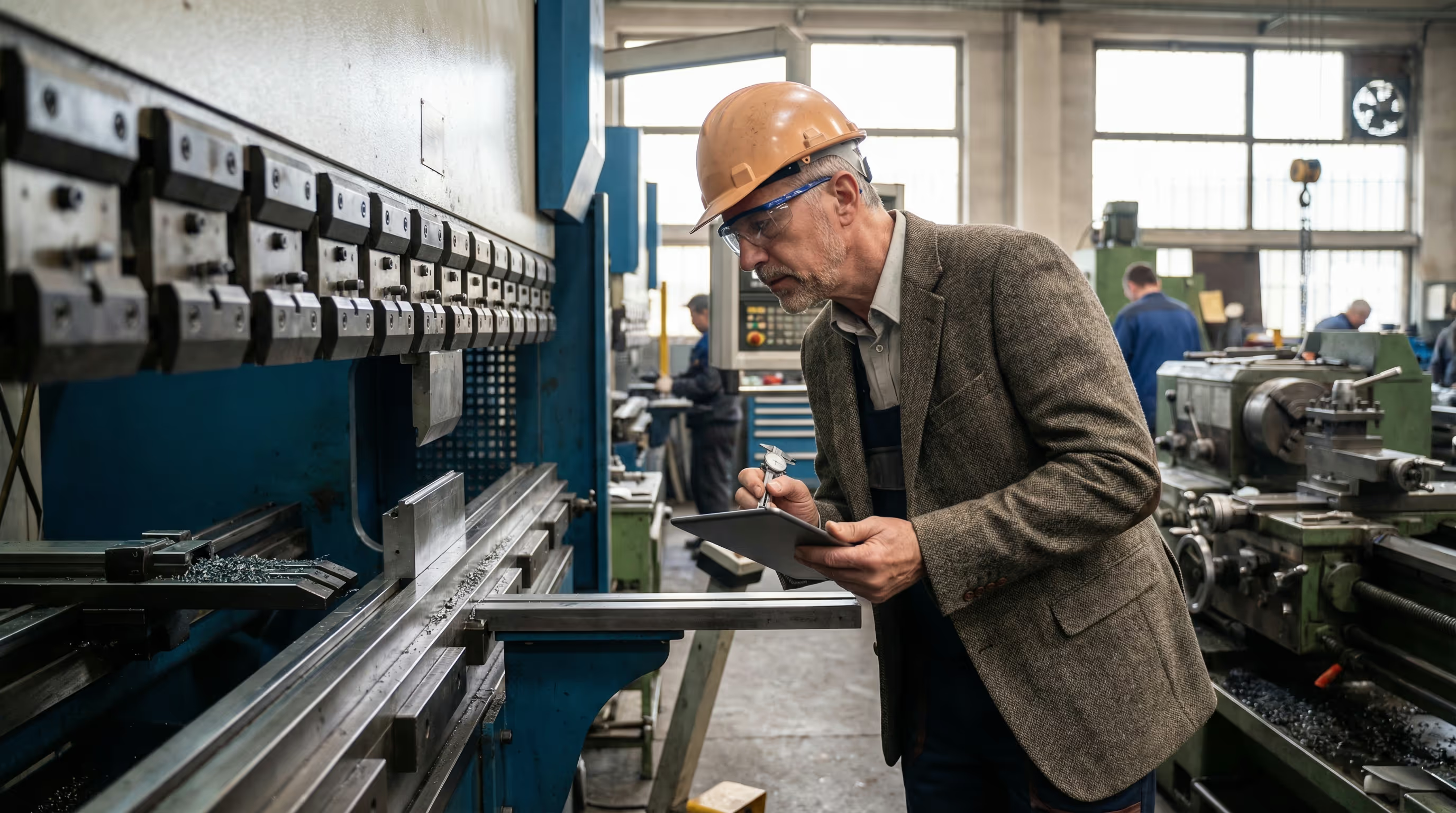






A metalworking equipment appraisal is a professional assessment that determines the fair market value, replacement cost, or liquidation value of machinery used to fabricate and shape metal components. Whether you need coverage for a $2 million CNC machining center or valuation for an entire production line, accurate appraisals protect your financial interests and ensure compliance with banking, insurance, and tax requirements.
Without proper appraisals, manufacturers face significant risks. Underinsured equipment can leave you with massive gaps during claims, while overvalued assets inflate insurance premiums unnecessarily. Banks require current valuations for loan approvals and renewals, and the IRS demands qualified appraisals for charitable donations or casualty loss deductions.
Quick Answer: Professional metalworking equipment appraisals typically cost between $2,500-$7,500 depending on complexity and provide defensible valuations accepted by banks, insurers, and courts nationwide.
This guide covers everything you need to know about metalworking equipment appraisals, from understanding different value types to choosing qualified appraisers. You'll learn what drives equipment values, how the appraisal process works, and what your final report should contain to meet professional standards.
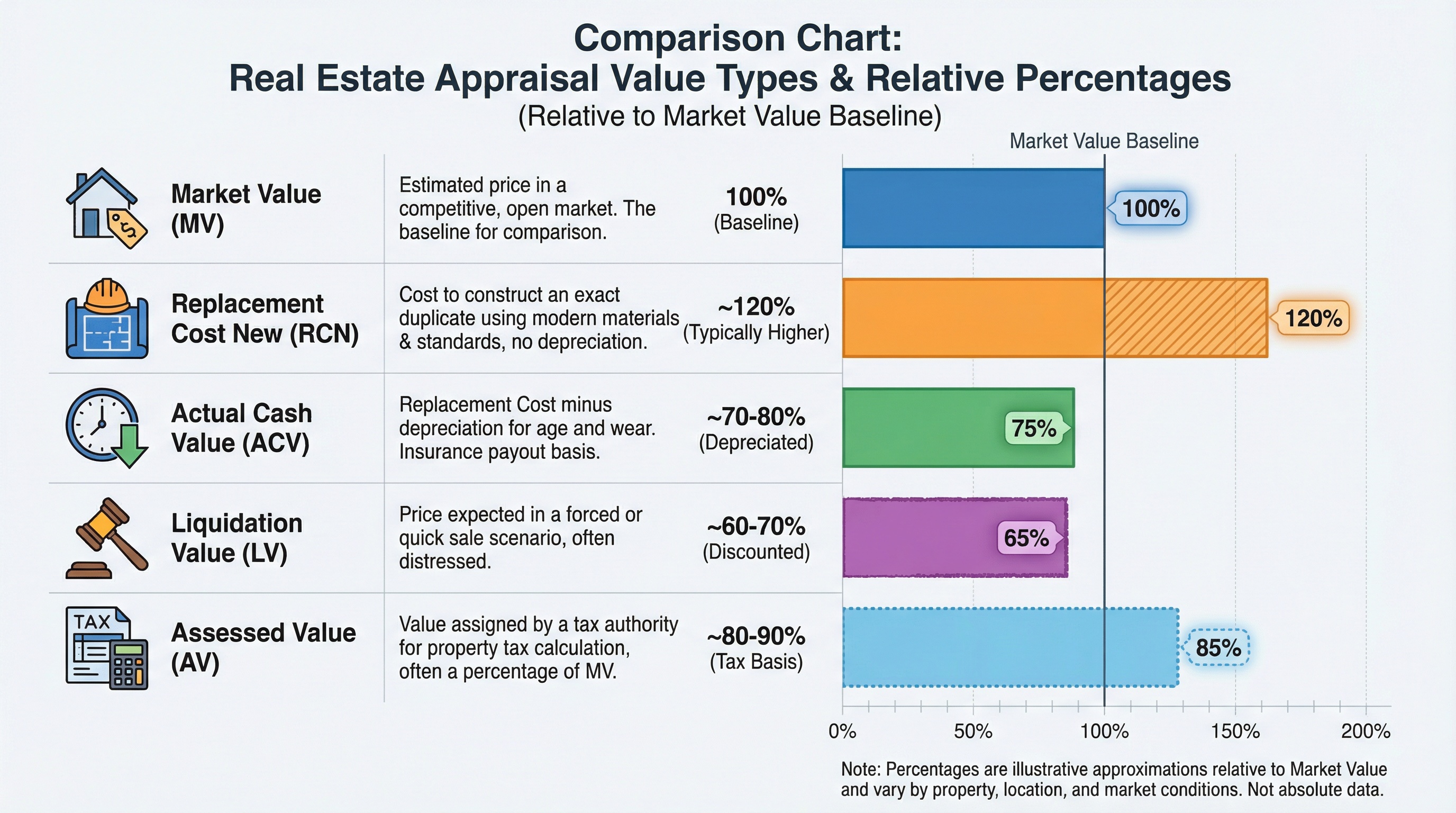
Different situations require different types of value, and understanding these distinctions helps you request the right appraisal for your specific needs.
Fair market value represents the price equipment would sell for between willing parties in an open market. This standard applies to most business transactions, estate planning, and IRS requirements. For a 10-year-old Haas CNC mill in good condition, fair market value might be 40-60% of its original purchase price.
Replacement cost new calculates what you'd pay today for identical new equipment with the same utility. Insurance companies often use this figure to determine coverage limits. A plasma cutting table that cost $150,000 five years ago might have a replacement cost of $180,000 today due to inflation and technology improvements.
Orderly liquidation value assumes equipment sells within a reasonable timeframe through normal marketing channels. Banks frequently request this value type when assessing loan collateral, as it represents a more conservative estimate than fair market value. Understanding different types and applications of equipment machinery appraising helps you determine which valuation approach best serves your specific needs.
Several critical factors influence how appraisers assign value to your metalworking equipment, and understanding these helps you maintain and document your assets effectively.
Age and operating hours create the foundation for value assessment. A 2019 DMG Mori lathe with 3,000 hours typically holds more value than a 2015 model with 15,000 hours, even if both appear similar. Appraisers examine hour meters, maintenance logs, and usage patterns to gauge remaining useful life.
Technology level and automation significantly impact desirability and value. Equipment with modern CNC controls, automatic tool changers, and integrated quality systems commands premium pricing. Older machines with manual controls or obsolete software face steeper depreciation curves.
Condition and maintenance history directly correlate with value retention. Well-maintained equipment with documented service records, recent upgrades, and minimal wear can achieve values near the higher end of market ranges. Conversely, deferred maintenance, visible damage, or missing components reduce valuations substantially. To avoid undervaluing your assets, learn about common mistakes to avoid when getting an equipment machinery appraisal.
Market demand and industry trends create fluctuations in equipment values. High-precision machining centers remain in strong demand, while older conventional equipment faces declining markets as manufacturers upgrade to CNC systems.
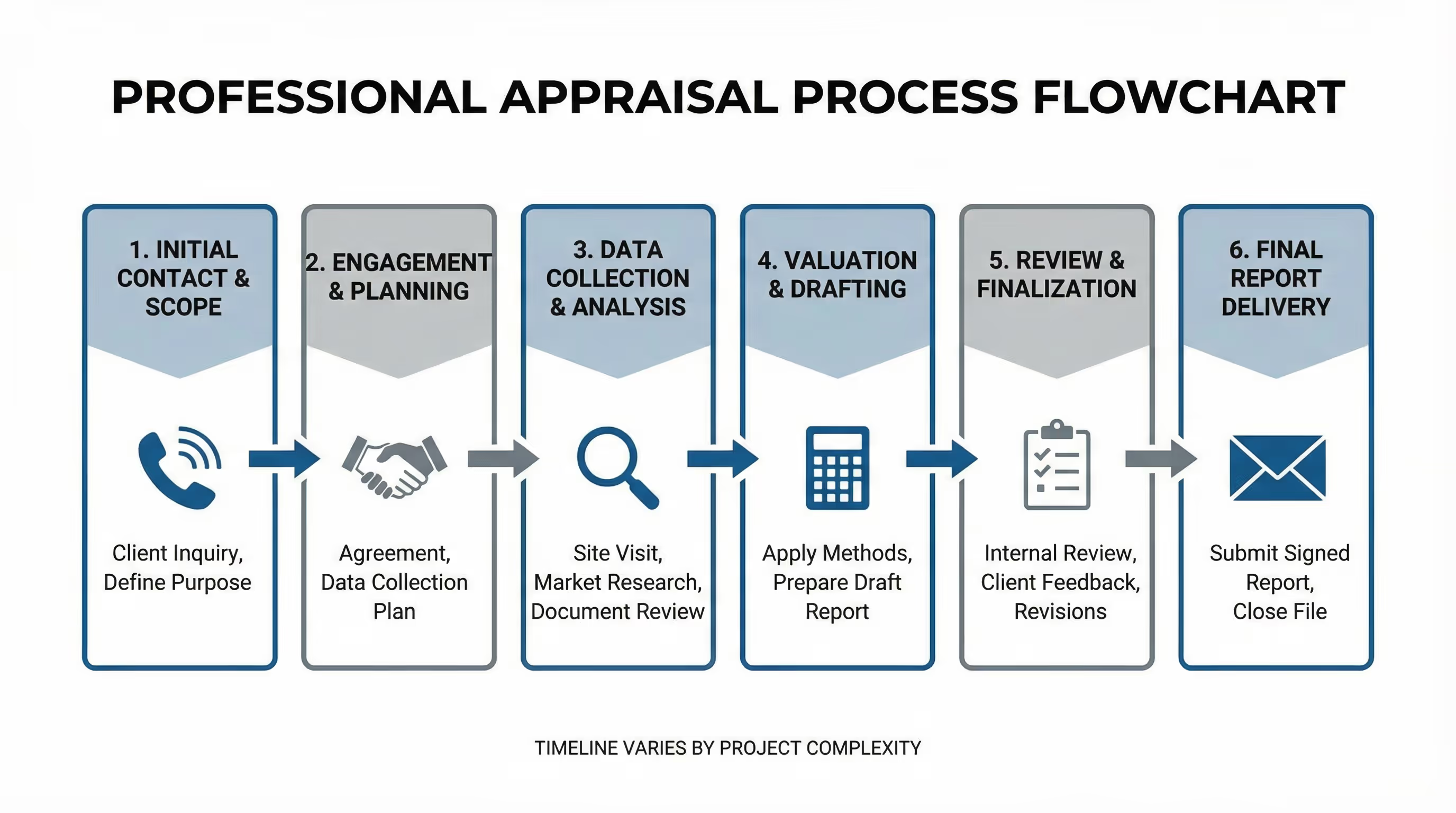
Professional metalworking equipment appraisals follow a structured methodology that ensures accurate, defensible results meeting industry standards.
Initial scoping and data collection begins the process. Your appraiser defines the assignment scope, value premise, and intended use while gathering equipment lists, purchase records, maintenance documentation, and operational data. This phase typically takes 1-2 weeks depending on your preparation.
Onsite inspection and verification forms the appraisal's foundation. Qualified appraisers examine each piece of equipment, verify serial numbers, assess condition, and photograph key components. They measure operating parameters, review maintenance records, and interview operators about performance and reliability.
Market research and valuation applies multiple approaches to determine value. Appraisers analyze recent sales data, replacement costs, and income potential where applicable. They consider market conditions, technology obsolescence, and regulatory factors affecting your specific equipment types. For insights into appraising industrial equipment and assessing machinery and manufacturing assets, consult experienced professionals who understand sector-specific considerations.
Report preparation and review produces the final deliverable. Professional reports include detailed asset descriptions, methodology explanations, market data support, and limiting conditions. The review process ensures accuracy and compliance with Uniform Standards of Professional Appraisal Practice.
Industry Insight: USPAP-compliant appraisals take 2-4 weeks to complete and include mandatory elements like effective date, intended use, and appraiser certification that banks and courts require.
Selecting the right appraiser protects your interests and ensures your report meets professional standards required by banks, insurers, and courts.
Professional credentials and designations indicate formal training and ongoing education. Look for appraisers holding ASA (American Society of Appraisers), AMEA (American Machinery and Equipment Appraisers), or ISA (International Society of Appraisers) designations. These organizations require rigorous testing, experience verification, and continuing education. Learn more about why certification matters for appraisers of equipment and machinery.
Industry experience with metalworking environments proves essential for accurate valuations. Appraisers should demonstrate familiarity with CNC machining, metal fabrication processes, and industrial equipment markets. Ask about their experience with your specific equipment types and manufacturing processes.
USPAP compliance and report defensibility ensure your appraisal meets professional standards. Qualified appraisers follow Uniform Standards of Professional Appraisal Practice and produce reports accepted by financial institutions, courts, and government agencies. Verify their ability to provide expert testimony if disputes arise.
CredentialOrganizationFocus AreaTypical ExperienceASAAmerican Society of AppraisersAll property types5+ years, comprehensive testingAMEAAmerican Machinery & Equipment AppraisersIndustrial equipment10+ years machinery focusISAInternational Society of AppraisersPersonal/business propertyVaried backgrounds, testing required
Red flags to avoid include appraisers lacking proper credentials, offering unusually low fees, or promising specific value conclusions before inspection. Be cautious of appraisers without manufacturing industry experience or those unable to explain their methodology clearly. Before selecting an appraiser, review questions to ask before getting an equipment machinery appraisal to ensure you make an informed decision.
Cost Reality Check: Professional metalworking equipment appraisals typically range from $2,500-$7,500 depending on complexity, with simple single-machine appraisals starting around $1,500 and comprehensive facility assessments reaching $15,000+.
Professional metalworking equipment appraisals provide essential protection for your manufacturing investments. Whether you need coverage for insurance claims, support for financing decisions, or compliance with tax requirements, qualified appraisers deliver defensible valuations that protect your interests. Understanding the basics of equipment machinery appraisal empowers you to navigate the process confidently.
At AppraiseItNow, our credentialed appraisers specialize in metalworking and industrial equipment across all 50 states. We provide USPAP-compliant reports accepted by major banks, insurance companies, and government agencies. Contact us today for a consultation on your metalworking equipment appraisal needs.
Professional metalworking equipment appraisals typically range from $2,500-$7,500 depending on complexity, with simple single-machine appraisals starting around $1,500 and comprehensive facility assessments reaching $15,000+. The cost depends on factors like the number of machines, inspection level (on-site vs desktop), travel requirements, and report complexity. While the investment may seem significant, it's typically small relative to the financial decisions it supports, such as securing loans, avoiding insurance gaps, or resolving legal disputes.
Fair market value represents the price equipment would sell for between willing parties in an open market with adequate marketing time, while liquidation value estimates what equipment would bring in a forced sale or auction scenario. Orderly liquidation value assumes reasonable marketing time (3-6 months), while forced liquidation value reflects immediate sale conditions. Banks often request liquidation values for collateral assessment as they represent more conservative estimates, while fair market value is typically used for transactions, insurance, and tax purposes.
Yes, desktop or remote appraisals can be performed when adequate documentation is available, including detailed photos, serial numbers, specifications, maintenance records, and equipment lists. Desktop appraisals work well for standard equipment in stable markets and lower-risk applications. However, on-site inspections are recommended for complex production lines, high-value machinery, custom equipment, litigation purposes, or when precise condition assessment is critical. Both approaches can be USPAP-compliant when properly scoped and executed.
Most metalworking equipment should be reappraised every 2-3 years for insurance and financing purposes, though this varies based on market conditions and equipment type. High-tech CNC equipment in rapidly evolving markets may need more frequent updates, while stable conventional machinery can go longer between appraisals. Major events that should trigger immediate reappraisal include significant capital investments, technology upgrades, market volatility, ownership changes, or upcoming financing, estate planning, or legal proceedings.




