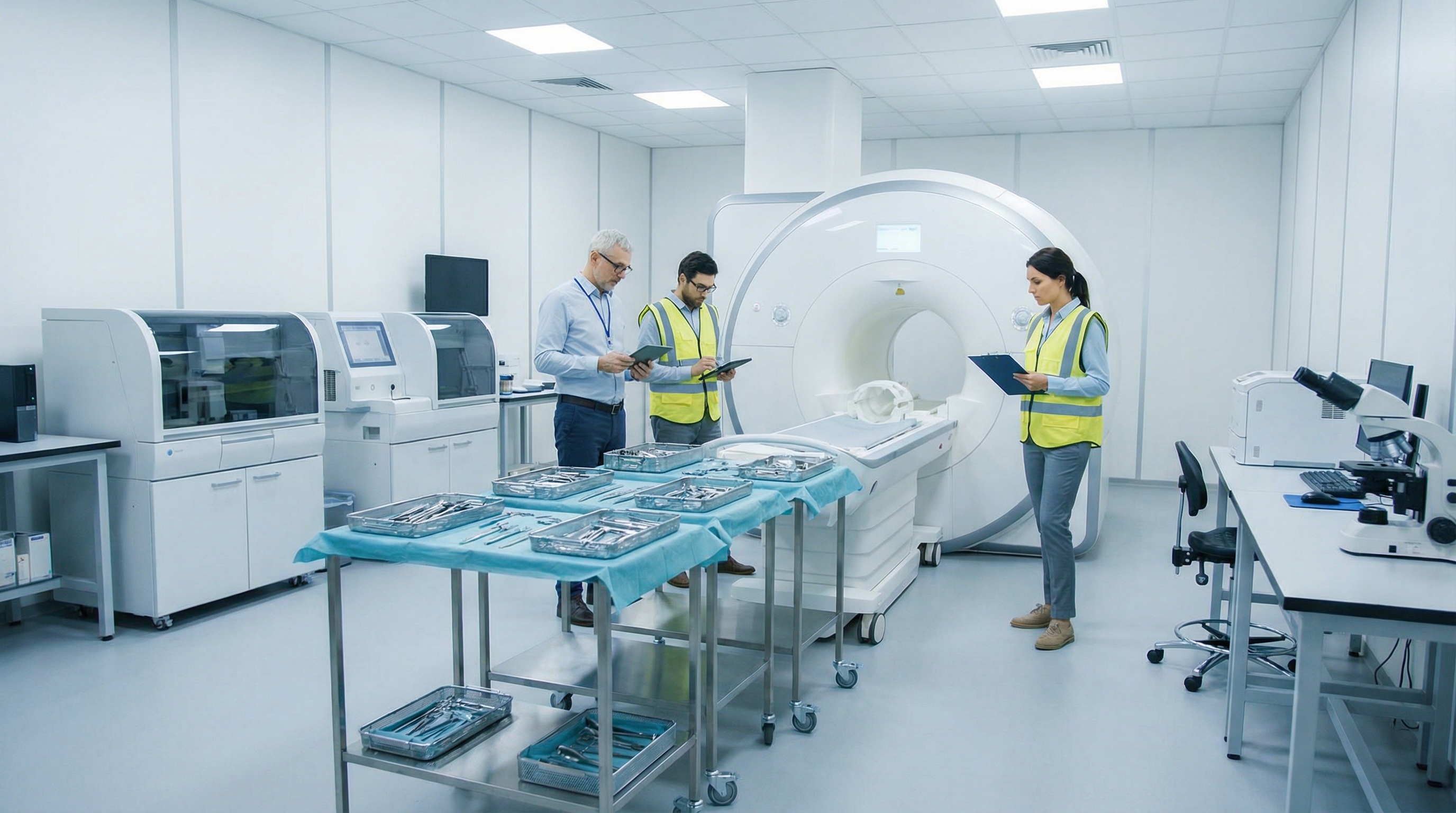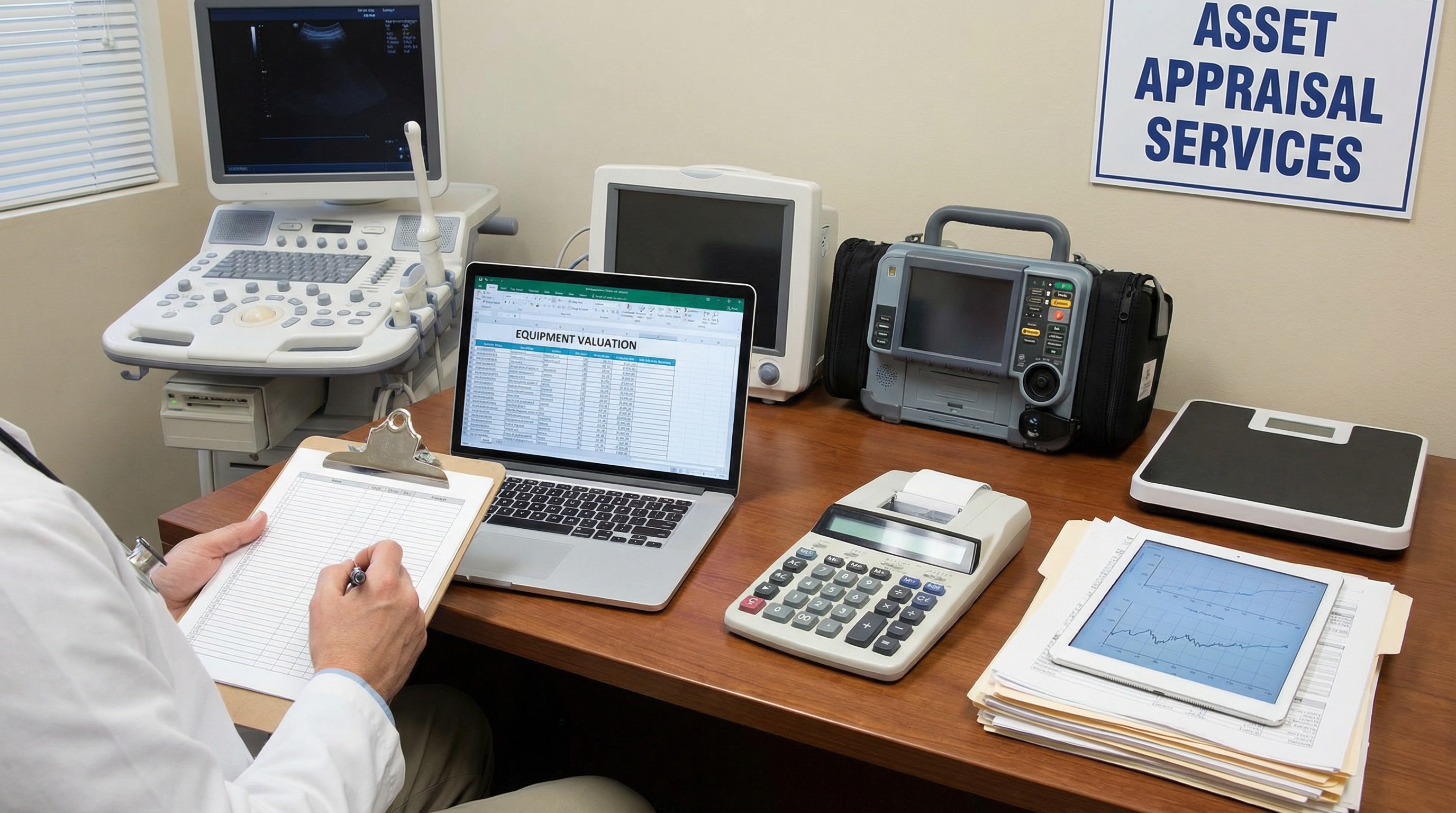
Whether you're selling a medical practice, upgrading imaging equipment, or preparing for an insurance audit, determining the accurate value of medical equipment can feel overwhelming. The stakes are high: undervalue your assets and you leave money on the table, overvalue them and you risk compliance issues with the IRS or insurance carriers.
Medical equipment valuation involves multiple complex factors including fair market value calculations, depreciation schedules, remaining useful life, and rapidly changing technology standards. Practice owners, hospital administrators, and equipment dealers must navigate these challenges while ensuring their valuations meet professional standards for tax reporting, insurance coverage, and financial statements.
Quick Answer: Medical equipment value depends on five core factors: original cost and age, current physical condition, market demand for that specific model, remaining useful life, and regulatory compliance status. Professional appraisers use these factors along with comparable sales data to determine fair market value.
The good news is that understanding the key principles of medical equipment valuation can help you make informed decisions and know when to engage professional help. This guide walks you through the essential framework used by USPAP-compliant appraisers, including depreciation calculations and useful life estimates that align with IRS and insurance industry standards.
Understanding medical equipment valuation basics
Medical equipment valuation determines the monetary worth of healthcare devices and machinery for specific purposes like sales, insurance, tax reporting, or financial statements. Unlike simple online price checks, professional valuations consider multiple value standards depending on how the equipment will be used.
The scope can cover almost anything a practice, clinic, or hospital owns, from current-generation imaging systems and diagnostic tools to laboratory analyzers, patient monitors, and exam room equipment, and from recently installed devices to older units still in service.
Fair market value represents what a willing buyer would pay a willing seller in an open market, assuming both parties have reasonable knowledge of relevant facts. This standard applies to most tax situations, estate planning, and business transactions. Replacement cost reflects what you'd pay to buy equivalent new or used equipment today, which insurance companies often use for coverage decisions.

Liquidation value estimates what equipment would bring in a forced sale situation, such as bankruptcy or urgent disposal. Understanding these distinctions helps you request the right type of valuation for your specific needs and ensures compliance with regulatory requirements.
Core factors that determine medical equipment value
The value of medical equipment depends on several interconnected factors that appraisers evaluate systematically. Age and original purchase price provide the starting baseline, but condition often matters more than chronological age for determining current worth.
Physical condition encompasses both cosmetic appearance and functional performance. Equipment that's been well-maintained with complete service records typically commands higher values than units with missing documentation or deferred maintenance. Software versions, calibration status, and availability of consumables or accessories also significantly impact marketability, as do any licenses, accreditations, or certifications tied to the device and whether they transfer to a new owner.
Brand reputation and model popularity create substantial value differences even among functionally similar equipment. Established manufacturers with strong service networks and parts availability generally maintain better resale values. Market demand varies by medical specialty, with some equipment types experiencing higher demand due to procedure volume growth or regulatory changes.
Key Insight: Equipment that remains in active clinical use often retains 40-60% of its original value after 5-7 years, while obsolete models may drop to 10-20% regardless of physical condition.
Technology advancement cycles can rapidly affect equipment values, particularly for imaging and diagnostic devices. When manufacturers release significantly improved models, older generations may experience accelerated value decline even if they remain clinically functional. Understanding factors that influence the value of medical equipment appraisals helps you anticipate these market dynamics.
How to calculate depreciation on medical equipment
Depreciation calculation forms the foundation of most medical equipment valuations, though appraisal depreciation differs from accounting depreciation used for tax purposes. The straight-line method provides the most straightforward approach for estimation purposes.
The basic straight-line formula is: Annual Depreciation = (Original Cost - Salvage Value) ÷ Useful Life in Years. For example, an MRI machine purchased for $2 million with an estimated 15-year useful life and $200,000 salvage value would depreciate $120,000 annually using this method.
However, medical equipment often experiences accelerated depreciation in early years due to technology advancement and market factors. Many appraisers apply modified approaches that account for higher depreciation rates in the first 3-5 years, followed by more gradual decline.
| Equipment Type | Typical Useful Life | Common Depreciation Pattern |
|---|---|---|
| Imaging Equipment (CT, MRI) | 10-15 years | Accelerated early years |
| Laboratory Analyzers | 7-10 years | Steady straight-line |
| Patient Monitors | 5-8 years | Technology-driven decline |
| Exam Room Equipment | 8-12 years | Condition-dependent |
Remember that depreciation for appraisal purposes focuses on market value loss, not tax deductions. Consult your CPA for tax depreciation strategies, as these may differ significantly from appraisal calculations.
Market research and comparable sales analysis
Effective valuation requires thorough market research to understand current pricing trends and demand patterns. Start by identifying truly comparable equipment: same manufacturer, similar model year, comparable condition, and similar geographic market when possible.
Online marketplaces, dealer listings, and auction results provide pricing data points, but exercise caution with outliers or incomplete information. Equipment listed significantly below market rates may have undisclosed condition issues, missing components, or compliance problems that affect usability.

Professional equipment dealers and certified refurbishers often provide more reliable pricing benchmarks than individual sellers or non-specialized auction houses. These sources typically ensure regulatory compliance and provide warranties that add value for buyers.
Consider market timing factors that influence demand, such as budget cycles for hospitals and practices, seasonal procedure volume changes, or regulatory deadline pressures. Equipment values can fluctuate based on these external factors even when the physical assets remain unchanged.
Pro Tip: Track completed sales rather than asking prices when researching comparables. Asking prices often exceed actual transaction values by 15-25% in the medical equipment secondary market.
When to hire a professional medical equipment appraiser
Certain situations strongly warrant professional appraisal services to ensure accuracy, compliance, and legal defensibility. IRS regulations require qualified appraisals for noncash charitable contributions exceeding $5,000, and many financial institutions require formal appraisals for equipment-secured lending.
Estate settlements, divorce proceedings, and business partnership disputes benefit from USPAP-compliant appraisals that provide independent, defensible value opinions. Insurance carriers increasingly request professional appraisals for high-value equipment schedules to ensure adequate coverage and streamline claims processing.
Operational decisions benefit as well. A current value gives you a firm footing when negotiating the purchase or sale of used equipment, and it helps answer whether a costly repair makes sense by comparing the repair estimate against what the unit is worth. Keeping that record on file also leaves you with documented support if a value is questioned later.
Professional appraisers bring specialized knowledge of medical equipment markets, regulatory requirements, and valuation methodologies that ensure compliance with professional standards. They provide detailed reports documenting their research, methodology, and conclusions that satisfy legal and regulatory scrutiny.
Look for appraisers with relevant credentials from recognized organizations, specific experience in medical equipment, and familiarity with your intended use of the valuation. USPAP compliance and IRS qualification ensure the appraisal meets professional standards for most business and legal purposes. Before engaging an appraiser, review what you should know before getting a medical equipment appraisal to ensure you're fully prepared.
What to expect from the medical equipment appraisal process
A professional medical equipment appraisal moves through a defined sequence, which keeps the final number traceable to the evidence behind it. A typical assignment follows these steps:
- Consultation and scope. We confirm the purpose, the value standard, the effective date, and which equipment and locations are included.
- Information review. You provide the equipment list with manufacturer, model, and serial numbers, along with service records, software versions, and purchase history.
- Condition assessment. The appraiser reviews the equipment and its documentation, noting condition, configuration, and any repairs or maintenance history that affect value.
- Analysis. Comparable sales, dealer and refurbisher pricing, replacement cost, and depreciation are weighed against current market conditions for each equipment category.
- Report. You receive a written report documenting the research, the valuation approaches applied, and the value conclusions.
Accurate medical equipment valuation protects your financial interests whether you're buying, selling, insuring, or reporting assets for tax purposes. While basic estimation techniques help with preliminary assessments, complex or high-value situations benefit from professional expertise that ensures compliance and accuracy. Understanding the different types of medical equipment appraisals available can help you choose the right approach for your specific needs.
AppraiseItNow's certified appraisers specialize in medical equipment valuations that meet USPAP standards and IRS requirements. Our comprehensive reports provide the documentation and credibility you need for confident decision-making in any situation requiring defensible asset values.