Medical Equipment Appraisals: How to Get Accurate, USPAP-Compliant Valuations

Last Updated on Sep 02, 2025
Originally Published on Sep 02, 2025
Thank you! Your submission has been received!
Oops! Something went wrong while submitting the form.
Nationwide Service
Onsite or Online
USPAP-Compliant
IRS Qualified
DEFENSIBLE, USPAP-COMPLIANT APPRAISAL REPORTS — ACCEPTED BY 10,000+ ORGANIZATIONS
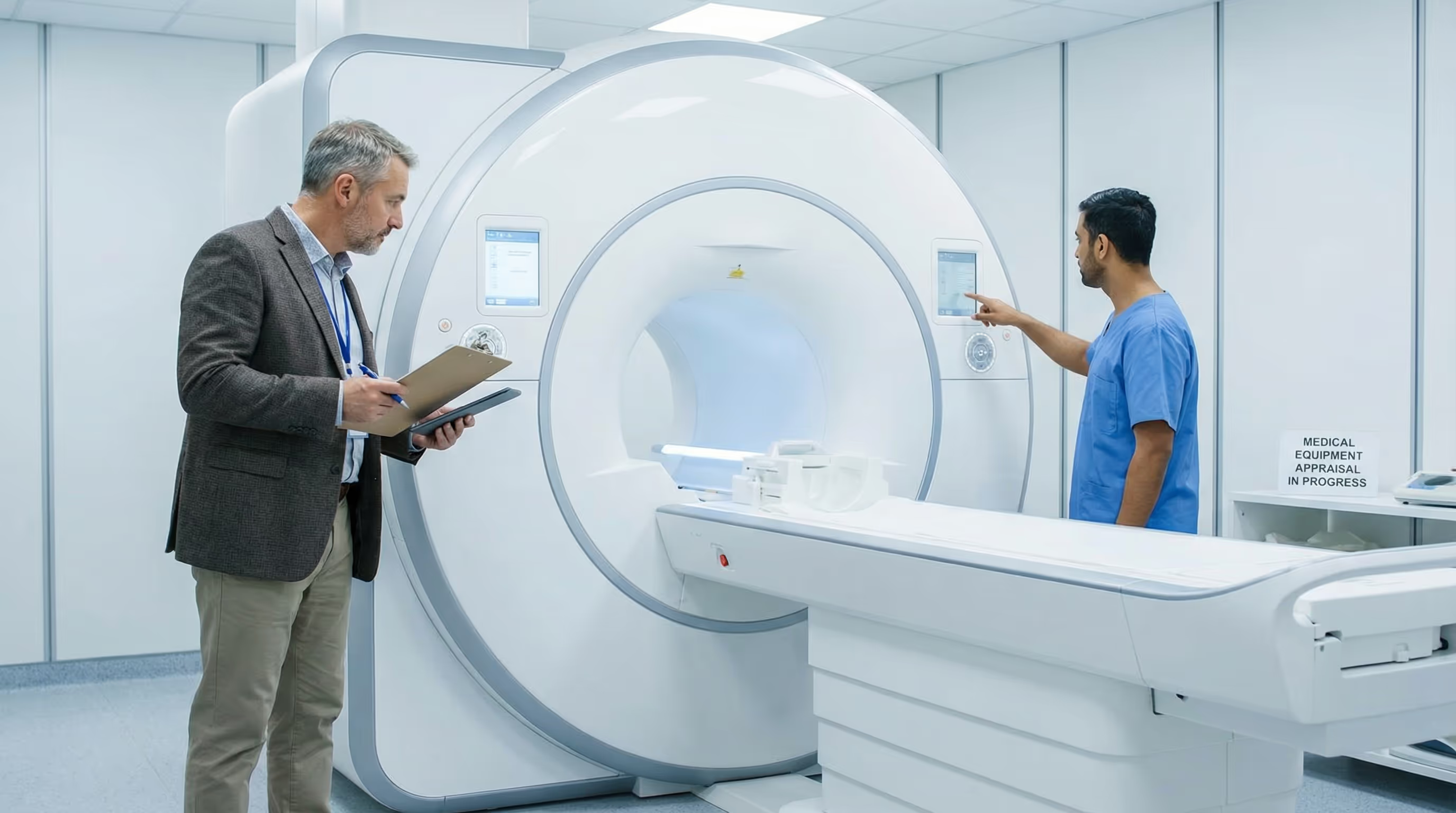
medical equipment appraisal process showing MRI machine being evaluated by professional appraiser with clipboard

Picture this: your practice is expanding, and the bank requires an equipment appraisal for your $2 million imaging suite. You get a quick estimate online, but when it comes time for the loan review, the bank rejects it because it's not USPAP-compliant. Now you're scrambling to get a proper appraisal, delaying your expansion by weeks.

A medical equipment appraisal is a professional evaluation that determines the fair market value, replacement cost, or other specified value of healthcare equipment by a qualified appraiser. These appraisals must meet strict standards to be accepted by banks, insurance companies, the IRS, and courts.

Quick Answer: Medical equipment appraisals typically take 2-4 weeks to complete and require USPAP compliance for legal and financial acceptance. The key to accuracy lies in proper preparation, choosing qualified appraisers, and understanding which type of value you need for your specific purpose.

You'll learn how to prepare your equipment for appraisal, select the right appraiser, navigate the process smoothly, and interpret your results. Whether you're refinancing, selling your practice, or updating insurance coverage, getting this right the first time saves both money and headaches.

Understanding medical equipment appraisals and when you need them

Medical equipment appraisals evaluate healthcare assets ranging from basic examination tables to complex imaging systems like MRI machines, CT scanners, and surgical robots. Unlike general equipment appraisals, these require specialized knowledge of medical technology, regulatory requirements, and healthcare market conditions.

You'll need a medical equipment appraisal in several key situations. Banks require them for equipment financing or practice loans exceeding certain thresholds. Insurance companies need current valuations to properly schedule high-value equipment and process claims accurately. The IRS requires qualified appraisals for equipment donations over $5,000 and for estate tax purposes.

Business transactions also trigger appraisal requirements. Whether you're buying into a practice, selling equipment, or going through a merger, accurate valuations protect all parties involved. Estate planning, divorce proceedings, and litigation often require court-acceptable appraisals as well.

The timing matters too. Equipment values can shift significantly due to technological advances, regulatory changes, or market conditions. An appraisal from three years ago might not reflect today's reality, especially in rapidly evolving fields like diagnostic imaging or laboratory automation.

Key factors that determine appraisal accuracy

Several critical factors influence how accurate your medical equipment appraisal will be. Equipment specifications top the list - model numbers, serial numbers, configuration details, and software versions all affect value. A basic ultrasound machine and one with advanced cardiac imaging capabilities can differ by hundreds of thousands of dollars.

Age and condition play major roles, but they're not always straightforward. A well-maintained 10-year-old MRI might be worth more than a newer model that's been heavily used or poorly serviced. Usage hours, maintenance records, and service contracts provide crucial context that appraisers need to assess true condition.

medical equipment documentation including maintenance logs, service records, and equipment specifications

Market factors add another layer of complexity. Recent technological advances can make certain equipment obsolete quickly, while supply chain disruptions might increase values for available units. Geographic location matters too - equipment in major metropolitan areas often commands different values than identical units in rural settings.

Documentation quality significantly impacts accuracy. Complete maintenance logs, original purchase invoices, service contracts, and performance reports help appraisers build confidence in their valuations. Missing documentation often leads to more conservative estimates or additional research time.

Pro Tip: Gather all equipment documentation before contacting an appraiser. This includes purchase invoices, maintenance logs, service contracts, software licenses, and any recent performance reports. Complete documentation can increase your appraisal value by 10-15% compared to poorly documented equipment.

Regulatory status can dramatically affect values. Equipment subject to recalls, pending FDA changes, or new safety requirements might see significant value adjustments. Appraisers must stay current on these developments to provide accurate assessments.

Choosing the right appraiser for your medical equipment

Not all appraisers are qualified to handle medical equipment. You need someone with specific credentials, industry knowledge, and USPAP compliance. Look for appraisers holding designations from recognized organizations like the American Society of Appraisers (ASA), the American Medical Equipment Appraisers (AMEA), or the International Society of Appraisers (ISA).

USPAP compliance isn't optional if you need the appraisal for legal, tax, or lending purposes. The Uniform Standards of Professional Appraisal Practice ensure your appraisal will be accepted by courts, the IRS, and financial institutions. Ask potential appraisers directly about their USPAP training and compliance.

Industry expertise matters enormously. An appraiser who specializes in manufacturing equipment might struggle with the nuances of medical technology. Look for professionals who regularly appraise healthcare equipment and understand medical practice operations, regulatory requirements, and technology trends.

Before hiring anyone, ask these essential questions: What specific medical equipment do you regularly appraise? Can you provide sample reports (with client information redacted)? How do you stay current on medical equipment markets and regulations? What's your typical turnaround time, and what could cause delays?

Request references from recent clients, particularly those with similar equipment or circumstances. A qualified appraiser should be happy to provide references and explain their methodology clearly.

The medical equipment appraisal process step by step

The appraisal process typically follows five main steps, each building toward your final valuation report. Understanding what happens at each stage helps you prepare effectively and avoid delays.

Step one involves the initial consultation and scope definition. Your appraiser will discuss the purpose of your appraisal, the specific equipment involved, and which type of value you need. This conversation determines the entire approach, so be clear about your intended use for the appraisal.

Data collection comes next. You'll provide equipment lists, serial numbers, purchase documentation, and maintenance records. The more complete your information, the more accurate your appraisal will be. Some appraisers can work from detailed photographs and documentation alone, while others require on-site inspections.

The inspection phase varies by equipment complexity and appraisal purpose. Simple equipment might only need photographs and specifications, while complex systems often require hands-on evaluation. Your appraiser will assess condition, functionality, and any modifications or upgrades.

Market research and analysis form the technical heart of the process. Your appraiser researches recent sales, current listings, manufacturer pricing, and market trends. They apply appropriate valuation methodologies - typically market, cost, or income approaches depending on your equipment and purpose.

Appraisal TypeTimelineBest ForTypical Cost RangeDesktop Review1-2 weeksStandard equipment, insurance$500-$1,500On-site Inspection2-4 weeksComplex systems, litigation$1,500-$5,000+Comprehensive Analysis3-6 weeksHigh-value equipment, M&A$3,000-$10,000+

Report preparation and delivery conclude the process. Your final report includes equipment descriptions, photographs, market analysis, valuation methodology, and the appraiser's conclusions. Quality reports also include assumptions, limiting conditions, and guidance on how to interpret the results.

Important: Most appraisals take 2-4 weeks from start to finish, but complex equipment or incomplete documentation can extend this timeline. Plan accordingly if you have specific deadlines for financing, sales, or tax filings.

Understanding your appraisal results and next steps

Your appraisal report will specify which type of value was determined, and understanding these differences is crucial for using your results effectively. Replacement Cost New represents what you'd pay to buy equivalent new equipment today, while Fair Market Value reflects what a willing buyer would pay a willing seller in an open market transaction.

Fair Value, used primarily for financial reporting, considers the equipment's value to your specific business rather than the general market. Liquidation values estimate what you might receive in a forced sale situation. Make sure your appraiser provided the right type of value for your intended use.

After receiving your report, review the equipment list carefully to ensure nothing was missed or misidentified. Check that the appraiser's assumptions match your actual situation. If you plan to sell equipment, verify that the appraiser considered your local market conditions and timing constraints.

Use your appraisal strategically beyond its immediate purpose. The report provides valuable data for insurance coverage decisions, equipment replacement planning, and practice valuation discussions. Many practices use appraisal results to negotiate better service contracts or evaluate upgrade timing.

Keep your appraisal current. Equipment values change due to technology advances, market conditions, and regulatory developments. Most lenders and insurers expect appraisals to be updated every 3-5 years, though rapidly evolving equipment might need more frequent updates.

professional medical equipment appraisal report showing valuation summary and equipment photos

Getting accurate medical equipment appraisals requires preparation, the right professional, and clear communication about your needs. Start by gathering complete documentation, choose a USPAP-compliant appraiser with medical equipment expertise, and be clear about your appraisal's purpose and timeline.

Remember that the cheapest option rarely delivers the accuracy and defensibility you need for important financial decisions. Invest in quality appraisal services that will stand up to scrutiny from banks, insurers, courts, and the IRS. When done right, a professional appraisal protects your interests and provides confidence in your equipment-related decisions.

Ready to get started? Contact our USPAP-compliant appraisers who specialize in medical equipment valuations. We'll help you determine exactly what type of appraisal you need and guide you through the entire process.

Frequently Asked Questions About Medical Equipment Appraisals

How long does a medical equipment appraisal take to complete?

Most medical equipment appraisals take 2-4 weeks from start to finish, depending on the complexity and number of items being appraised. Simple desktop reviews for standard equipment may be completed in 1-2 weeks, while comprehensive on-site appraisals for complex systems or large portfolios can take 3-6 weeks. The timeline also depends on how quickly you provide complete documentation and equipment access.

What's the difference between fair market value and replacement cost for medical equipment?

Fair market value represents what a willing buyer would pay a willing seller in an open market transaction, commonly used for sales, donations, and financial reporting. Replacement cost reflects what you'd pay to replace the equipment with new or similar items today, typically used for insurance coverage decisions. The choice depends on your appraisal's purpose - insurance claims need replacement cost while equipment sales require fair market value.

What information should I gather before ordering a medical equipment appraisal?

Prepare a complete equipment list with manufacturer, model, serial numbers, and purchase dates. Gather maintenance records, service contracts, photos showing condition, and any documentation of upgrades or modifications. Also clarify your appraisal's purpose (insurance, sale, donation, etc.) and provide access information for on-site inspections if needed. Complete documentation can increase your appraisal value by 10-15%.

Do I need a USPAP-compliant appraisal for my medical equipment?

Yes, if you need the appraisal for legal, tax, or lending purposes. USPAP (Uniform Standards of Professional Appraisal Practice) compliance ensures your appraisal will be accepted by courts, the IRS, banks, and insurance companies. For equipment donations over $5,000, estate planning, litigation, or loan collateral, a USPAP-compliant appraisal is typically required and provides the strongest legal defensibility.

Related Appraisals We Offer

Related Articles

BEST-IN-CLASS APPRAISERS, CREDENTIALED BY: