Laundry Equipment Appraisals: Key Factors That Affect Value and How to Get an Accurate Valuation

Last Updated on Aug 22, 2025
Originally Published on Aug 22, 2025
Thank you! Your submission has been received!
Oops! Something went wrong while submitting the form.
Nationwide Service
Onsite or Online
USPAP-Compliant
IRS Qualified
DEFENSIBLE, USPAP-COMPLIANT APPRAISAL REPORTS — ACCEPTED BY 10,000+ ORGANIZATIONS
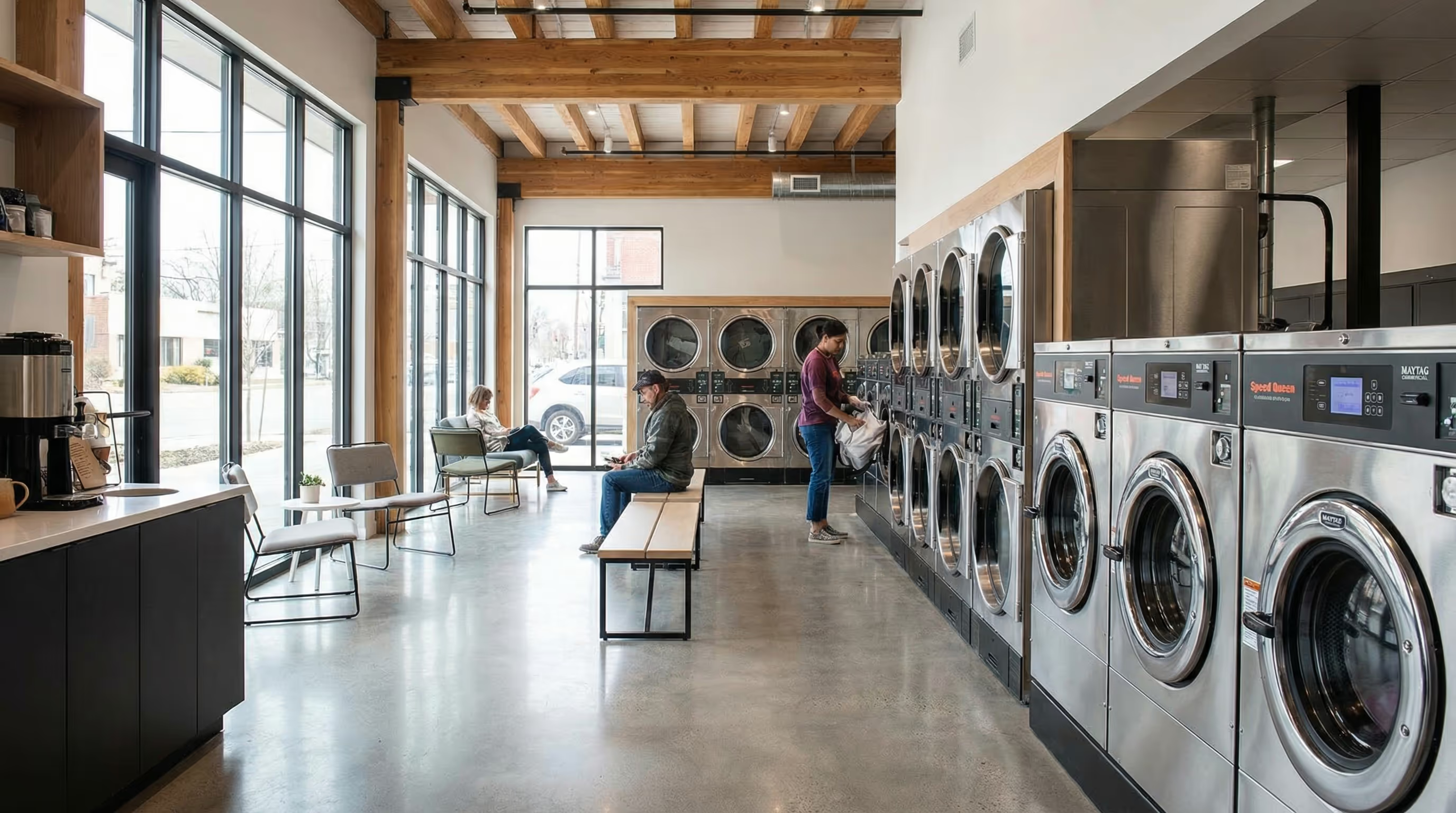
Commercial laundry equipment in a modern laundromat with washers and dryers

Whether you're buying a laundromat, securing financing, or updating your insurance coverage, knowing the true value of your laundry equipment can save you thousands of dollars. Without an accurate appraisal, you might overpay for equipment, struggle to get adequate financing, or find yourself underinsured when you need coverage most.

A laundry equipment appraisal is a formal, documented opinion of value that meets professional appraisal standards. These appraisals are used for buying and selling laundromats, securing loans, insurance claims, tax reporting, and estate planning. The process considers multiple factors including equipment age, condition, brand reputation, market demand, and location-specific factors.

Professional laundry equipment appraisals typically range from $500 to $2,500 depending on the scope and complexity of the equipment being evaluated.

This guide walks you through the core factors that influence equipment value, explains how the appraisal process works, and shows you how to prepare for an accurate valuation.

What makes laundry equipment valuable

The value of your washers, dryers, and related equipment depends on several interconnected factors. Understanding these helps you make better decisions whether you're buying, selling, or managing your current equipment.

Age and remaining useful life play the biggest role in determining value. Commercial washers typically last 10-15 years with proper maintenance, while dryers often run 15-20 years. However, a well-maintained 12-year-old machine can be worth more than a neglected 5-year-old unit. Appraisers look at both chronological age and functional condition to estimate remaining useful life.

Physical condition and maintenance history directly impact value more than age alone. Equipment with documented regular maintenance, recent repairs, and clean operating conditions commands higher values. Visible wear, rust, or mechanical issues significantly reduce worth. Smart owners keep detailed service records because they translate directly into higher appraisal values, similar to how proper preparation impacts construction equipment valuations.

Appraiser inspecting commercial washing machine with clipboard and measuring tools

Brand reputation and model specifications create substantial value differences. Premium brands like Continental Girbau, Huebsch, and Speed Queen typically hold value better than generic alternatives. High-capacity machines, energy-efficient models, and units with advanced features like programmable controls or card readers are worth more in today's market.

Energy-efficient laundry equipment can be valued 15-25% higher than standard models due to operating cost savings and utility rebate programs.

How market conditions shape equipment value

Market dynamics significantly influence what your equipment is worth at any given time. Local and national demand for commercial laundry equipment fluctuates based on economic conditions, new construction, and industry trends.

Supply and demand in your area affects value more than you might expect. In markets with many laundromats closing, used equipment values drop. Conversely, areas experiencing growth in multi-family housing or commercial development see stronger equipment values. Your appraiser will research recent sales of comparable equipment in your region, using methodologies similar to those employed in restaurant equipment appraisals.

Economic factors like interest rates, recession concerns, and energy costs all impact equipment values. During economic uncertainty, buyers become more price-sensitive, which can depress values. Rising energy costs increase demand for efficient equipment while making older, less efficient machines worth less.

Technology trends also matter. As contactless payment systems become standard, older coin-operated machines lose value faster. Equipment that can be easily upgraded with modern payment systems maintains better value than units requiring complete replacement.

The professional appraisal process explained

Understanding how appraisers work helps you prepare better and ensures you get the most accurate valuation possible. Professional appraisers follow established methodologies to determine fair market value, much like the comprehensive approaches used for industrial equipment.

The sales comparison approach is most commonly used for laundry equipment. Appraisers research recent sales of similar washers and dryers, then adjust for differences in age, condition, brand, and capacity. This method works well when comparable sales data is available.

The cost approach calculates what it would cost to replace your equipment today, then subtracts depreciation for age and condition. This method is useful for newer equipment or when sales data is limited. Appraisers consider both physical wear and technological obsolescence.

Professional appraiser taking photos and notes of laundry equipment serial numbers

The income approach may be used when equipment is part of an operating laundromat. This method considers how much income the equipment generates and capitalizes that into a value. It's particularly relevant for financing and business sale purposes.

Most appraisers combine multiple approaches to reach a final value conclusion. The process typically takes 1-3 days depending on the number of machines and complexity of the assignment.

How to prepare for your equipment appraisal

Proper preparation can significantly impact your appraisal results. Taking time to organize information and present your equipment well often leads to higher values and smoother appraisal processes.

Start by creating a complete equipment inventory with make, model, serial numbers, and purchase dates for each machine. Gather maintenance records, repair invoices, and any warranty information. If you have previous appraisals or insurance valuations, provide those as well. For detailed guidance on this preparation process, review our comprehensive checklist for preparing equipment for appraisal.

Clean your equipment and make minor repairs before the appraiser arrives. While you shouldn't invest heavily in major repairs, addressing obvious issues like burnt-out lights, loose panels, or excessive lint buildup shows the equipment is well-maintained.

Preparation TaskImpact on ValueTime RequiredComplete equipment inventoryHigh2-3 hoursGather maintenance recordsHigh1-2 hoursClean equipment thoroughlyMedium3-4 hoursMinor repairs and touch-upsMedium2-3 hours

Document any recent upgrades or improvements. New payment systems, energy-efficient retrofits, or capacity upgrades all add value. Make sure your appraiser knows about these enhancements and has supporting documentation.

Getting an accurate laundry equipment appraisal requires working with qualified professionals who understand both appraisal standards and the commercial laundry industry. Before engaging an appraiser, be sure to avoid common mistakes that can affect your appraisal outcome. The investment in a proper appraisal pays dividends whether you're buying, selling, financing, or insuring your equipment. With the right preparation and understanding of value factors, you can ensure your appraisal reflects the true worth of your laundry equipment investment.

Frequently Asked Questions About Laundry Equipment Appraisals

What factors affect the value of commercial laundry equipment?

The value of commercial laundry equipment is primarily determined by age, physical condition, brand reputation, model specifications, remaining useful life, maintenance history, and market demand. Additional factors include location, energy efficiency, technology features like payment systems, and the purpose of the appraisal. Well-maintained equipment from reputable manufacturers typically retains higher value than older units with deferred maintenance.

How do appraisers determine fair market value for laundry machines?

Appraisers use three main approaches: the sales comparison approach (analyzing recent sales of similar equipment), the cost approach (replacement cost minus depreciation), and sometimes the income approach (for revenue-generating equipment). They research comparable sales data, assess physical condition, and consider market conditions to reach a defensible value conclusion that meets professional appraisal standards.

What information should I provide for a laundry equipment appraisal?

You should provide make, model, and serial numbers for each machine, purchase dates and original costs, maintenance and repair records, warranty information, photos of the equipment, and details about capacity and special features. Having organized documentation helps appraisers work more efficiently and supports a more accurate valuation of your laundry equipment.

When should I get my laundry equipment reappraised?

Consider reappraising your laundry equipment when refinancing, buying or selling a laundromat, making major equipment upgrades, updating insurance coverage, or during significant market changes. Most experts recommend reappraisals every 3-5 years for active businesses, or whenever there are substantial changes to your equipment or market conditions that could affect value.

Related Appraisals We Offer

Related Articles

BEST-IN-CLASS APPRAISERS, CREDENTIALED BY: