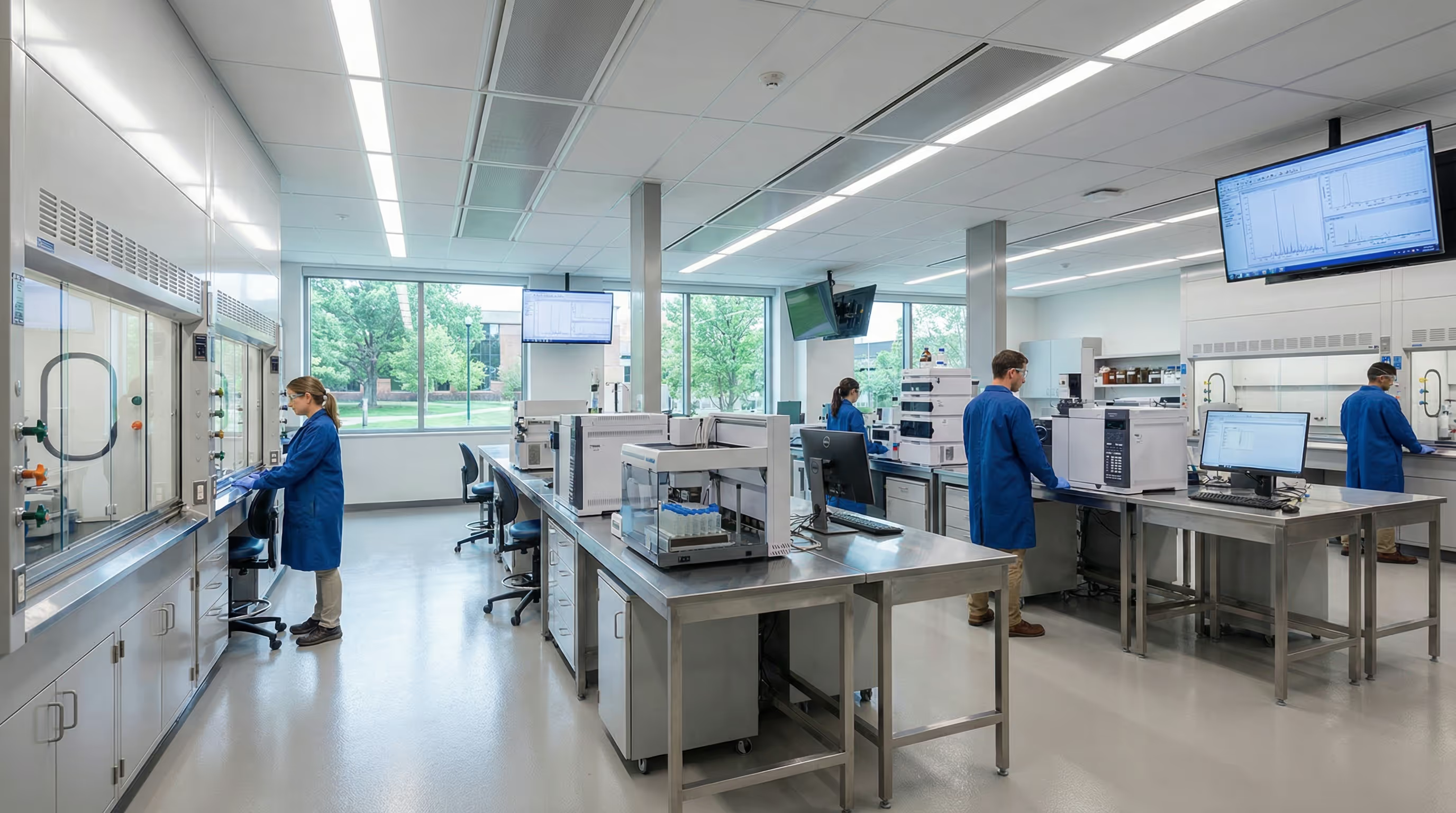
When your lab needs an equipment appraisal, getting it right the first time can save you thousands of dollars and prevent costly disputes down the road. Whether you're securing insurance coverage, preparing for a sale, or meeting compliance requirements, a professional lab equipment appraisal provides the documented proof of value that banks, insurers, and courts will accept.
A lab equipment appraisal is a formal assessment conducted by a certified professional who determines the monetary value of laboratory instruments and equipment. These USPAP-compliant reports establish fair market value, replacement cost, or liquidation value depending on your specific needs. The process involves detailed inspection, market research, and comprehensive documentation that meets IRS and insurance industry standards.
Quick Answer: The five essential steps for a successful lab equipment appraisal are: creating a detailed inventory, understanding appraisal scope and methods, gathering comprehensive documentation, providing operational context, and reviewing the final report for accuracy.
Common lab equipment categories include analytical instruments like HPLC systems and mass spectrometers, clinical analyzers, biosafety cabinets, ultra-low temperature freezers, centrifuges, and specialized research equipment. Each category requires specific expertise to evaluate properly.
Several situations require professional equipment valuations. Insurance coverage represents the most common need, as standard policies often have sub-limits that leave expensive instruments underprotected. Without proper appraisals, you might discover your $200,000 LC-MS system is only covered for $25,000 under a general equipment clause.
Business transactions also trigger appraisal requirements. When selling lab equipment packages, acquiring another facility, or seeking asset-based financing, lenders and buyers need independent value verification. Mergers and acquisitions particularly benefit from comprehensive equipment valuations to support purchase price negotiations.
Financial reporting situations include estate planning, divorce proceedings, and charitable donations. The IRS requires qualified appraisals for equipment donations exceeding $5,000, while estate and divorce courts rely on professional valuations to ensure equitable asset distribution.
Pro Tip: Schedule appraisals before you need them. Last-minute valuations often cost more and may not meet specific compliance deadlines for transactions or insurance claims.
Understanding what drives equipment value helps you prepare more effectively for the appraisal process. Age and condition represent primary factors, but technology obsolescence often matters more than chronological age. A five-year-old instrument with discontinued software support may be worth less than a ten-year-old system with active manufacturer backing.
Brand reputation significantly impacts value, with established manufacturers like Agilent, Waters, and Thermo Fisher typically commanding higher resale values than lesser-known brands. Model-specific factors include throughput capacity, automation features, and regulatory approvals for clinical or pharmaceutical applications.
Maintenance history and calibration records provide crucial value evidence. Well-documented service histories with original manufacturer support increase value, while instruments with spotty maintenance or third-party repairs face value discounts. Software licenses, method packages, and specialized accessories can add substantial value but are often overlooked in preliminary estimates.
Market demand varies significantly by instrument type and application. Clinical chemistry analyzers maintain steady demand, while highly specialized research instruments may have limited resale markets. Geographic factors also matter, as some equipment types are more valuable in specific regions or industries.

Proper preparation accelerates the appraisal process and improves accuracy. Start by creating a comprehensive equipment inventory that goes beyond basic descriptions. Include manufacturer, model number, serial number, year of manufacture, and current location for each item.
Document key specifications and options that affect value. For analytical instruments, note detector types, sample handling accessories, and software packages. Clinical equipment should include regulatory clearances, throughput specifications, and any specialized applications. Don't forget consumables, spare parts, and maintenance contracts that transfer with the equipment.
Your inventory serves as the foundation for accurate valuation. List each instrument with complete identifying information including asset tags, purchase dates, and original costs when available. Include accessories like autosamplers, fraction collectors, and specialized detectors that significantly impact value.
Group related equipment logically, such as complete analytical systems or integrated workcells. This helps appraisers understand functional relationships and identify items that may have higher value when sold together versus individually. For more guidance on this critical step, review our checklist for preparing your equipment for appraisal.
Different appraisal purposes require different value definitions. Insurance appraisals typically use replacement cost new, which represents the cost to replace equipment with similar new items. Sale transactions usually require fair market value, representing the price willing buyers and sellers would agree upon.
Liquidation scenarios may call for orderly liquidation value if you have time to market equipment properly, or forced liquidation value for quick disposal situations. Discuss these options with your appraiser to ensure the value definition matches your intended use.
PurposeValue TypeTypical Use CaseInsuranceReplacement CostScheduling high-value equipmentSale/PurchaseFair Market ValueEquipment transactionsLiquidationOrderly/Forced LiquidationLab closure or downsizingFinancial ReportingFair Market ValueBalance sheet reporting
Documentation quality directly impacts appraisal accuracy and defensibility. Organize records into three categories: purchase and ownership documents, technical specifications, and maintenance records.
Purchase documentation includes original invoices, purchase orders, and lease agreements. These establish acquisition cost and ownership history. Technical documents encompass user manuals, specification sheets, and validation protocols that demonstrate equipment capabilities and compliance status.
Maintenance records prove equipment condition and reliability. Include service contracts, calibration certificates, repair invoices, and performance verification reports. For regulated environments, validation and qualification documents add significant value by demonstrating compliance readiness.
Important: Take high-quality photos of equipment exterior, interior components, serial number plates, and control screens. These images support the appraiser's inspection and provide documentation for insurance or legal purposes.
Provide context that helps appraisers understand your equipment's role and market position. Share utilization data, typical sample loads, and any known performance issues. If you're planning equipment relocation, upgrades, or decommissioning, mention these factors as they can affect value.
Include any recent price quotations, trade-in offers, or auction results you've received. While appraisers must verify this information independently, it provides useful market reference points. Mention specific applications or industries where your equipment excels, as this can identify specialized market segments.

Appraiser selection significantly impacts report quality and acceptance. Look for professionals with recognized credentials from organizations like the American Society of Appraisers (ASA), International Society of Appraisers (ISA), or American Society of Appraisers (ASA). These designations require extensive education, testing, and ongoing professional development.
Verify USPAP compliance, which ensures the appraisal meets Uniform Standards of Professional Appraisal Practice. This compliance is essential for IRS acceptance, court proceedings, and many insurance applications. Ask about specific experience with laboratory equipment, as general machinery appraisers may lack the specialized knowledge needed for accurate scientific instrument valuation.
Consider geographic coverage and inspection capabilities. Some appraisers offer desktop valuations using photos and documentation, while others require on-site inspections. Complex or high-value equipment typically benefits from physical examination, especially when condition significantly affects value. Learn more about selecting a professional appraiser for lab equipment.
Request references from similar organizations and ask about typical turnaround times. Quality appraisals require thorough research and analysis, so be wary of unusually fast completion promises that might indicate shortcuts in methodology.
The appraisal process typically takes one to three weeks depending on equipment complexity and documentation availability. Simple desktop appraisals of standard instruments may complete faster, while comprehensive facility appraisals with multiple specialized systems require more time for proper analysis.
Most qualified appraisers can work from detailed photos and documentation for routine equipment, but high-value or complex systems often benefit from on-site inspection. Discuss these options during initial consultations to determine the most appropriate approach for your situation.
Your final appraisal report should include detailed equipment descriptions, condition assessments, methodology explanations, and supporting market data. Verify that all equipment is correctly identified and that the intended use and value definition match your requirements. If anything seems unclear or incorrect, request clarification before submitting the report to insurers, lenders, or legal proceedings. To avoid common pitfalls, review our guide on mistakes to avoid during lab equipment appraisal.
Professional lab equipment appraisals provide the documented value evidence you need for insurance, transactions, and compliance purposes. By following these preparation steps and working with qualified appraisers, you'll receive accurate, defensible valuations that protect your interests and meet professional standards. For additional insights into understanding the laboratory equipment appraisal process, explore our comprehensive resources. When you're ready to schedule your lab equipment appraisal, AppraiseItNow's certified professionals can provide the expertise and documentation you need nationwide.
A lab equipment appraisal is a formal assessment conducted by a certified professional who determines the monetary value of laboratory instruments and equipment. These USPAP-compliant reports establish fair market value, replacement cost, or liquidation value depending on your specific needs. The process involves detailed inspection, market research, and comprehensive documentation that meets IRS and insurance industry standards.
The appraisal process typically takes one to three weeks depending on equipment complexity and documentation availability. Simple desktop appraisals of standard instruments may complete faster, while comprehensive facility appraisals with multiple specialized systems require more time for proper analysis. Most qualified appraisers can work from detailed photos and documentation for routine equipment, but high-value or complex systems often benefit from on-site inspection.
You should gather purchase documentation including original invoices, purchase orders, and lease agreements. Technical documents encompass user manuals, specification sheets, and validation protocols. Maintenance records prove equipment condition and include service contracts, calibration certificates, repair invoices, and performance verification reports. For regulated environments, validation and qualification documents add significant value by demonstrating compliance readiness.
Look for professionals with recognized credentials from organizations like the American Society of Appraisers (ASA), International Society of Appraisers (ISA), or Association of Machinery and Equipment Appraisers (AMEA). Verify USPAP compliance, which ensures the appraisal meets Uniform Standards of Professional Appraisal Practice. Ask about specific experience with laboratory equipment, as general machinery appraisers may lack the specialized knowledge needed for accurate scientific instrument valuation.