How to Determine the Value of Your Coins Step by Step

Last Updated on Dec 14, 2025
Originally Published on Dec 14, 2025
Thank you! Your submission has been received!
Oops! Something went wrong while submitting the form.
Nationwide Service
Onsite or Online
USPAP-Compliant
IRS Qualified
DEFENSIBLE, USPAP-COMPLIANT APPRAISAL REPORTS — ACCEPTED BY 10,000+ ORGANIZATIONS
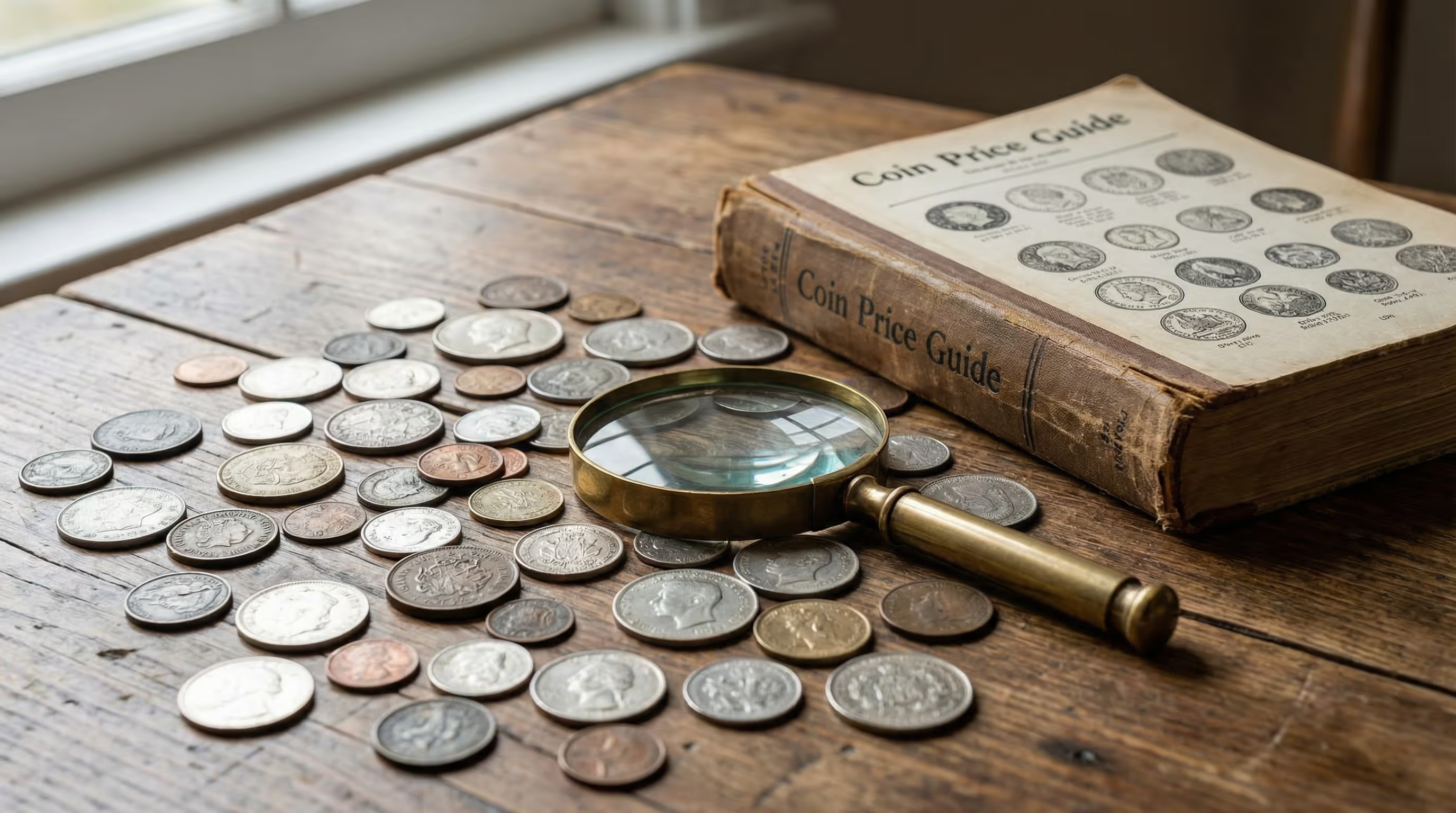
Coins scattered on table with magnifying glass and price guide

Whether you've inherited a jar of old coins, found some interesting pieces in your pocket change, or rediscovered a childhood collection, you're probably wondering what they're worth. The good news is that you can learn to evaluate most coins yourself using a straightforward process before deciding if you need professional help from a qualified appraiser.

Quick answer: A coin's value depends on five main factors - date and mintmark, how many were made (mintage), condition or grade, metal content, and current collector demand. Most coins are worth face value, but some can be worth hundreds or thousands of dollars based on these variables.

Pro tip: Before you start, never clean your coins. Cleaning almost always reduces value, even if the coin looks "better" afterward.

Here's the step-by-step process to determine what your coins are worth.

Step 1: Identify your coin completely

Start by gathering basic information about each coin. You'll need to identify the country, denomination, date, and mintmark. For U.S. coins, look for the date on the front and check for small letters indicating where it was made.

Mintmarks are tiny letters that show which U.S. mint produced the coin. Common ones include "D" for Denver, "S" for San Francisco, and no mark (or "P") for Philadelphia. These marks are usually found near the date or on the reverse side, depending on the coin type and year.

Write down this information for each coin. A 1909-S penny is completely different from a 1909 penny without a mintmark, even though they look nearly identical. That small "S" can mean the difference between a few cents and several hundred dollars.

Step 2: Check rarity and mintage numbers

Once you know exactly what coin you have, research how many were made. This number is called the mintage, and it's your first clue about rarity. You can find mintage figures in coin price guides, online databases, or numismatic websites.

However, rarity alone doesn't guarantee high value. A coin also needs collector demand. Some coins with low mintages aren't particularly valuable because few people collect them, while certain common dates in exceptional condition can be worth significant money.

Coin reference book open showing mintage numbers and values

Look for "key dates" and "semi-key dates" in your coin series. These are specific year and mintmark combinations that are scarce and actively sought by collectors. For example, the 1909-S VDB penny or the 1916-D Mercury dime are famous key dates that command premium prices.

Important note: Don't rely solely on online forums or social media for rarity information. Use established price guides and auction records for accurate data.

Step 3: Evaluate condition and assign a grade

A coin's condition dramatically affects its value. The same rare coin can be worth $50 in poor condition or $5,000 in mint condition. Learning basic grading helps you estimate value more accurately.

Coins are graded on a scale from 1 to 70, but you can start with these basic categories. Circulated coins show wear from use and fall into grades like Good, Fine, Very Fine, and Extremely Fine. Uncirculated coins never entered circulation and range from About Uncirculated to perfect Mint State.

Look for wear on the highest points of the design first. On a penny, check Lincoln's cheek and the wheat stalks. On quarters, examine Washington's hair and the eagle's breast. The more detail that remains sharp and unworn, the higher the grade and value.

Grade RangeDescriptionTypical Value ImpactGood-Very GoodHeavy wear, major details visibleBase collector valueFine-Very FineModerate wear, most details clear2-5x base valueExtremely FineLight wear, sharp details5-15x base valueAbout UncirculatedSlight wear on high points only10-50x base valueMint StateNo wear, original mint luster20-500x+ base value

Step 4: Research current market prices

Price guides give you starting points, but actual market values come from recent sales. Check completed auction listings on major platforms, dealer websites, and coin show results to see what similar coins actually sold for, not just asking prices.

Pay attention to coins in similar condition to yours. A price guide might list a coin at $100 in Fine condition, but recent sales might show them selling for $75 or $125 depending on market conditions and specific eye appeal.

Remember that coin values fluctuate. Bullion coins (like silver dollars or gold coins) track precious metal prices closely, while collectible coins depend more on collector demand and can be more stable or volatile depending on the series.

Computer screen showing coin auction results and price comparisons

For valuable discoveries, document everything with clear photos and detailed notes. This information becomes crucial if you decide to seek professional authentication, grading, or appraisal services.

Market reality check: Most coins are worth face value or slightly above. Don't be discouraged if your collection isn't a goldmine - the real value often lies in the enjoyment and history.

When you've completed these steps, you'll have a realistic idea of your coins' values. For most common coins, this process gives you enough information to make informed decisions about keeping, selling, or getting additional expert opinions.

If you discover potentially valuable coins, especially those worth more than a few hundred dollars, or if you need formal documentation for insurance, estate, or tax purposes, that's when professional appraisal services become worthwhile. A USPAP-compliant appraisal from qualified experts like those at AppraiseItNow provides the documentation and credibility you need for official purposes.

The key to successful coin valuation is patience, research, and honest assessment of condition. With these tools, you can confidently evaluate your collection and make informed decisions about your next steps. Understanding the benefits of regularly appraising your coins can help you track your collection's value over time and make strategic decisions about buying, selling, or holding specific pieces.

Frequently Asked Questions About Coin Values

What makes a coin valuable beyond its face value?

A coin's value depends on five main factors: date and mintmark, rarity (how many were made and survive), condition or grade, metal content, and current collector demand. Historical significance and errors can also increase value. Most coins are worth face value, but rare dates, low mintages, high grades, or precious metal content can make them worth hundreds or thousands of dollars.

Should I clean my coins before getting them appraised?

No, never clean your coins. Cleaning almost always reduces value, even if the coin looks "better" afterward. Professional appraisers and collectors prefer coins in their original, uncleaned condition. Instead, store coins properly in protective holders and let a professional appraiser evaluate them as-is.

How can I tell if my coin is rare?

Check the coin's mintage figures in price guides or online databases to see how many were originally made. Look for "key dates" and "semi-key dates" in your coin series - these are specific year and mintmark combinations that are scarce and sought after by collectors. Remember that rarity alone doesn't guarantee high value; the coin also needs collector demand and good condition.

When should I get a professional coin appraisal instead of using price guides?

Get a professional appraisal when you need defensible documentation for insurance, estate settlement, charitable donation, divorce, or tax purposes. Also consider professional appraisal for potentially valuable coins worth more than a few hundred dollars, or when you need USPAP-compliant documentation accepted by courts, the IRS, and major insurers.

Related Appraisals We Offer

Related Articles

BEST-IN-CLASS APPRAISERS, CREDENTIALED BY: