When you're facing an insurance claim, securing financing, or making a buy-sell decision involving equipment, miscalculating repair costs can mean the difference between thousands of dollars in your pocket or out of it. A single oversight in estimating repair expenses can lead to underinsured assets, inflated loan collateral values, or poor investment decisions.
Repair costs are the expenses required to restore equipment or machinery to its intended functional condition. These costs directly impact appraisal values and include labor, parts, materials, and outside services needed for restoration. For appraisers, business owners, lenders, and insurance professionals, understanding how to calculate these costs accurately is essential for making informed decisions about equipment value and risk.
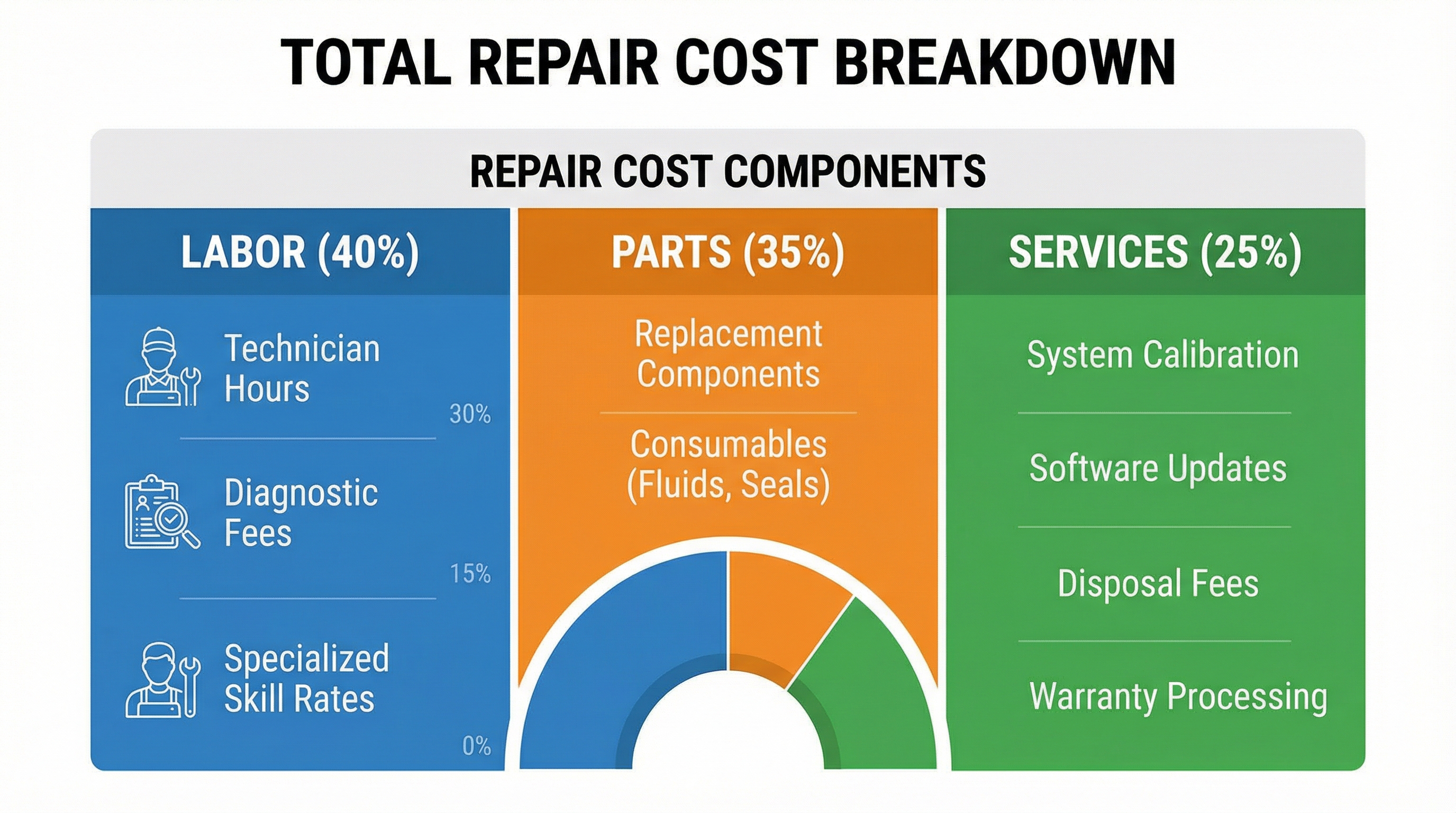
Quick Answer: Total repair costs equal labor hours multiplied by hourly rates, plus parts and materials, plus subcontracted services, plus overhead and contingency allowances. Most professionals add 10-20% contingency for unexpected issues.
This guide will walk you through a practical framework for calculating repair costs, complete with formulas, examples, and decision-making tools that help you determine when repair makes economic sense versus replacement.
Understanding repair costs in equipment appraisals
Repair costs in equipment appraisals represent the monetary investment required to bring machinery back to its intended operational state. These costs differ from routine maintenance expenses because they address specific deficiencies, damage, or wear that prevents the equipment from functioning properly.
When appraising equipment, you need to consider repair costs within the context of the asset's overall value and remaining useful life. A $5,000 repair on a $50,000 piece of equipment might be justified, while the same repair cost on a $6,000 machine would likely point toward replacement instead.
The key is understanding that repair costs serve different purposes depending on your appraisal objective. For insurance purposes, you might calculate the cost to restore equipment to its pre-loss condition. For lending decisions, you're determining the cost to achieve marketable condition. For buy-sell transactions, repair costs help establish fair market value adjustments. Understanding the basics of equipment & machinery appraisal can provide critical context for these calculations.
Step-by-step repair cost calculation method
Calculating repair costs systematically ensures you capture all necessary expenses and avoid costly oversights. Here's the proven framework professionals use:
Step 1: Document current condition
Start by thoroughly inspecting the equipment and documenting all deficiencies, damage, or wear issues. Take photos, note serial numbers, and gather maintenance records. This documentation becomes your baseline for determining what needs repair.
Step 2: Define repair scope
Clearly establish whether you're calculating costs to achieve basic functionality, full operational capacity, or like-new condition. This scope definition drives every subsequent cost estimate.
Step 3: Estimate labor requirements
Research typical labor hours for each repair task using manufacturer service manuals, industry guides, or quotes from qualified technicians. Factor in diagnostic time, setup, and testing.
Step 4: Price parts and materials
Obtain current pricing for required parts from OEM dealers, aftermarket suppliers, or used parts vendors. Include consumables like fluids, filters, and gaskets that will be needed during repairs.
Step 5: Add specialty services
Include costs for subcontracted work like welding, machining, electrical work, or painting that requires specialized skills or equipment.
Step 6: Apply overhead and contingency
Add 15-25% for overhead costs, shipping, taxes, and unforeseen complications that commonly arise during repair work.
Formula: Total Repair Cost = (Labor Hours × Hourly Rate) + Parts & Materials + Subcontracted Services + (Overhead & Contingency %)
Key factors that drive repair costs
Several critical factors can dramatically impact your repair cost estimates. Understanding these variables helps you adjust calculations for specific situations and avoid significant estimation errors.
Equipment age and model support significantly affects parts availability and labor complexity. Newer equipment typically has readily available parts and documented repair procedures, while older machinery may require custom fabrication or extensive troubleshooting time.
Damage severity and location influences both labor time and parts requirements. Surface damage might require only cosmetic repairs, while internal component failures could necessitate complete system overhauls.
Geographic location and labor markets create substantial cost variations. Urban areas with skilled technicians might charge premium rates, while rural locations could face limited service availability and higher travel costs.
Parts availability and sourcing options directly impact both cost and timeline. OEM parts command premium pricing but ensure compatibility, while aftermarket alternatives offer savings but may require additional fitting time. When working with specialized equipment like construction equipment or agricultural machinery, these factors become even more critical.
| Factor | Low Impact | High Impact |
|---|---|---|
| Equipment Age | 0-5 years | 15+ years |
| Damage Severity | Cosmetic/minor | Structural/major systems |
| Labor Market | Standard rates | Premium/scarce skills |
| Parts Availability | Common/stocked | Obsolete/custom |
Tools and data sources for accurate estimates
Professional repair cost estimation relies on multiple data sources to ensure accuracy and defensibility. Using the right combination of tools helps validate your estimates and provides documentation for your appraisal report.
Manufacturer resources offer the most accurate baseline data. OEM service manuals provide standard labor times, parts diagrams, and recommended procedures. Many manufacturers also offer online parts catalogs with current pricing and availability information.
Industry cost guides like Marshall & Swift, Prism, or equipment-specific databases provide standardized repair cost data across different asset types and geographic regions. These guides help benchmark your estimates against industry standards.
Service provider quotes from qualified repair shops, dealers, or mobile technicians provide real-world pricing for specific repair scenarios. Obtaining multiple quotes helps validate your estimates and identifies potential cost variations.
Historical repair data from your own records or similar equipment provides valuable insight into actual versus estimated costs. This data helps refine your estimation accuracy over time.
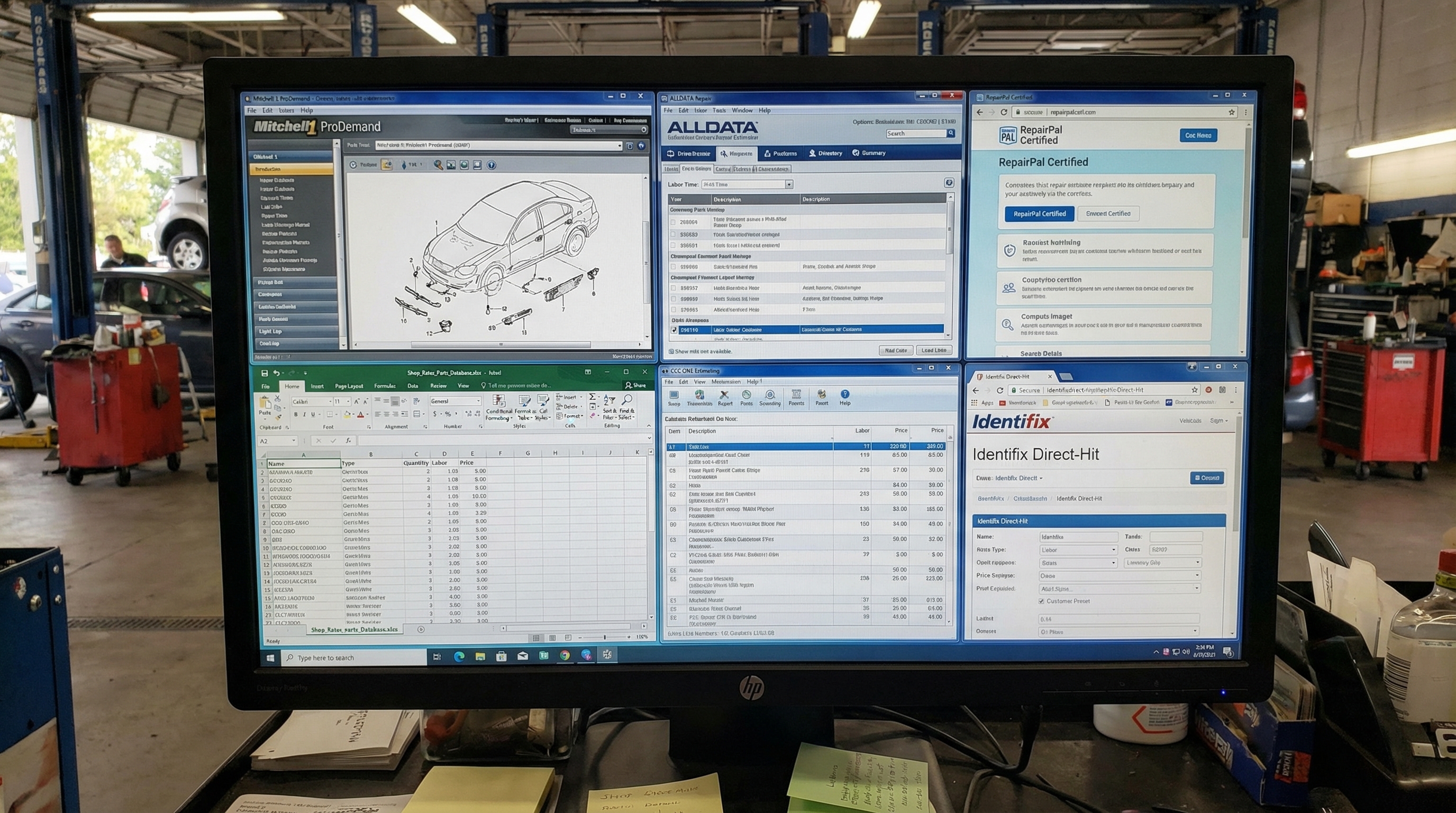
Pro Tip: Always use at least two independent data sources when estimating repair costs over $5,000. This cross-validation reduces estimation errors and strengthens your appraisal defensibility.
When repair costs indicate replacement instead
Understanding when repair costs exceed economic justification is crucial for accurate appraisals and sound business decisions. The relationship between repair costs, replacement costs, and remaining asset value determines the most rational course of action.
The 50% rule serves as a general guideline: when repair costs exceed 50% of the equipment's current market value, replacement often makes more economic sense. However, this threshold varies based on asset type, market conditions, and specific circumstances.
Remaining useful life considerations factor heavily into repair versus replacement decisions. Equipment with significant remaining useful life justifies higher repair investments, while assets nearing end-of-life rarely warrant major repair expenditures.
Technology obsolescence can make even moderate repair costs unjustifiable. If repairs restore functionality but leave you with outdated technology that affects productivity or compliance, replacement might be the better long-term choice.
Consider total cost of ownership when evaluating repair decisions. Factor in ongoing maintenance costs, energy efficiency improvements, warranty coverage, and productivity gains that newer equipment might provide. This is particularly important for industrial equipment and heavy machinery where operational efficiency directly impacts profitability.
The repair versus replacement analysis becomes particularly important for insurance claims, where you need to determine whether restoration or total loss settlement provides better value for all parties involved.
Understanding how to calculate repair costs accurately protects you from costly estimation errors and helps you make informed decisions about equipment value and risk. Whether you're handling insurance claims, evaluating loan collateral, or making buy-sell decisions, these calculation methods provide the foundation for defensible appraisals.
When repair cost calculations become complex or involve high-value assets, working with certified appraisers ensures USPAP-compliant reports that stand up to scrutiny from lenders, insurers, and courts. Professional appraisers bring specialized knowledge of market conditions, repair cost databases, and industry standards that strengthen your position in any valuation scenario. Avoiding common mistakes in equipment appraisals can save both time and money in the long run.