






USPAP-compliant appraisals by best-in-class appraisers
.avif)
Joe Kattan

Anne Hay, ISA AM

Jason Dolph, CAGA

Ashley Innes, ISA AM

Aron Blue
About AppraiseItNow's Jewelry Appraisal Services
AppraiseItNow provides professional jewelry appraisals for insurance coverage, estate tax reporting, charitable donations, divorce proceedings, and resale or liquidation purposes. Our appraisers evaluate all categories of fine jewelry, from diamond engagement rings and signed designer pieces to antique brooches, loose gemstones, and precious metal items. Jewelry appraisals require specialized gemological knowledge and current market data, and our team brings both to every engagement. Our mission is to deliver defensible, USPAP-compliant valuations with exceptional speed, professionalism, and client service.
As a specialized subset of professional personal property valuations, our jewelry appraisal services are used by individuals, collectors, estate attorneys, CPAs, insurance agents, and financial advisors. Most jewelry appraisals can be completed remotely using high-resolution photographs and documentation submitted through our online platform, though onsite inspection may be coordinated for large collections, estate inventories, or items requiring in-person gemological examination. We offer Fair Market Value (FMV), Replacement Value, and Actual Cash Value (ACV) appraisals for various intended uses.
What Types of Jewelry Do We Appraise?
AppraiseItNow appraises a wide range of jewelry and gemstone items, including:
- Diamond engagement rings and wedding bands
- Loose diamonds and colored gemstones
- Fine jewelry by signed designers such as Cartier, Tiffany, Van Cleef, and Bulgari
- Antique and estate jewelry from Georgian, Victorian, Art Nouveau, Art Deco, and Retro periods
- Gold, platinum, and silver jewelry
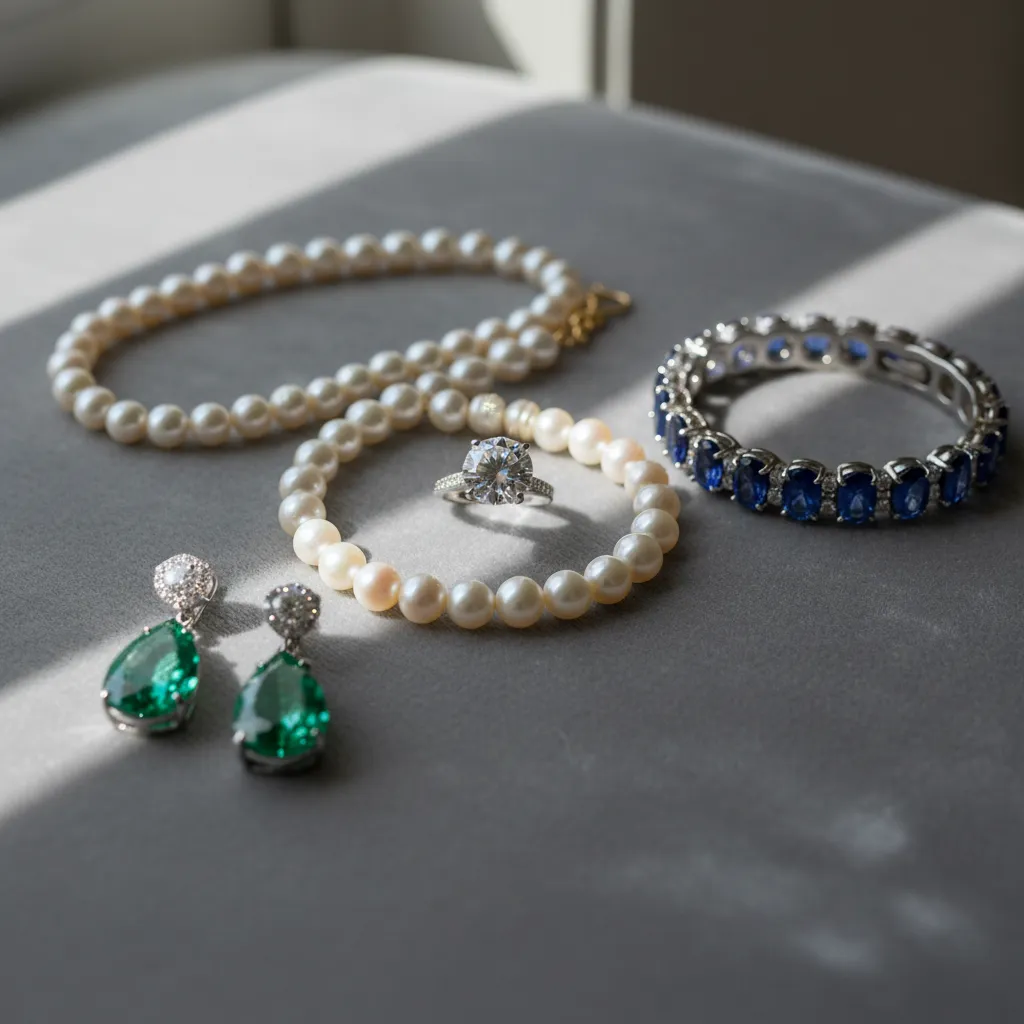
- Pearls, including natural, cultured, and South Sea varieties
- Gemstone jewelry featuring rubies, sapphires, emeralds, and other precious stones
- Fashion and costume jewelry with collectible or secondary market value
- Watches and timepieces with jewelry-grade components
- Jewelry sets and parures appraised as a collection or individually
Who Does AppraiseItNow Serve?
AppraiseItNow serves individuals, families, and collectors who need a credible, independent jewelry valuation, as well as estate attorneys, CPAs, insurance professionals, and divorce attorneys who require USPAP-compliant reports for legal or financial proceedings.
How much does a Jewelry appraisal cost?
Appraisal Type
Standard Fee Range
Pricing By Volume
What Drives Cost?
.svg)
5-Star Valuation Services, Loved by Hundreds
{{sectionName}}

{{sectionName}}
{{sectionName}}
{{sectionName}}
.svg)
View all Locations
How our Valuation Process Works
Written USPAP-compliant personal property appraisals for when defensibility matters.
Given the USPAP-compliant nature of AppraiseItNow’s appraisal reports, we prepare our deliverables for major legal, tax, and financial reporting purposes for individual and commercial clients.
Popular uses of our appraisal reports include:
Taxes, Estates & Financial Planning
- Gift Tax - IRS Form 709
- Estate Tax - IRS Form 706
- Charitable Donations - IRS Form 8283
- Estate planning, equitable distribution, and probate
- Loan Purposes
Life Events & Special Circumstances
- Divorce
- Social Security reporting or Medicaid Application Filings
- E-2 visa applications
Insurance & Risk Management
- Insurance coverage
- Insurance claims
- Third-party & legal damage claims





What types of jewelry does AppraiseItNow appraise?
AppraiseItNow appraises a wide range of fine and estate jewelry, from everyday pieces to high-value collections. Common items include:
- Engagement rings and wedding bands
- Diamond and gemstone jewelry
- Gold, silver, and platinum pieces
- Antique and vintage jewelry
- Signed designer pieces and costume jewelry
- Loose gemstones and diamonds
- Watches and timepieces
- Pearls and pearl strands
Are your jewelry appraisals USPAP-compliant?
Yes. All jewelry appraisals prepared by AppraiseItNow follow USPAP Standards 7 and 8, which govern the development and reporting of personal property appraisals. These standards require clear identification of each piece, documentation of physical characteristics such as metal type, gemstone details, and condition, analysis of relevant market data, and a credible value conclusion supported by transparent methodology.
What are common reasons someone needs a jewelry appraisal?
Jewelry appraisals are needed for a wide variety of personal, legal, and financial purposes, including:
- Insurance coverage and insurance claims
- Estate settlement and probate
- Charitable donation deductions, particularly for pieces valued over $5,000 where IRS Form 8283 requires a qualified appraisal
- Estate tax reporting on Form 706
- Divorce proceedings and equitable distribution
- Gift tax filings on Form 709
- Pre-sale valuation and buyer due diligence
Can you appraise jewelry in poor condition, with unknown provenance, or with limited documentation?
Yes. Appraisers can work with pieces that have limited documentation or uncertain history, and condition is always factored into the value conclusion rather than treated as a barrier. For high-end pieces, documented provenance such as a known ownership history or celebrity association can significantly increase value, while the absence of documentation is simply noted and reflected in the analysis. Our appraisers use specialized equipment including loupes and gemological tools to assess physical characteristics directly, so a GIA certificate or original receipt is helpful but not required to proceed.
Can you appraise large collections or multiple pieces?
Yes. AppraiseItNow regularly appraises small jewelry collections, large estate jewelry inventories, and everything in between. Whether you have a handful of inherited pieces or a substantial collection spanning dozens of items, we can scope the engagement appropriately and apply volume pricing to keep costs manageable.
Do you provide online or remote jewelry appraisals?
Most jewelry appraisals are completed remotely, with clients submitting photographs, gemological reports, and descriptive information through our secure online process. For larger collections, complex estates, or situations where a physical inspection is required by scope, we can coordinate an in-person appraiser anywhere in the United States.
How much does a jewelry appraisal cost?
Jewelry appraisal fees depend on the purpose, number of items, and complexity of the engagement. Standard appraisals for insurance coverage, personal use, probate, and estate distribution start at $195, while advanced appraisals for charitable donations, estate tax, divorce, and legal proceedings start at $295. Volume pricing by number of items is as follows:
- 1 item: $195 to $495
- 10 items: $695 to $1,200
- 50 to 100 or more items: $1,600 to $3,500 or more
All fees are quoted as a fixed price before work begins so there are no surprises.
Do you offer discounted pricing for large volumes?
Yes. Collections of 50 or more jewelry items qualify for discounted collection pricing, with fees ranging from $1,600 to $3,500 or more depending on scope and complexity. If you have a large estate inventory or a substantial personal collection, contact us for a custom quote tailored to your specific needs.
How long does a jewelry appraisal take?
Most remote jewelry appraisals are completed within 7 to 10 business days. Onsite inspections or larger collections typically take 2 to 3 weeks from the date of inspection. If you have a deadline, rush service is available for same-day or next-day turnaround upon request.
Who prepares the appraisal report?
Appraisal reports are prepared by credentialed personal property appraisers with specialized expertise in jewelry, gemstones, and precious metals. Each report is reviewed for accuracy, completeness, and compliance with USPAP Standards 7 and 8 before delivery.
Are your appraisers ISA, ASA, or AAA credentialed?
Yes. AppraiseItNow's personal property appraisers hold professional credentials including ISA AM (International Society of Appraisers Accredited Member) designations. Our team also includes appraisers who meet the IRS definition of a qualified appraiser under IRC Section 170(f)(11)(E), which requires demonstrated education, experience, and prior acceptance by relevant agencies and fiduciaries.
Do you prepare appraisals for IRS Form 8283 (Noncash Charitable Contributions)?
Yes. When you donate jewelry with a claimed fair market value exceeding $5,000, the IRS requires a qualified appraisal and a completed Section B of Form 8283, signed by a qualified appraiser. AppraiseItNow prepares fully compliant appraisal reports that meet these requirements, including the detailed descriptions of weight, metal type, gemstone characteristics, and valuation methodology that the IRS expects.
Do you prepare appraisals for IRS Form 706 (Estate Tax)?
Yes. For estates that exceed the federal estate tax threshold, currently $13.61 million in 2024, jewelry must be reported at fair market value on Form 706. AppraiseItNow prepares USPAP-compliant appraisals that document each piece in sufficient detail to withstand IRS scrutiny and support the executor's filings.
Do you buy, sell, or broker jewelry?
No. AppraiseItNow is an independent appraisal firm and does not buy, sell, or broker jewelry. This independence is essential to producing unbiased, defensible valuations that are accepted by the IRS, insurers, courts, and other parties.
What information do you need to get started?
To begin a jewelry appraisal, it helps to have the following available:
- Clear photographs of each piece from multiple angles
- Any existing gemological reports such as GIA or AGS certificates
- Known details about metal type and purity, such as 18k gold or platinum
- Approximate carat weight or stone dimensions if known
- Provenance documents, receipts, or prior appraisals if available
- The purpose of the appraisal, such as insurance, estate, or donation
- Your preferred turnaround timeline
Can AppraiseItNow appraise jewelry located anywhere in the U.S.?
Yes. Remote appraisals are available to clients in all 50 states, and the majority of jewelry appraisals are completed entirely online. For larger or more complex projects, such as full estate inventories or situations requiring physical inspection, we can coordinate an in-person appraiser in any state.
Will my appraisal be accepted by the IRS, insurers, or courts?
AppraiseItNow's appraisal reports are prepared to meet the standards required by the IRS, insurance carriers, probate courts, and other legal and financial institutions. Our reports are USPAP-compliant, signed and dated by a qualified appraiser, and include the detailed property descriptions, valuation methodology, and appraiser declarations required under IRS Code Sections 170(f)(11)(E) and 6695A. Non-compliant appraisals risk deduction denial or penalties, which is why working with a qualified, credentialed appraiser matters.
How often should I have my jewelry re-appraised for insurance purposes?
Insurance professionals and appraisers generally recommend updating jewelry appraisals every 3 to 5 years, and sometimes more frequently for high-value pieces. Gold prices, diamond market conditions, and fashion-driven demand can shift significantly over time, and an outdated appraisal can leave you underinsured, with insurers potentially denying or limiting claims based on a value that no longer reflects the current replacement cost. Keeping your appraisal current ensures your coverage accurately reflects what it would cost to replace each piece today.
What is the difference between replacement value and fair market value for jewelry?
Replacement value is the cost to replace a piece with one of comparable quality at current retail prices, and it is the standard used for insurance coverage purposes. Fair market value, by contrast, is the price a willing buyer would pay a willing seller in an open market, and it is typically lower than replacement value since it reflects what the piece would actually sell for rather than what it would cost to buy new. The IRS requires fair market value for estate tax, gift tax, and charitable donation appraisals, so using the wrong value type for the wrong purpose can create compliance problems.
What gemological documentation strengthens a jewelry appraisal?
A GIA grading report or similar certificate from a recognized gemological laboratory provides independent verification of a stone's cut, color, clarity, and carat weight, and appraisers can cross-reference this data against current market comparables from auction records and dealer transactions. Without a lab report, appraisers use specialized equipment such as loupes, refractometers, and scales to measure and grade stones directly, which is fully acceptable under USPAP but may introduce slightly wider ranges in the value conclusion. Providing any existing certificates, prior appraisals, or purchase receipts at the start of the engagement helps the appraiser work more efficiently and produce a more precise report.
APPRAISEITNOW APPRAISERS ARE BEST-IN-CLASS & CREDENTIALED BY LEADING APPRAISAL ORGANIZATIONS LIKE THE ISA, ASA, & MORE.




