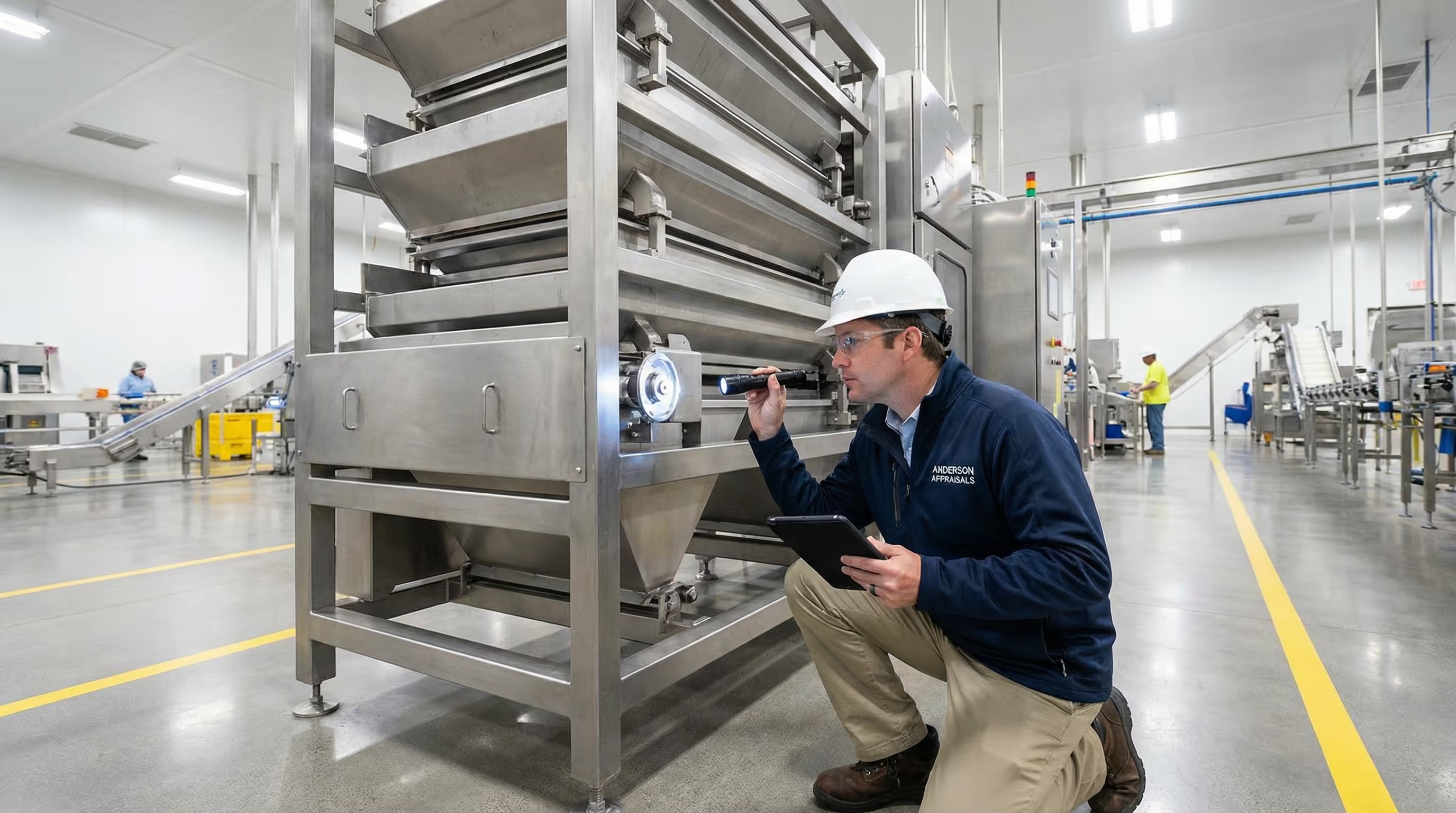
When your lender asks for the value of your bottling line or your insurance company needs documentation for your spiral freezer, you need more than a guess. Food processing equipment appraisals provide the defensible, professional valuations that banks, insurers, and courts accept for financing, insurance claims, and business transactions.
A certified equipment appraisal gives you an independent opinion of value prepared by accredited professionals following industry standards. Whether you're securing a loan against your packaging line or settling an insurance claim after equipment damage, accurate valuations protect your financial interests and support critical business decisions.
Quick Answer: Professional food processing equipment appraisals typically cost between $2,000 to $15,000 depending on complexity, with most single-line assessments completed within 1-2 weeks using sales comparison, cost, and income approaches.
This guide covers everything you need to know about food processing equipment appraisals, from understanding the valuation process to choosing the right appraiser for your specific needs.
You need professional equipment valuations in several critical situations. When securing financing, lenders require defensible asset values to determine loan amounts and collateral adequacy. Your $500,000 packaging line might secure a larger credit facility than you realize, but only with proper documentation.
Insurance coverage decisions depend on accurate replacement costs. Without current appraisals, you risk being underinsured when equipment fails or gets damaged. Many food processors discover this gap only after filing claims for inadequate amounts.
Business transactions like mergers, acquisitions, or partnership changes require fair market valuations. Buyers and sellers need independent opinions to negotiate confidently and avoid disputes. Estate planning, divorce proceedings, and tax reporting also demand certified appraisals that withstand scrutiny from attorneys and tax authorities.

The cost of guesswork often exceeds appraisal fees. One food processor avoided a $50,000 overpayment on used equipment after their professional appraisal for food processing equipment revealed hidden maintenance issues that reduced the fair market value significantly.
Professional appraisers use three standard approaches to determine equipment value, often combining methods for the most accurate assessment.
The sales comparison approach analyzes recent sales of similar equipment. Your appraiser researches comparable mixers, ovens, or packaging lines that sold recently, adjusting for differences in age, condition, and capacity. This works best when active markets exist for your equipment type.
The cost approach calculates replacement cost new, then subtracts depreciation for physical wear, functional obsolescence, and economic factors. A 10-year-old canning line might cost $2 million to replace new but be worth $800,000 after accounting for wear and newer technology available.
Industry Insight: Custom food processing equipment often relies heavily on cost approach valuations since comparable sales data is limited, making detailed documentation of original specifications and modifications crucial for accurate assessments.
The income approach applies when equipment generates measurable cash flows, such as dedicated production lines or toll processing arrangements. This method is less common but valuable for specialized scenarios.
USPAP-compliant appraisers consider all relevant approaches and reconcile them into a final opinion of value that stands up to third-party scrutiny. Understanding the process of food processing equipment appraisal helps you prepare for what to expect during the valuation.
Several factors significantly influence food processing equipment values, and understanding them helps you maintain and maximize your asset worth.
Age and remaining useful life matter most for rapidly evolving technology. A five-year-old automated packaging system typically retains more value than a 15-year-old manual line, assuming similar condition. However, well-maintained older equipment from reputable manufacturers can surprise owners with retained value.
Physical condition and maintenance history directly impact valuations. Equipment with documented preventive maintenance, recent overhauls, and complete service records commands premium prices. Deferred maintenance becomes immediately apparent to experienced appraisers and reduces values accordingly.
Technology level and automation increasingly influence modern valuations. Food safety features, energy efficiency, and integration capabilities with plant management systems add value. Conversely, equipment requiring manual operation or lacking modern safety features faces functional obsolescence.
Brand reputation and specifications create value differences. Established manufacturers like Bühler, GEA, or JBT typically maintain better resale values than lesser-known brands. Stainless steel construction, sanitary design, and modular configurations also enhance value compared to basic alternatives.
Market demand fluctuates based on industry trends. Ready-to-eat meal production equipment currently enjoys strong demand, while some traditional canning equipment faces softer markets. Your appraiser monitors these trends to provide current market perspectives.
Food processing equipment appraisal costs vary based on several factors you can influence through preparation and scope decisions.
FactorImpact on CostTypical RangeSingle machineLower complexity$2,000 - $5,000Production lineModerate complexity$5,000 - $10,000Full plantHigh complexity$10,000 - $25,000+Rush timelinePremium pricing+25% - 50%
Project scope affects pricing most significantly. Appraising a single spiral freezer costs less than valuing an entire bakery production line with integrated systems. Geographic dispersion adds costs when equipment spans multiple facilities.
Inspection requirements influence fees and timelines. On-site inspections provide the most accurate assessments but require travel time and coordination with your operations. Desktop appraisals work for some purposes but may not satisfy lender or legal requirements.
Timeline needs impact pricing. Standard appraisals typically complete within 2-3 weeks, while rush projects requiring completion in days command premium fees. Planning ahead saves money and ensures thorough analysis.
Cost-Saving Tip: Prepare detailed equipment lists, serial numbers, and maintenance records before engaging an appraiser. This preparation can reduce billable hours and improve accuracy while demonstrating equipment care to potential buyers or lenders.
Intended use affects complexity and cost. Appraisals for internal planning cost less than those prepared for litigation or regulatory compliance, which require additional documentation and expert witness capabilities.
Most appraisers offer fixed-fee proposals after understanding your specific requirements. Request detailed proposals comparing different scope options to make informed decisions about depth versus cost. Learn more about common questions about food processing equipment appraisal to better prepare for the engagement.

Selecting qualified appraisers protects your interests and ensures report acceptance by third parties. Several credentials and qualifications matter for food processing equipment valuations.
Professional accreditation provides quality assurance. Look for designations from recognized organizations like the American Society of Appraisers (ASA), International Society of Appraisers (ISA), or American Machinery and Equipment Appraisers (AMEA). These credentials require education, experience, and continuing education commitments.
USPAP compliance ensures professional standards. The Uniform Standards of Professional Appraisal Practice govern ethical and technical requirements for defensible appraisals. Non-compliant reports may not satisfy lender, legal, or tax authority requirements.
Industry experience matters significantly for accuracy. Food processing equipment has unique characteristics, markets, and applications that general machinery appraisers might miss. Ask about specific experience with your equipment types and industry sectors. Consider what to look for when choosing a food processing equipment appraiser to ensure you select the right professional.
Report quality and expert witness capability become important for contested situations. Review sample reports to assess thoroughness and clarity. If litigation potential exists, confirm the appraiser's expert witness experience and testimony capabilities.
Request written proposals outlining scope, methodology, timeline, and fees before engaging any appraiser. Compare qualifications and approaches rather than focusing solely on price, since inadequate appraisals often cost more than quality work through delays, disputes, or rejected reports. Understanding the importance of accurate food processing equipment appraisal helps you appreciate the value of selecting experienced professionals.
Understanding food processing equipment appraisals empowers better business decisions and protects your financial interests. Whether you need valuations for financing, insurance, transactions, or compliance, professional appraisals provide the defensible documentation that banks, insurers, and courts require. The investment in quality appraisal services typically pays for itself through better loan terms, appropriate insurance coverage, and confident transaction negotiations.
Ready to get your food processing equipment professionally appraised? Contact AppraiseItNow today for a consultation and detailed proposal tailored to your specific valuation needs.
Food processing equipment appraisal costs typically range from $2,000 to $15,000 depending on the complexity and scope of the project. Single machine appraisals generally cost less, while complete production lines or full plant assessments require more extensive analysis and higher fees. Factors that influence cost include the number of assets, equipment complexity, geographic location, timeline requirements, and the level of detail needed in the final report.
The most significant factors affecting food processing equipment value include age and remaining useful life, physical condition and maintenance history, brand reputation and model specifications, technology level and automation capabilities, and current market demand. Equipment with documented preventive maintenance, modern safety features, stainless steel construction, and compliance with current food safety regulations typically commands higher values than older, poorly maintained, or obsolete machinery.
Most food processing equipment appraisals are completed within 1-3 weeks from the initial engagement. Simple single-machine assessments may be finished in as little as one week, while complex production lines or full plant appraisals can take 2-4 weeks depending on the scope and access requirements. Rush projects requiring completion in days are possible but typically command premium pricing of 25-50% above standard fees.
Look for appraisers with professional accreditation from recognized organizations like the American Society of Appraisers (ASA), International Society of Appraisers (ISA), or American Machinery and Equipment Appraisers (AMEA). Ensure they follow USPAP (Uniform Standards of Professional Appraisal Practice) compliance and have specific experience with food processing equipment. The appraiser should be able to provide sample reports and demonstrate knowledge of food industry regulations, equipment markets, and valuation methodologies specific to food processing machinery.