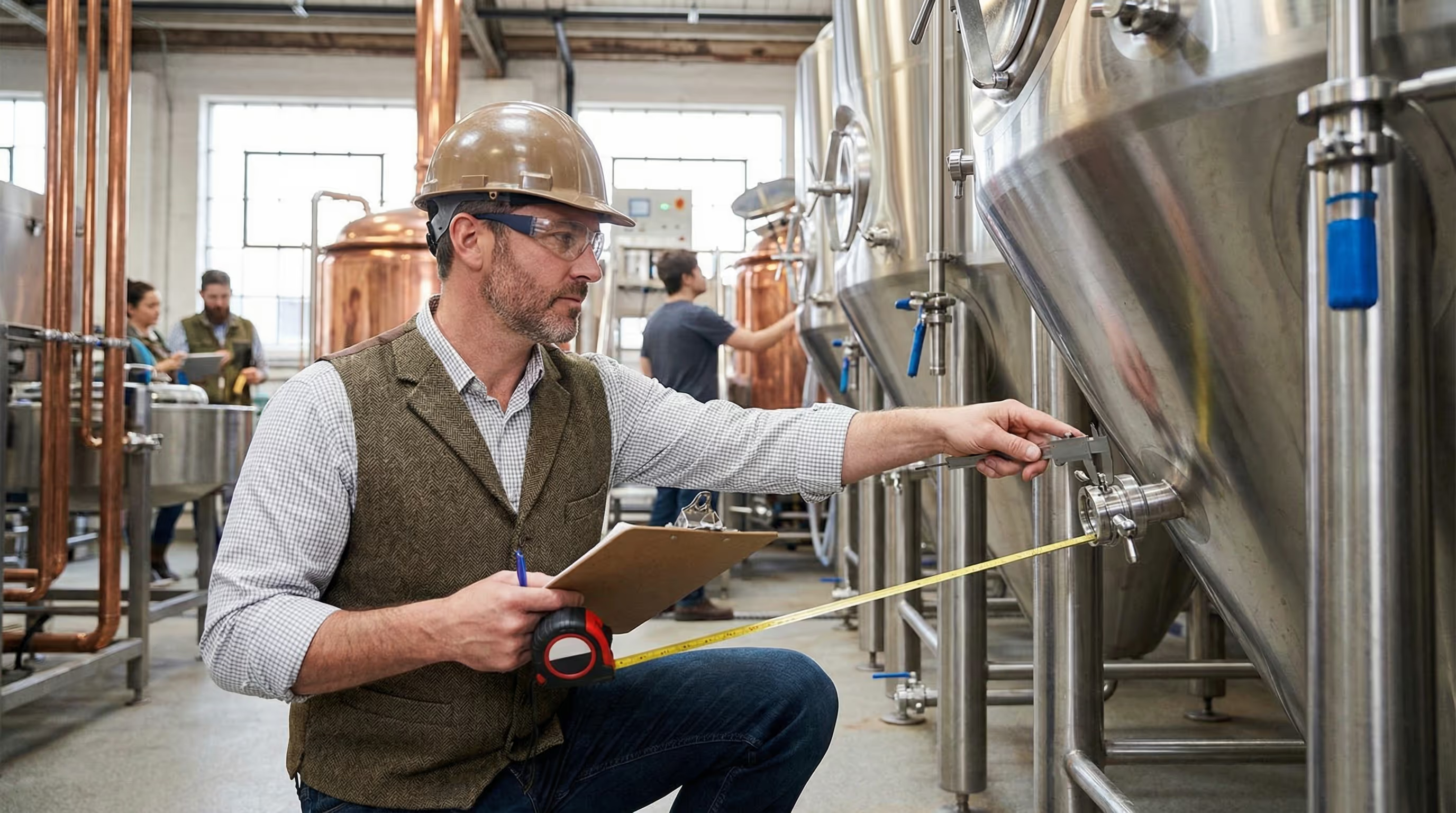
Whether you're running a craft brewery, coffee shop, or bottling plant, your beverage equipment represents a significant investment. Without knowing its true value, you could face costly mistakes when dealing with insurance claims, loan applications, or business sales. A professional beverage equipment appraisal provides the accurate valuation you need to make confident financial decisions and protect your business interests.
This guide walks you through everything about beverage equipment appraisals, from understanding when you need one to choosing the right appraiser for your specific situation.
Quick Answer: A beverage equipment appraisal is a professional evaluation that determines the current market value of your brewing, bottling, dispensing, and related equipment. Banks, insurers, courts, and the IRS rely on these USPAP-compliant reports for financing, insurance, legal, and tax purposes.
Understanding the right time to get your equipment appraised can save you thousands of dollars and prevent costly disputes down the road.
Financing and loan applications often require accurate equipment valuations. Banks and SBA lenders need to know the collateral value before approving loans for equipment purchases or business expansion. Without a proper appraisal, you might face loan delays or reduced funding amounts.
Insurance purposes represent another critical need. Your standard business policy may not adequately cover specialized beverage equipment. An appraisal ensures you have appropriate coverage limits and provides documentation for damage or theft claims. Similar to restaurant equipment appraisals, beverage equipment requires specialized knowledge to value properly for insurance purposes.
Buying or selling a beverage business requires knowing exactly what your equipment is worth. Whether you're acquiring a competitor's canning line or selling your entire operation, accurate valuations prevent overpaying or underpricing valuable assets.
Legal and tax situations also demand professional appraisals. Estate planning, divorce proceedings, partnership disputes, and IRS reporting all require defensible equipment valuations that meet specific regulatory standards.

Professional appraisers can evaluate virtually any equipment used in beverage production, service, or distribution.
Production equipment forms the backbone of most beverage operations. This includes fermentation tanks, bright tanks, mash tuns, kettles, heat exchangers, filtration systems, pasteurizers, and CIP (clean-in-place) systems. Bottling and canning lines, keg washers, fillers, cappers, and labeling machines also fall into this category.
Front-of-house equipment covers what customers see and interact with. Commercial espresso machines, batch brewers, beer taps, draft systems, refrigerated display cases, and beverage dispensers all require specialized knowledge to value properly. Just as with food processing equipment appraisal, understanding the specific industry applications is crucial.
Supporting systems keep operations running smoothly. Walk-in coolers, glycol systems, CO₂ equipment, compressors, boilers, and quality control instruments all contribute to your operation's overall value.
The scope can extend beyond individual machines to include complete production lines, packaging systems, and even related infrastructure when it's integral to the equipment's function.
Professional appraisers use established methodologies to ensure accurate, defensible valuations that meet industry standards.
The cost approach calculates what it would cost to replace your equipment today, minus depreciation for age, wear, and obsolescence. This method works well for newer equipment or when comparable sales data is limited.
The market approach compares your equipment to recent sales of similar items. Appraisers research auction results, dealer transactions, and private sales to establish market value based on actual trading activity.
The income approach considers how much revenue the equipment generates, though this method is less common for individual pieces of beverage equipment unless they directly produce measurable income streams.
Several factors influence the final valuation. Age and condition matter significantly, but so do brand reputation, technological advancement, energy efficiency, and current market demand. Equipment that meets modern sanitation standards or offers automation capabilities typically commands higher values.
Industry Insight: Well-maintained equipment from recognized manufacturers like Krones, KHS, or Alfa Laval often retains value better than generic alternatives, even when older, due to parts availability and proven reliability.
Understanding what happens during an appraisal helps you prepare effectively and ensures accurate results.
Initial consultation begins with defining your appraisal's purpose and scope. Different uses require different value standards, so your appraiser needs to understand whether you're seeking fair market value, replacement cost, or liquidation value.
Data collection involves gathering detailed information about each piece of equipment. You'll provide make, model, serial numbers, purchase dates, maintenance records, and current condition assessments. Following best practices for preparing for an equipment appraisal can streamline this phase significantly.
Site inspection may be necessary for complex or high-value equipment. The appraiser examines physical condition, installation quality, modifications, and operational status. Some appraisals can be completed using detailed photos and documentation.
Research and analysis follows, where the appraiser investigates market data, replacement costs, and comparable sales. This phase requires specialized knowledge of beverage industry trends and equipment markets.
Report preparation produces your final appraisal document. Depending on your needs, this might be a summary report for loan purposes or a comprehensive self-contained report for legal proceedings.
The entire process typically takes one to three weeks, depending on the equipment's complexity and the required report detail level.

Report TypeDetail LevelTypical UsesBest ForRestrictedBasicInternal planningQuick valuationsSummaryModerateLoans, insuranceMost common needsSelf-containedComprehensiveLegal, tax, disputesComplex situations
Pro Tip: Gather all equipment documentation, maintenance records, and recent photos before contacting an appraiser. This preparation speeds up the process and often reduces costs.
Selecting an appraiser with the right qualifications and experience ensures accurate results that stand up to scrutiny.
Industry-specific experience matters tremendously in beverage equipment appraisal. Look for appraisers who understand brewing processes, sanitation requirements, production capacities, and the unique challenges of beverage operations. Understanding what to look for when choosing a specialized equipment appraiser can help you make an informed decision.
Professional credentials provide assurance of competency and ethical standards. Seek appraisers with designations from recognized organizations like the American Society of Appraisers (ASA), American Machinery and Equipment Appraisers (AMEA), or Certified Machinery and Equipment Appraisers (CMEA).
USPAP compliance is essential for most business purposes. The Uniform Standards of Professional Appraisal Practice ensure your appraisal meets requirements for banks, courts, and government agencies.
Before hiring, ask about their specific experience with your type of equipment, recent comparable assignments, turnaround times, and whether they carry professional liability insurance. A qualified appraiser should readily provide references and explain their methodology clearly. Avoiding common mistakes when getting a beverage equipment appraisal starts with choosing the right professional.
The cost typically ranges from 2-3% of the equipment's appraised value, with minimum fees for smaller assignments. Factors affecting cost include the number of items, geographic location, required report detail, and timeline urgency.
Getting a professional beverage equipment appraisal provides confidence in your asset values and supports better business decisions. Whether you're securing financing, updating insurance coverage, or planning a business transaction, accurate equipment valuations protect your interests and demonstrate professionalism to banks, insurers, and business partners. For more comprehensive guidance, explore everything you need to know about beverage equipment appraisals.
Ready to move forward? Start by gathering your equipment lists, maintenance records, and photos, then contact a qualified appraiser to discuss your specific needs and timeline.
A beverage equipment appraisal is a professional evaluation that determines the current market value of your brewing, bottling, dispensing, and related equipment. A certified appraiser inspects the assets, analyzes market data, and applies recognized valuation methods to estimate fair market value or another defined value standard. Banks, insurers, courts, and the IRS rely on these USPAP-compliant reports for financing, insurance, legal, and tax purposes.
The cost of a beverage equipment appraisal typically ranges from 2-3% of the equipment's appraised value, with minimum fees for smaller assignments. Factors affecting cost include the number of items being appraised, geographic location, required report detail level, timeline urgency, and whether on-site inspection is needed. Complex operations like large breweries or multi-location facilities may require higher fees due to extensive documentation and analysis requirements.
You should prepare a complete equipment inventory with make, model, serial numbers, year of manufacture, purchase dates and costs, operating hours, maintenance records, and current condition assessments. Additional helpful documentation includes warranties, manuals, photos of each asset, and details about any modifications or upgrades. Providing complete information upfront can reduce appraisal time and improve accuracy.
Professional appraisers use three main approaches: the cost approach (replacement cost minus depreciation), the market approach (comparing to recent sales of similar equipment), and the income approach (revenue generation potential). Key factors influencing value include age, physical condition, brand reputation, technology level, energy efficiency, regulatory compliance, and current market demand. The appraiser reconciles these methods to reach a final defensible value conclusion.