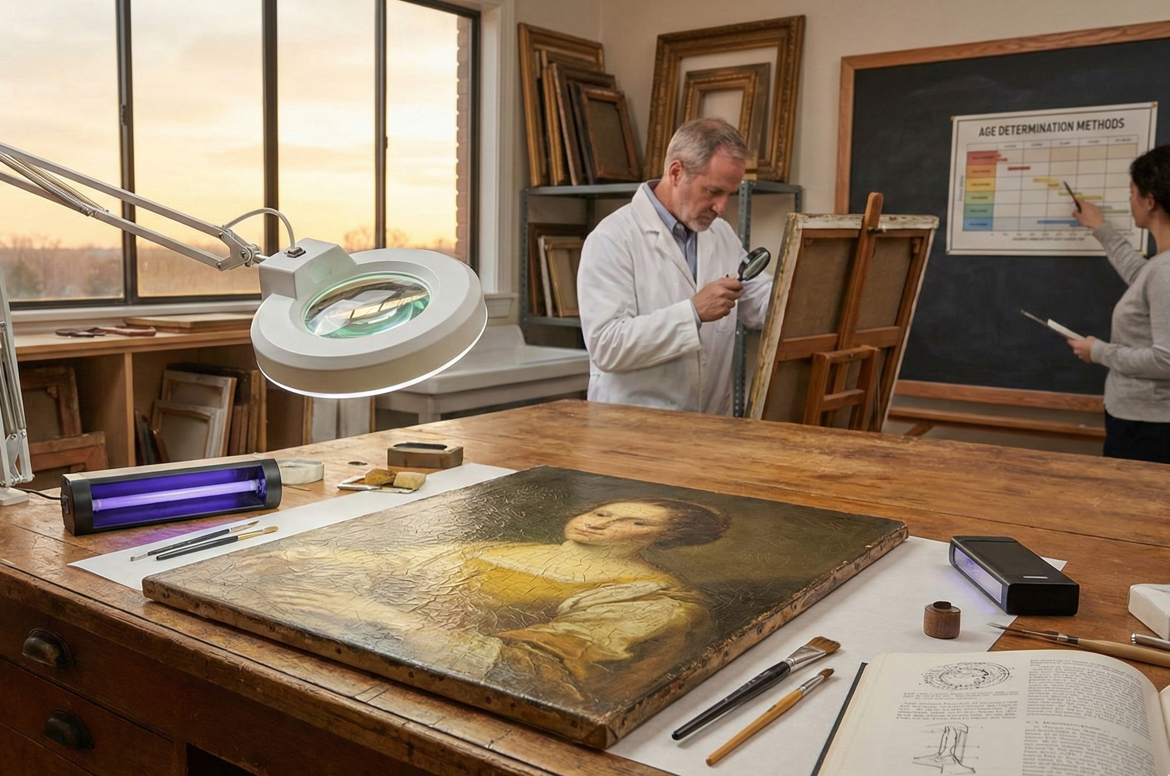
Whether you own a single valuable piece or an entire collection, understanding art appraisals can save you thousands of dollars and protect your investment. With defaults on art-backed loans rising 17% and the art market experiencing significant shifts, having accurate valuations has never been more critical.
An art appraisal is a formal assessment by a certified professional that determines your artwork's current market value. This process involves detailed research, documentation, and analysis to provide legally defensible valuations accepted by insurance companies, the IRS, and courts nationwide.
Quick fact: Professional appraisals are required for any charitable art donation over $5,000 to qualify for tax deductions, and insurance companies typically require updated appraisals every 3-5 years.
What is an art appraisal and why does it matter
An art appraisal is much more than an educated guess about your artwork's worth. It's a comprehensive evaluation conducted by a professionally licensed appraiser who follows strict industry standards. The appraiser examines your piece's condition, researches comparable sales, and considers current market trends to determine an accurate value.
Think of it like getting a medical diagnosis from a doctor versus asking a friend for health advice. While both might have opinions, only one carries the weight and credibility needed for important decisions. Professional appraisals provide the documentation you need for insurance claims, tax purposes, and legal proceedings.
The appraisal process typically takes one to two weeks from inspection to final report delivery. During this time, your appraiser conducts extensive research using auction records, gallery sales, and market databases to ensure accuracy.
Understanding different types of art appraisals
Not all appraisals serve the same purpose, and choosing the wrong type can cost you money or create legal complications. The three main types each serve specific needs and use different valuation approaches.
| Appraisal Type | Purpose | Value Basis | Typical Use |
|---|---|---|---|
| Fair Market Value | Estate, donation, sale | What willing buyer pays willing seller | Tax filings, estate planning |
| Insurance/Replacement | Coverage protection | Cost to replace with similar piece | Insurance policies |
| Liquidation Value | Quick sale scenarios | Forced sale conditions | Divorce, bankruptcy |
Fair market value represents what your artwork would sell for in the current market between knowledgeable parties. This is the standard for most tax-related purposes and estate planning. Insurance value, however, reflects replacement cost and is typically 20-30% higher than fair market value to account for retail markups and acquisition time.
Understanding these differences helps you request the right appraisal type for your specific situation. Using an insurance appraisal for tax purposes, for example, could trigger IRS scrutiny and potential penalties.
When you need professional art appraisals
Several situations require professional appraisals, and attempting to handle these with informal valuations can lead to significant financial losses. Insurance coverage represents the most common need, as standard homeowner policies often limit coverage for art to just $1,000-$2,500 per piece.
Estate planning requires accurate valuations to calculate taxes and ensure fair distribution among heirs. Without proper appraisals, families often face disputes or unexpected tax bills that could have been avoided with advance planning.
Charitable donations offer substantial tax benefits, but the IRS requires professional appraisals for any non-cash donation over $5,000. Many donors discover too late that their informal valuation doesn't meet IRS standards, resulting in rejected deductions.
Important note: Art-backed loans, which reached an estimated $40 billion market in 2026, always require current professional appraisals as lenders tighten requirements amid market volatility.
If you're considering selling your artwork, a professional appraisal provides crucial pricing guidance and gives potential buyers confidence in your asking price. This documentation can significantly reduce negotiation time and help you achieve better sale prices.
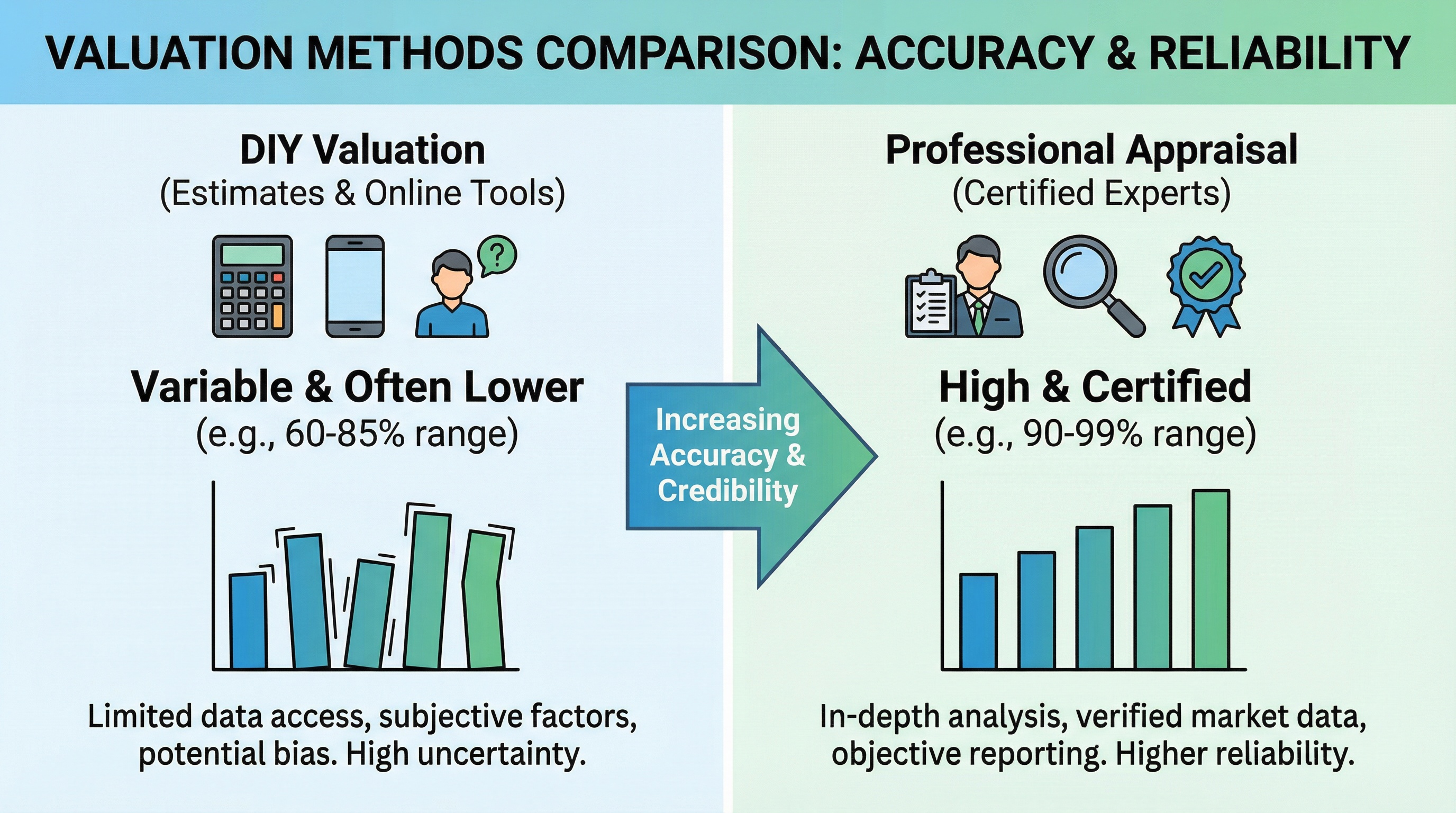
How to choose the right art appraiser
Finding a qualified appraiser requires more than a simple internet search. Look for professionals certified by recognized organizations like the American Society of Appraisers (ASA) or International Society of Appraisers (ISA). These credentials ensure your appraiser follows industry standards and maintains continuing education requirements.
Experience with your specific type of artwork matters significantly. An appraiser who specializes in contemporary paintings might not be the best choice for antique sculptures or emerging digital art. Ask potential appraisers about their experience with pieces similar to yours and request examples of recent appraisals in your category.
Geographic location affects both convenience and expertise. While many appraisers now offer virtual consultations, complex pieces often require in-person examination. Local appraisers also understand regional market variations that can impact values.
Pro tip: Always verify that your appraiser carries professional liability insurance and ask for references from recent clients, especially those who used appraisals for similar purposes to yours.
Cost considerations vary widely based on artwork complexity and appraiser experience. Most charge flat fees ranging from $300-$800 per piece, though extensive collections may qualify for volume discounts. Avoid appraisers who charge percentage-based fees, as this creates potential conflicts of interest. Learn more about factors that influence artwork appraisal costs to budget appropriately.
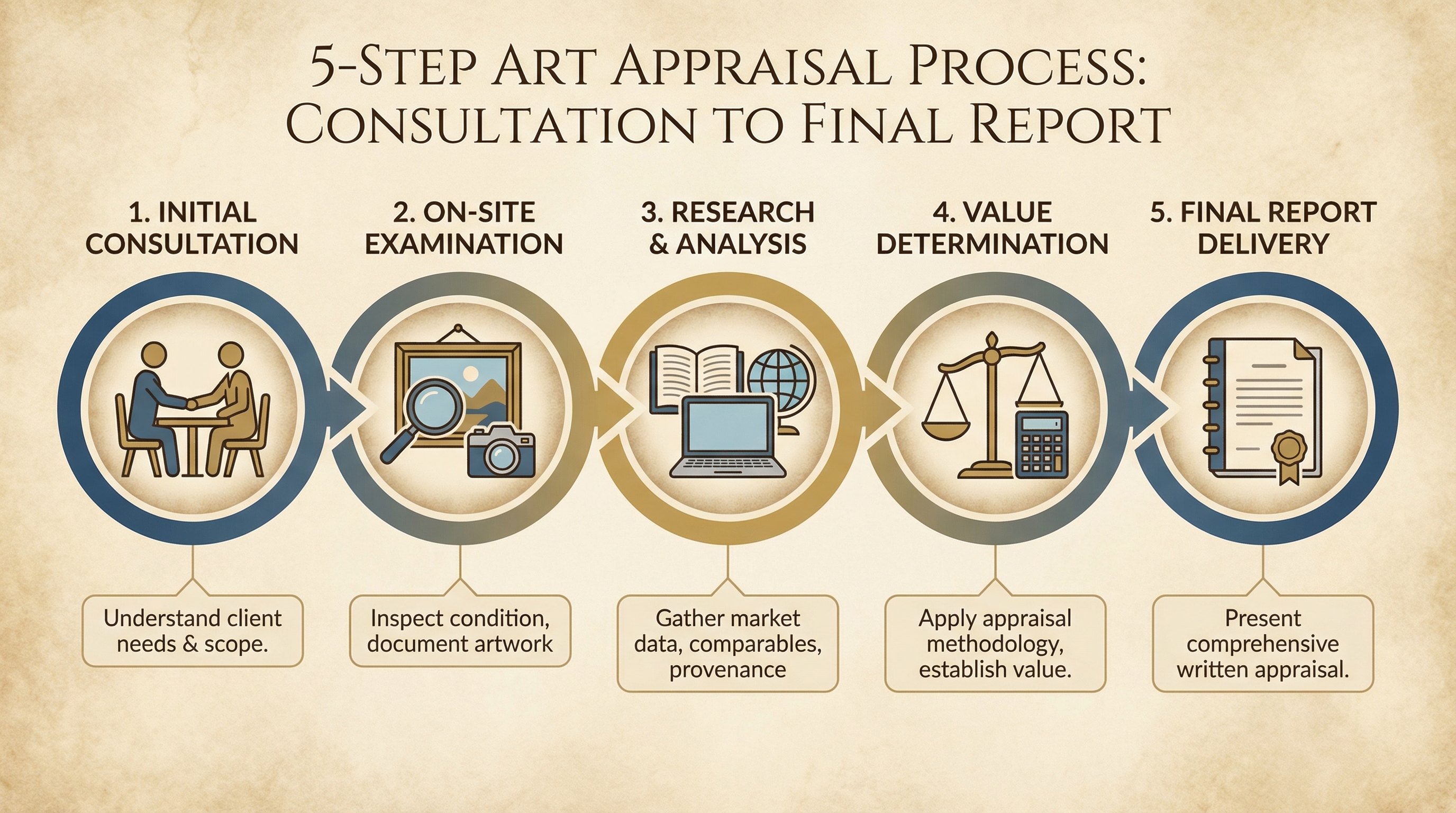
The appraisal process typically begins with an initial consultation where you discuss your needs and timeline. During the inspection phase, your appraiser photographs and measures each piece while noting condition details. Research and analysis follow, culminating in a detailed written report that meets legal and industry standards.
Professional art appraisals protect your financial interests while providing peace of mind about your collection's value. Whether you need coverage for insurance, planning for estate matters, or considering a sale, working with qualified professionals ensures you receive accurate, defensible valuations that stand up to scrutiny from insurers, tax authorities, and courts.
With the art market continuing to evolve and lending requirements tightening, having current professional appraisals has become essential for serious collectors and casual owners alike. The investment in professional appraisal services typically pays for itself through proper insurance coverage, tax benefits, or improved sale prices.