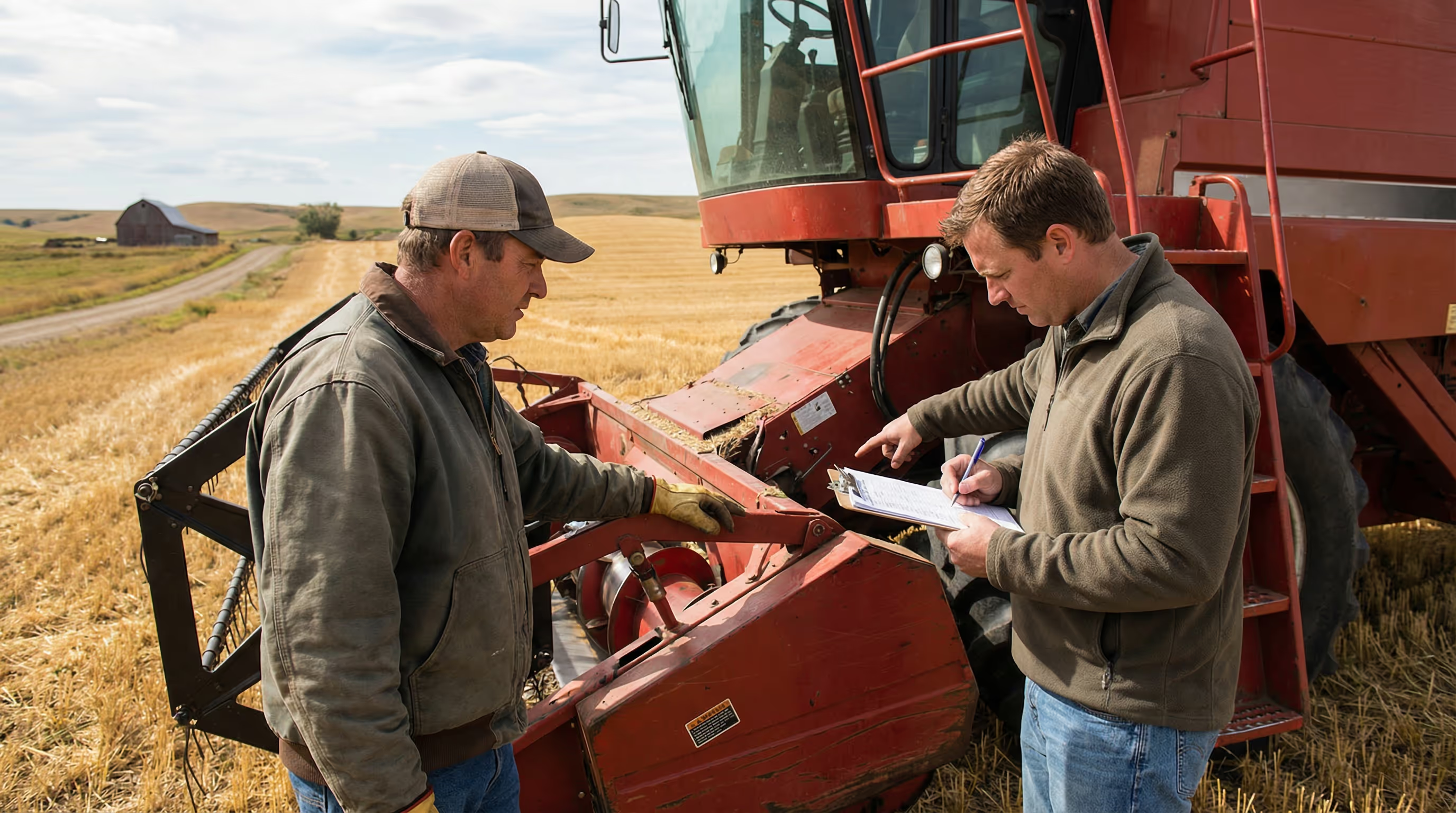
When Sarah needed to refinance her farm operation last spring, her lender required current valuations for her equipment fleet. What she discovered changed everything about how she viewed her machinery investments. The combine she thought was worth $180,000 actually appraised at $240,000, while her older tractor came in significantly lower than expected. This experience taught her a crucial lesson: assumptions about equipment value can cost you thousands in missed opportunities or financial exposure.
Agricultural equipment appraisal is the professional process of determining the fair market value of farm machinery and implements. Whether you're buying, selling, financing, or insuring equipment, an accurate appraisal protects your financial interests and ensures you make informed decisions. This guide walks you through everything you need to know about agricultural equipment appraisals, from understanding the process to choosing the right appraiser for your needs.
Key insight: Agricultural equipment appraisals can reveal value differences of 20-40% compared to rough estimates, directly impacting your financing options, insurance coverage, and sale negotiations.
Agricultural equipment appraisal is the systematic evaluation of farm machinery to determine its current market value. Unlike quick online estimates or dealer trade-in quotes, professional appraisals follow established methodologies and standards to provide defensible valuations that banks, insurance companies, courts, and the IRS will accept.
The process involves examining factors like equipment condition, age, hours of operation, maintenance history, and current market demand. Appraisers use three main approaches: the sales comparison method (analyzing recent sales of similar equipment), the cost approach (replacement cost minus depreciation), and when applicable, the income approach (value based on earning potential).
Different types of value serve different purposes. Fair market value represents what equipment would sell for between willing buyers and sellers. Orderly liquidation value estimates proceeds from a planned sale with reasonable marketing time. Forced liquidation value reflects quick-sale scenarios, while replacement cost new helps determine insurance coverage needs.

Several situations require professional equipment valuations, each with specific stakes and consequences. Understanding when to get an appraisal can save you from costly mistakes and missed opportunities.
Financing and lending situations represent the most common need. Banks require current appraisals for equipment loans, refinancing, and line-of-credit applications. Without accurate valuations, you might qualify for less favorable terms or face loan rejection if your collateral appears insufficient.
Insurance coverage and claims create another critical need. Standard policies often cap coverage for farm equipment, leaving you underinsured if values have increased. After theft, damage, or total loss, insurance companies rely on appraisals to determine payouts. Having current appraisals before a loss occurs strengthens your position during claims negotiations.
Estate planning and succession scenarios require appraisals for tax reporting and fair distribution among heirs. The IRS scrutinizes estate valuations, and inaccurate appraisals can trigger audits and penalties. Similarly, divorce proceedings often involve equipment division, where professional appraisals prevent disputes and ensure equitable settlements.
Important note: Equipment values can fluctuate significantly based on commodity prices, seasonal demand, and technological advances, making regular reappraisals essential for major financial decisions.
Professional appraisers can evaluate virtually any piece of farm or ranch equipment, from individual implements to entire operational fleets. Understanding the scope helps you plan comprehensive valuations for your specific needs.
Field equipment forms the backbone of most appraisals, including tractors of all sizes, combines, planters, cultivators, and harvesting equipment. These high-value items often serve as primary loan collateral and represent significant portions of farm asset values.
Specialized machinery covers equipment specific to certain operations: hay balers and mowers, irrigation systems and pumps, livestock handling equipment, dairy parlor systems, and vineyard or orchard machinery. Each category requires appraisers with relevant market knowledge and technical understanding.
Supporting equipment includes trucks, trailers, storage systems, grain handling equipment, and shop tools. While individually less valuable, these items collectively represent substantial investments and often require valuation for comprehensive insurance coverage or business sales.
The key advantage of professional appraisal is the ability to value entire operations comprehensively, ensuring nothing gets overlooked in major transactions or insurance planning.
Professional appraisals deliver concrete financial advantages that far outweigh their cost. These benefits protect your interests across multiple scenarios and decision points throughout equipment ownership.
Accurate pricing power helps you negotiate from strength whether buying or selling. Knowing your combine's true market value of $285,000 instead of guessing at $250,000 gives you $35,000 more negotiating room. Conversely, understanding depreciation helps you avoid overpaying for used equipment.
Enhanced financing terms result from providing lenders with credible collateral valuations. Banks offer better rates and terms when they trust your equipment values. Accurate appraisals can mean the difference between approval and rejection for expansion financing.
Proper insurance protection prevents costly coverage gaps. If your equipment values have increased but your coverage hasn't, you're essentially self-insuring the difference. Professional appraisals ensure your coverage matches current replacement costs.
Legal and tax compliance becomes crucial during audits, estate settlements, or divorce proceedings. Courts and the IRS expect defensible valuations backed by professional methodology. Accurate appraisals prevent disputes and reduce audit risk.

Financial impact: Farmers using professional appraisals for insurance typically discover coverage gaps averaging $50,000-$150,000 per operation, representing significant financial exposure.
The peace of mind from knowing your true equipment values allows you to make confident decisions about purchases, sales, insurance, and financing without second-guessing your assumptions.
Whether you're planning equipment purchases, updating insurance coverage, or preparing for major life transitions, professional agricultural equipment appraisals provide the foundation for sound financial decisions. The investment in accurate valuations pays dividends through better financing terms, appropriate insurance coverage, and stronger negotiating positions. When choosing an appraiser, look for relevant agricultural experience, professional credentials, and familiarity with your specific equipment types and regional markets. With the right professional guidance, you can navigate equipment valuations with confidence and protect your agricultural investments for the long term. Before scheduling your appraisal, make sure to review common mistakes to avoid and prepare your equipment properly to ensure the most accurate results.
Fair market value for agricultural equipment is the price a willing buyer and willing seller would agree to in an open, competitive market, with both parties having reasonable knowledge of the equipment and no pressure to buy or sell. A professional appraiser estimates this value by analyzing the machine's condition, hours, options, and recent sales of similar equipment.
The cost of an agricultural equipment appraisal depends on the number of items, their complexity, location, and whether an on-site inspection is required. Some assignments are priced per asset, while others use a project fee. A short discovery call with the appraiser is usually enough to receive a tailored quote.
Most single-equipment or small-fleet appraisals can be completed within a few days to a couple of weeks, depending on scheduling and how quickly information is provided. Larger operations, multiple locations, or complex legal assignments may take longer because of the inspection and research required.
Yes. In some cases, appraisers can perform a desktop or remote appraisal using detailed equipment lists, photos, videos, and maintenance records provided by the owner. However, for complex, high-value, or contested assignments, an on-site inspection is often recommended.