
IRS-qualified antique silver appraisals in Utah for donations, estate tax, divorce, and probate. AppraiseItNow appraises sterling flatware, silver hollowware, antique tea sets, coin silver, and decorative silver objects online and onsite across Utah, including Salt Lake City, Provo, and Ogden.







By credentialed, best-in-class appraisers
.avif)
Joe Kattan
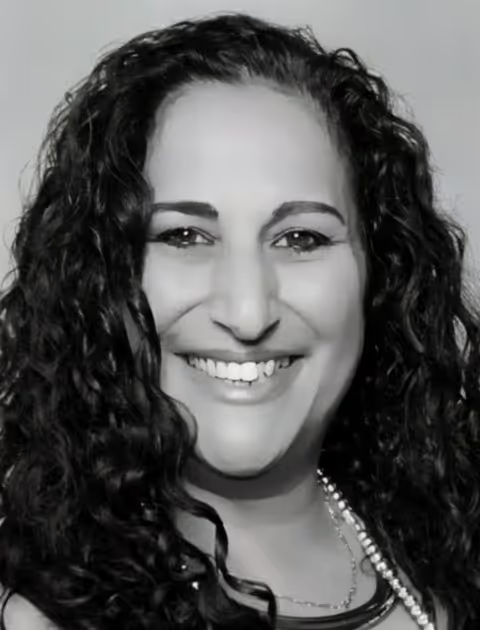
Anne Hay, ISA AM

Jason Dolph, CAGA

Ashley Innes, ISA AM

Aron Blue
About Antique Silver Appraisals in Utah
AppraiseItNow provides certified antique silver appraisals throughout Utah, serving clients who need professional valuations for donations, estate tax reporting, divorce proceedings, and probate. Whether you are settling an estate, dividing assets in a legal dispute, or documenting a charitable contribution of inherited silverware, our appraisers deliver accurate, well-supported reports that satisfy IRS requirements and court standards. As part of our broader personal property appraisal services, antique silver appraisals are conducted by credentialed professionals who understand both the numismatic and intrinsic value dimensions of silver collections. Our mission is to deliver defensible, USPAP-compliant valuations with exceptional speed, professionalism, and client service.
AppraiseItNow offers both remote and onsite appraisal options, making it easy for Utah clients to get the documentation they need regardless of where their silver is located, from Salt Lake City to St. George to rural communities across the state. Remote appraisals are completed using detailed photographs and item descriptions, while onsite appointments allow for hands-on inspection of larger or more complex collections. We offer Fair Market Value (FMV), Replacement Value, and Actual Cash Value (ACV) appraisals for various intended uses.
What Types of Antique Silver Do We Appraise in Utah?
Our appraisers evaluate a wide range of antique silver items, from individual heirloom pieces to entire household collections accumulated over generations. Common categories we appraise include:
- Sterling silver flatware sets and serving utensils
- Silver holloware including pitchers, bowls, tureens, and trays
- Antique silver tea and coffee services
- Silver candlesticks and candelabras
- Coin silver pieces made before the sterling standard was widely adopted
- Antique silver jewelry including brooches, bracelets, and necklaces
- Silver-plated items with documented age and maker's marks
- Antique silver boxes, frames, and decorative objects
- Presentation silver and commemorative pieces
- Antique silver coins and numismatic items with collector value beyond melt price
Each appraisal accounts for maker's marks, hallmarks, condition, provenance, and current market demand, ensuring that the valuation reflects both the historical significance and the fair market reality of the piece. Utah's sales tax exemption on silver transactions over $1,000 and the absence of a state estate tax make accurate appraisals especially valuable for heirs and estate administrators working to maximize the benefit of inherited collections.
Who Does AppraiseItNow Serve in Utah?
AppraiseItNow serves individuals, families, attorneys, estate administrators, financial advisors, and nonprofit organizations throughout Utah who need credible, professionally prepared antique silver appraisals for legal, tax, insurance, or transactional purposes. Whether you are an executor managing a probate estate, a donor seeking a qualified appraisal for IRS Form 8283, or a divorcing spouse requiring a neutral valuation, our appraisers are equipped to support your specific needs.
5-Star Valuation Services, Loved by Hundreds
How much does an Antique Silver appraisal cost?
Appraisal Type
Standard Fee Range
Pricing By Volume
What Drives Cost?
.svg)
Written USPAP-compliant personal property appraisals for when defensibility matters.
Given the USPAP-compliant nature of AppraiseItNow’s appraisal reports, we prepare our deliverables for major legal, tax, and financial reporting purposes for individual and commercial clients.
Popular uses of our appraisal reports include:
Taxes, Estates & Financial Planning
- Gift Tax - IRS Form 709
- Estate Tax - IRS Form 706
- Charitable Donations - IRS Form 8283
- Estate planning, equitable distribution, and probate
- Loan Purposes
Life Events & Special Circumstances
- Divorce
- Social Security reporting or Medicaid Application Filings
- E-2 visa applications
Insurance & Risk Management
- Insurance coverage
- Insurance claims
- Third-party & legal damage claims
Frequently Asked
Questions
No Frequently Asked Questions Found.
Can AppraiseItNow appraise Antique Silver in Utah?
Yes, AppraiseItNow provides certified antique silver appraisals for clients throughout Utah, including Salt Lake City, Provo, Ogden, and surrounding areas. We handle everything from single heirloom pieces to large estate collections, fully remotely or onsite.
What types of Antique Silver does AppraiseItNow appraise in Utah?
We appraise a wide range of antique silver, including sterling flatware, hollowware, tea services, candlesticks, decorative objects, coins, and numismatic pieces. Whether your collection is American, European, or of mixed origin, our appraisers have the expertise to assess it accurately.
Are your Antique Silver appraisals USPAP-compliant?
Yes, all our appraisals conform to the Uniform Standards of Professional Appraisal Practice (USPAP), including the 2024 Edition effective in 2026. This ensures your report meets IRS, legal, and institutional requirements.
What are common reasons someone in Utah needs a Antique Silver appraisal?
Utah clients most often request antique silver appraisals for estate tax reporting, probate proceedings, charitable donations, and divorce settlements. Appraisals are also used for insurance coverage and pre-sale valuation.
Do you provide online or remote Antique Silver appraisals in Utah?
Yes, most of our antique silver appraisals in Utah are completed remotely using photographs and documentation you submit through our secure online process. For larger collections or complex estates, we can arrange onsite appraisals as well.
How much does a Antique Silver appraisal cost in Utah?
Our antique silver appraisal fees in Utah are structured by scope and complexity:
- Standard: $195
- Advanced: $295
- Range: $395 to $2,200 depending on collection size and detail required
- Volume pricing: 1 item at $195 to $495, 10 items at $695 to $1,200, and 50 to 100+ items at $1,600 to $3,500+
Contact us to discuss which tier fits your needs.
How long does a Antique Silver appraisal take?
Most remote antique silver appraisals in Utah are completed within 7 to 10 days. Onsite appraisals or larger collections typically take 2 to 3 weeks.
Who prepares the appraisal report?
Your report is prepared by a credentialed appraiser with specialized knowledge in antique silver and precious metals. All appraisers follow USPAP standards and carry relevant professional qualifications.
Are there any Utah-specific regulations for Antique Silver appraisals?
Utah does not impose a state estate or inheritance tax, and personal antique silver collections are exempt from annual property tax filings. This means appraisal requirements for Utah residents are primarily driven by federal IRS rules rather than state mandates.
Do you prepare appraisals for IRS Form 8283 (Noncash Charitable Contributions)?
Yes, we prepare qualified appraisals specifically designed to support IRS Form 8283 for charitable donations of antique silver exceeding $5,000. Our reports meet all IRS requirements for substantiating fair market value as a collectible.
Do you buy, sell, or broker Antique Silver?
No, AppraiseItNow is an independent appraisal firm and does not buy, sell, or broker antique silver. This independence ensures our valuations are objective and free from any conflict of interest.
What information do you need to get started?
To begin, we typically need clear photographs of each piece, any known provenance or documentation, and a brief description of the purpose for the appraisal. You can submit everything through our online intake process, and we will guide you from there.
Will my appraisal be accepted by the IRS, insurers, or courts in Utah?
Yes, our USPAP-compliant reports are prepared to meet the standards required by the IRS, insurance companies, and Utah courts. Whether your appraisal is for estate tax, a charitable deduction, divorce proceedings, or probate, the report is structured to hold up to scrutiny.
Does Utah have property tax rules that require appraisals for personal antique silver collections?
Utah exempts personal tangible property, including antique silver collections, from annual property tax filings, as those rules apply only to business-use items. Because Utah also has no state estate or inheritance tax, appraisal requirements for silver collections are governed by federal rules rather than any state property tax mandate.
How does Utah's sales tax exemption on silver affect appraising inherited antique silver for sale?
Utah exempts sales of silver bullion and coins from state sales tax for transactions over $1,000, which applies to both buying and selling inherited antique silver. A professional appraisal establishes fair market value for the sale while allowing you to take full advantage of this exemption without additional state tax layers on the transaction.
What IRS step-up in basis rules apply to antique silver inherited in Utah?
Inherited antique silver receives a federal step-up in basis to its fair market value on the date of death, meaning heirs owe capital gains tax only on appreciation that occurs after inheritance. With the federal estate tax exemption dropping to approximately $6.8 million in 2026, a qualified appraisal is essential for estates exceeding that threshold, though Utah itself imposes no state estate or inheritance tax.
When is a qualified appraisal needed for donating antique silver in Utah?
A qualified appraisal is required for any charitable donation of antique silver where the claimed deduction exceeds $5,000, reported on IRS Form 8283. The appraisal must be USPAP-compliant and carefully distinguish numismatic value from bullion value to satisfy IRS standards.
Are there Utah-specific rules on cleaning or testing antique silver before an appraisal?
No Utah-specific regulations govern cleaning or testing antique silver before appraisal, but experts strongly advise against cleaning pieces prior to evaluation. Natural toning and patina can significantly increase numismatic value beyond melt price, so the appraisal should always come first.
Why is Salt Lake City a strong market for antique silver appraisals?
Salt Lake City supports an active precious metals industry, partly because Utah's sales tax exemption on silver over $1,000 attracts dealers and reduces transaction costs. Combined with no state estate or inheritance tax and simplified probate for smaller estates, Utah is a favorable environment for getting antique silver appraised and sold locally.
What mistakes do Utah families commonly make when appraising inherited antique silver?
The most common mistake is cleaning inherited silver coins or pieces before appraisal, which destroys patina and reduces value to melt price only. Families also frequently skip obtaining a date-of-death fair market value appraisal, missing the IRS step-up in basis and potentially exposing heirs to higher capital gains taxes on the full original purchase price.
APPRAISEITNOW APPRAISERS ARE BEST-IN-CLASS & CREDENTIALED BY LEADING APPRAISAL ORGANIZATIONS LIKE THE ISA, ASA, & MORE.




