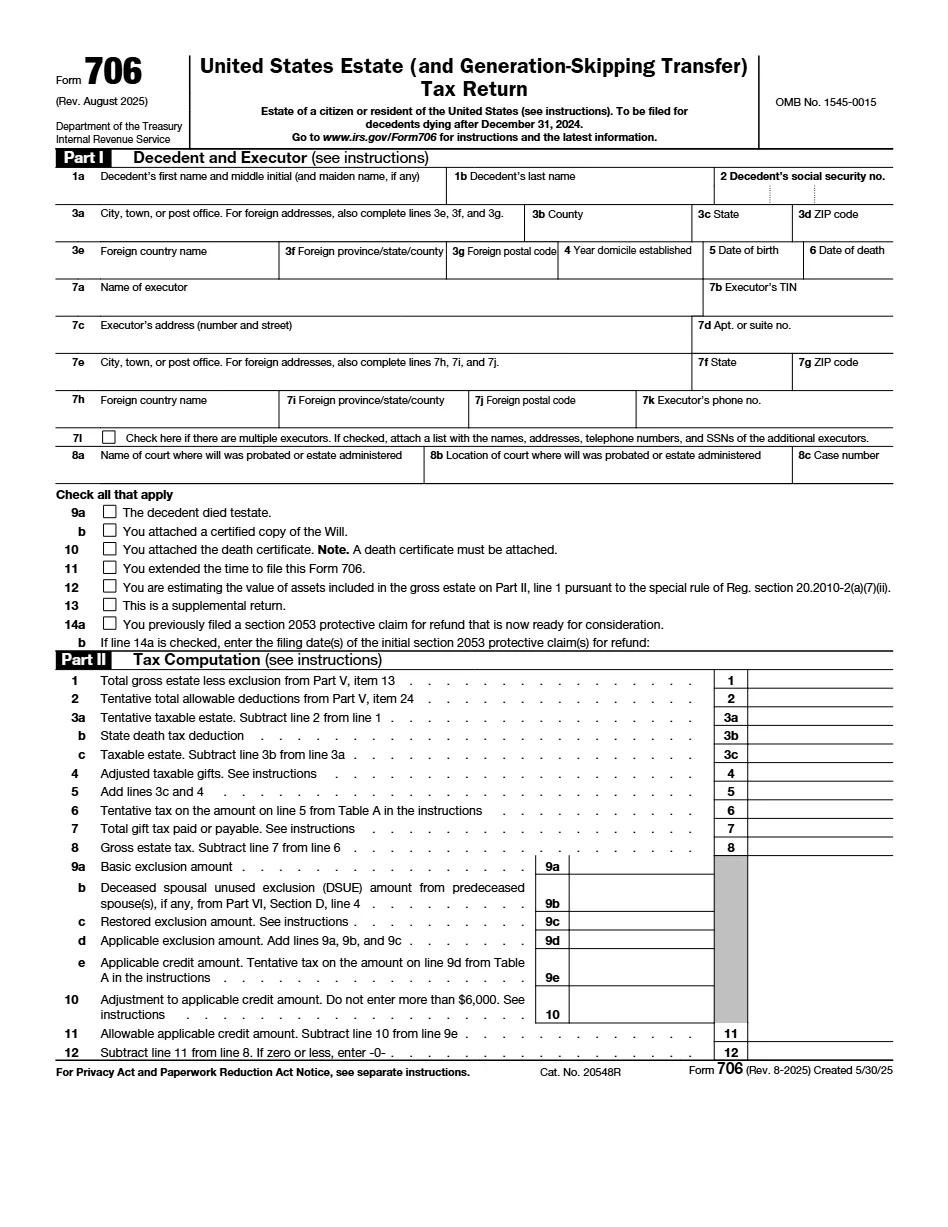
USPAP-compliant boat appraisals for IRS Form 706 estate tax returns, establishing fair market value as of the date of death. AppraiseItNow provides qualified vessel valuations for Schedule F reporting, helping executors meet IRS standards and avoid costly audit exposure.


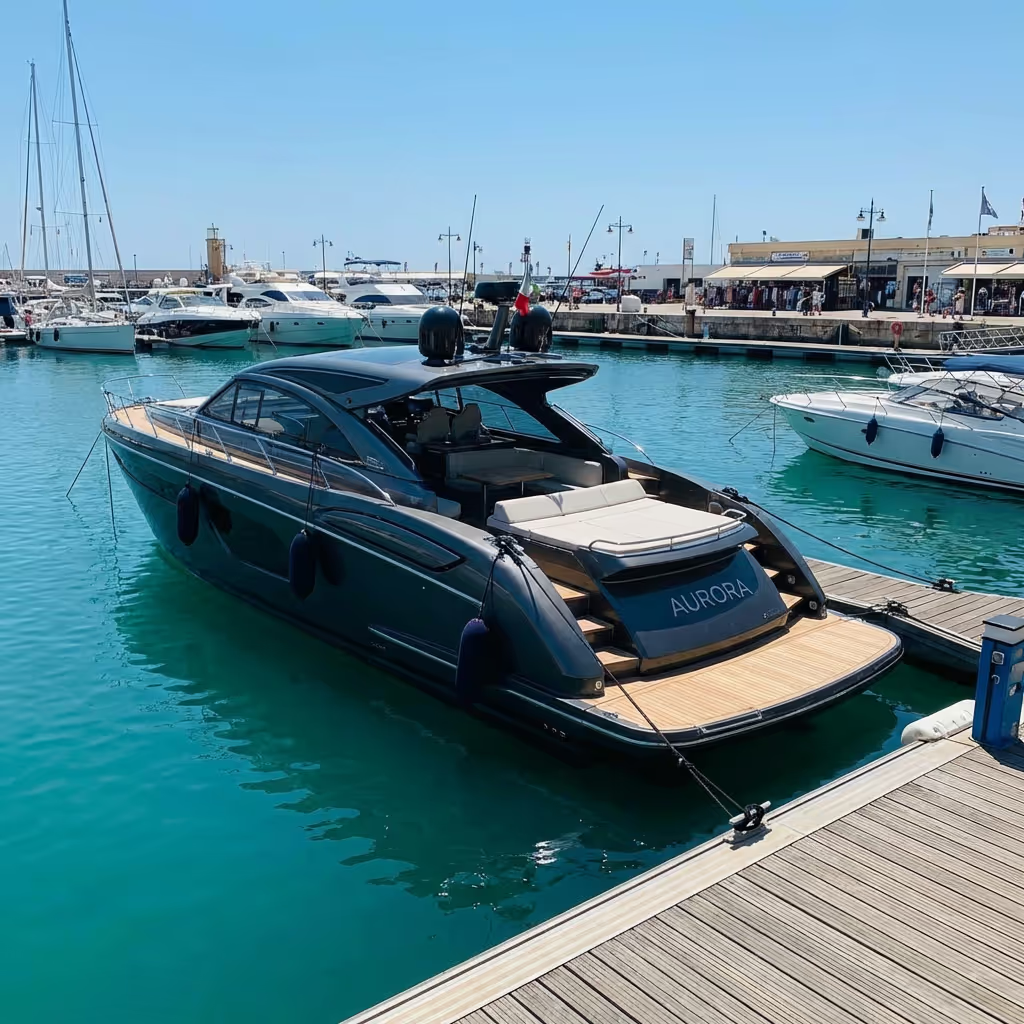
When a decedent's gross estate exceeds the federal filing threshold, executors must report every material asset at fair market value as of the date of death, and boats are no exception. Vessels of all kinds are reported on Schedule F of Form 706 as miscellaneous personal property, and the IRS requires a qualified, USPAP-compliant appraisal to support those values. Our marine vessel appraisal services cover everything from modest runabouts to high-value yachts, with reports built to satisfy IRS scrutiny and withstand audit.
AppraiseItNow delivers these appraisals both online and onsite across the United States. For most vessels, a detailed photo submission and supporting documentation are sufficient for a fully defensible report. For complex or high-value boats, an onsite inspection adds an additional layer of credibility. Our Form 706 estate tax valuation services are handled by credentialed appraisers who understand IRS qualified appraiser requirements under Reg. §20.2031-6(b). Our mission is to deliver defensible, USPAP-compliant valuations with exceptional speed, professionalism, and client service.
AppraiseItNow appraises a wide range of vessels for Form 706 filings, including:
Clients can expect the following when working with us on an estate tax boat appraisal:
A boat appraisal for IRS Form 706 determines the fair market value of a vessel as of the decedent's date of death, or the elected alternate valuation date, for reporting on the federal estate tax return. The process includes a comparative market analysis using recent sales of similar boats, a condition assessment, review of maintenance logs and registration records, and photographs, all compiled into a USPAP-compliant report suitable for attachment to Schedule F.
A boat appraisal is required when the gross estate exceeds the federal exemption threshold and triggers a Form 706 filing, making accurate valuation of all material assets, including vessels, necessary for Schedule F. Even when no estate tax is ultimately owed, a qualified appraisal supports the return against potential IRS scrutiny, particularly for high-value or unique boats.
The IRS requires appraisers to be qualified under Regulation section 20.2031-6(b), meaning they must be independent, hold recognized credentials such as those from ISA, ASA, or AAA, and possess demonstrated marine asset expertise. The appraiser must also include a sworn declaration of qualifications within the USPAP-compliant report.
Boats are valued at fair market value, defined as what a willing buyer would pay a willing seller with neither under compulsion, using comparable sales data adjusted for size, age, vessel type, location, and condition of the hull, engines, and onboard systems. The analysis is anchored to the valuation date, relying on documentation such as photos, logs, and registration records rather than the original purchase price or current asking prices.
Yes, all AppraiseItNow appraisals are prepared in full compliance with USPAP standards and meet IRS qualified appraisal requirements, including proper valuation date documentation, transparent methodology, credentialed appraisers, and a non-contingent fee declaration. Our appraisers hold credentials through recognized organizations including ISA, ASA, AAA, CAGA, AMEA, and NEBB.
Standard boat appraisals for IRS Form 706 are typically completed in 3 to 5 days once all required documentation is received. If a marine survey is needed as part of the process, scheduling and completing that survey generally takes 3 to 5 weeks, so early engagement is recommended when estate deadlines are approaching.
Advanced boat appraisals prepared for IRS estate tax purposes start at $295, with most projects falling in the $195 to $495 range depending on complexity, vessel type, and documentation quality. Factors that influence the fee include the scope of condition analysis requested, whether the vessel is vintage or modified, and any volume of related assets such as trailers. All fees are quoted as a fixed price before work begins. Visit our boat appraisal page for more detail on pricing.
Yes, AppraiseItNow provides boat appraisals for IRS Form 706 purposes nationwide. Whether the vessel is located on the Gulf Coast, the Great Lakes, the Pacific Northwest, or anywhere else in the country, our team can coordinate the appraisal process remotely or through our network of credentialed marine appraisers.
AppraiseItNow prepares boat appraisals to qualified appraisal standards, including proper valuation date documentation, a clear methodology, credentialed and independent appraisers, and a non-contingent fee declaration, all of which are the key elements the IRS looks for under Regulation section 20.2031-6(b). While no appraisal firm can guarantee acceptance in every circumstance, following these standards significantly reduces the risk of challenge by the IRS, insurers, or courts.
A boat must be appraised when the decedent's gross estate exceeds the federal exemption threshold and Form 706 is required, with the vessel's fair market value reported on Schedule F as miscellaneous property. Accurate appraisal matters even when the estate owes no tax, since the IRS can audit valuations and assess penalties on understatements.
The fair market value of a boat is reported on Schedule F, which covers other miscellaneous property, and the USPAP-compliant appraisal report is attached directly to that schedule. The appraised value is then included in the Part V totals for the overall estate calculation.
The condition of the hull, engines, electronics, and rigging as of the date of death carries significant weight, along with recent comparable sales adjusted for vessel size, age, type, and geographic market. Documentation such as maintenance logs, registration records, and photographs helps establish the vessel's condition at the specific valuation date, excluding any changes that occurred after death.
Yes, the executor may elect the alternate valuation date, which is six months after the date of death, if doing so reduces both the gross estate value and the overall tax liability. When this election is made, the appraisal must be tied to market data and condition evidence as of that later date rather than the date of death.
The report includes a full vessel description, condition assessment with photographs, review of maintenance logs and registration, a comparable sales analysis, a fair market value conclusion, a USPAP compliance statement, and the appraiser's sworn declaration of qualifications. All of this is compiled to meet Schedule F attachment requirements and to withstand IRS review.
Under 26 U.S.C. section 6662, a substantial understatement, where the reported value is 65% or less of the actual value, carries a 20% penalty on the resulting underpayment, and a gross understatement at 40% or less doubles that penalty to 40%. Obtaining a qualified appraisal that meets IRS standards can protect the estate from these penalties if the return is later examined.