Charitable Donation appraisals in New Mexico for personal property, equipment and machinery, fine art, business interests, boats and watercraft, automobiles and vehicles, and inventory. AppraiseItNow provides credentialed, USPAP-compliant Charitable Donation appraisals online and onsite across New Mexico, including Albuquerque, Santa Fe, and Las Cruces.
.png)


No Frequently Asked Questions Found.
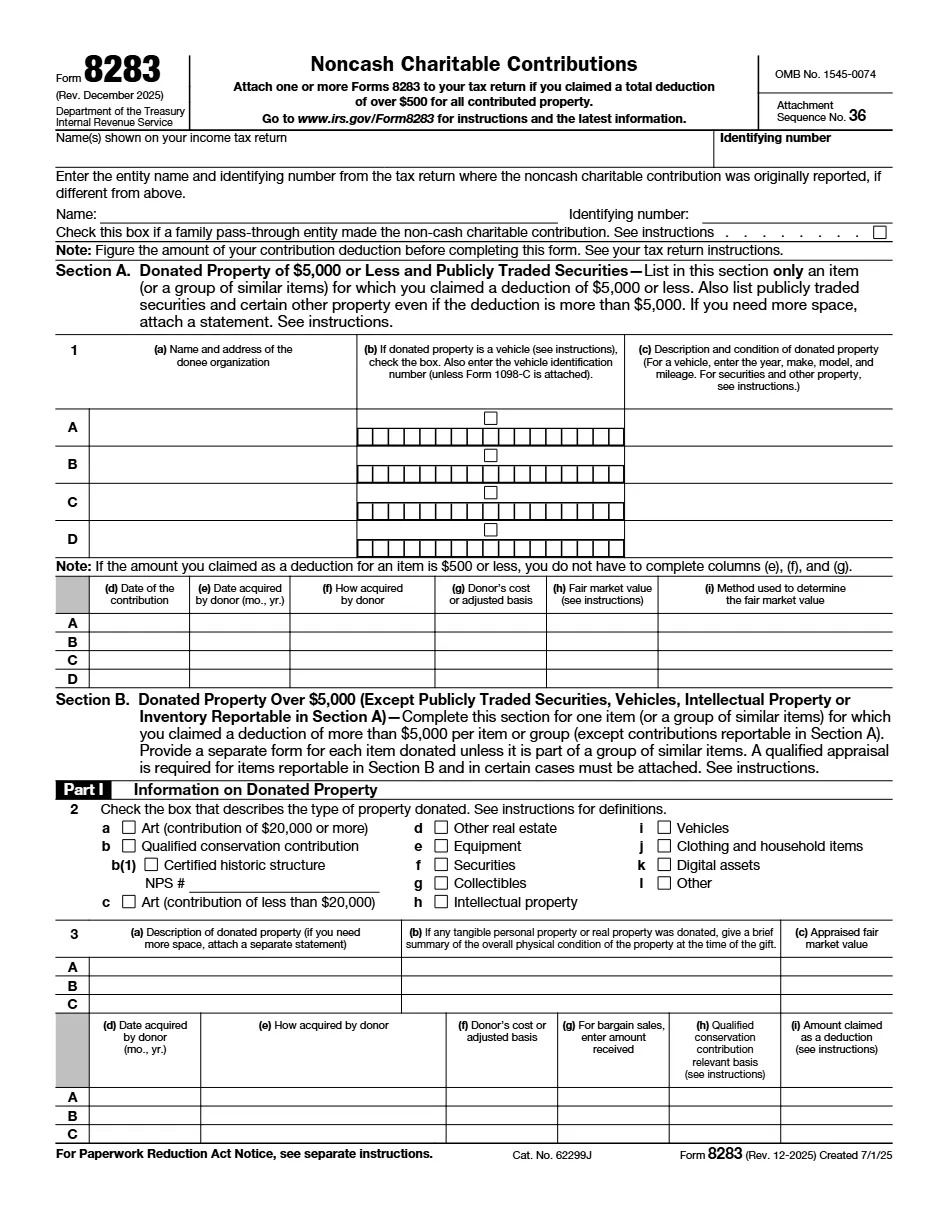
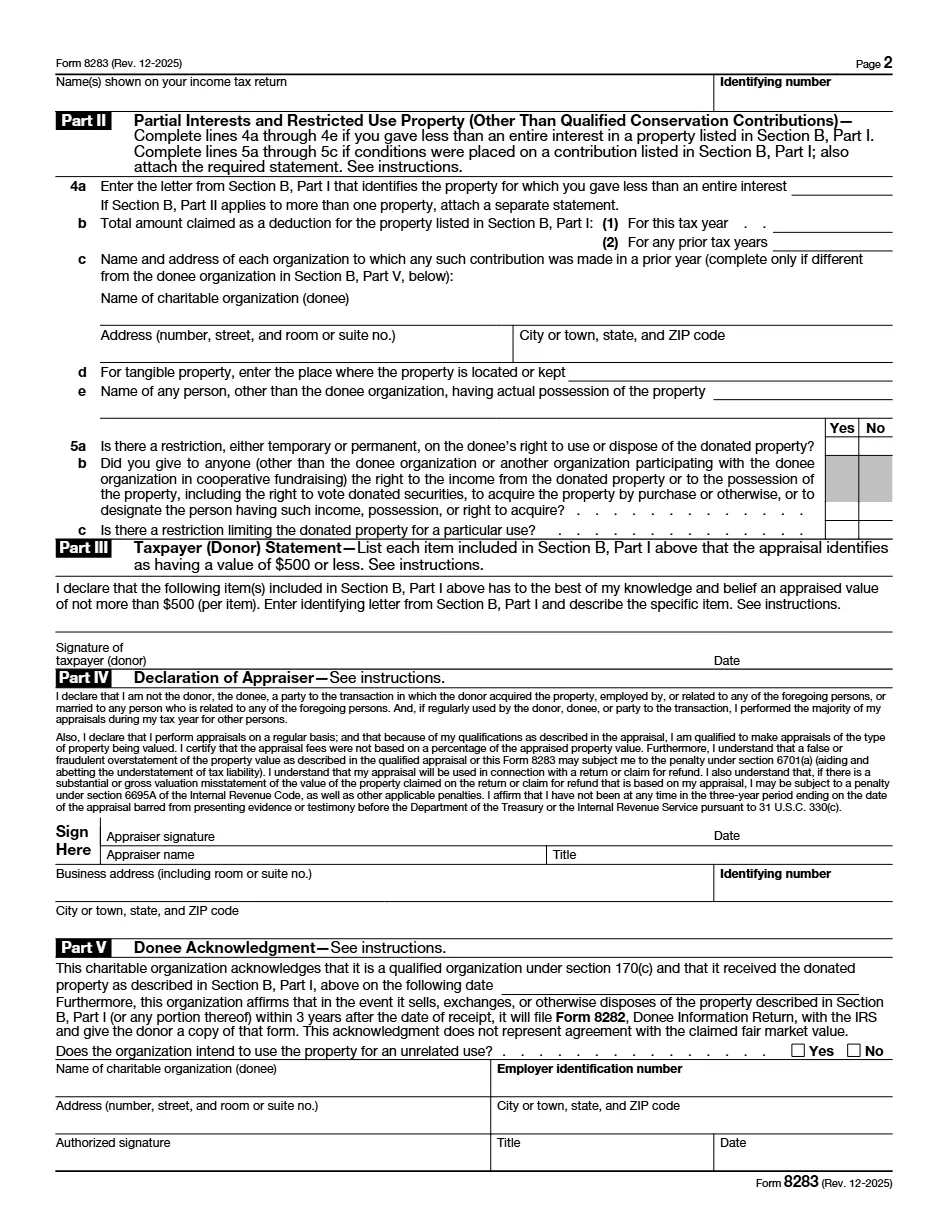
AppraiseItNow provides qualified charitable donation appraisals for New Mexico donors contributing non-cash property to qualifying organizations, with IRS Form 8283 required for donations exceeding $5,000 per item or group of similar items. New Mexico donors giving high-value art, equipment, vehicles, or business interests to institutions like New Mexico State University or local nonprofits need a defensible, USPAP-compliant appraisal to substantiate their federal deduction. Our mission is to deliver defensible, USPAP-compliant valuations with exceptional speed, professionalism, and client service.
Both remote and onsite appraisal options are available, making it easy for donors across the state to get started quickly. Learn more about our full range of appraisal services in New Mexico to find the right solution for your needs.
AppraiseItNow covers all major asset classes commonly donated to qualifying organizations in New Mexico, including:
AppraiseItNow serves individual donors, business owners, collectors, and nonprofit organizations across New Mexico who need qualified appraisals to support IRS Form 8283 filings and maximize the defensibility of their charitable contribution deductions.
Yes, AppraiseItNow provides qualified appraisals for charitable donation purposes throughout New Mexico. Our appraisers are experienced with both federal IRS requirements and New Mexico-specific rules, including those governing conservation tax credits under the Land Conservation Incentives Act.
We appraise a wide range of non-cash assets commonly donated to qualifying organizations, including artwork, antiques, collectibles, vehicles, business interests, equipment, and inventory. Each appraisal is prepared to meet IRS standards for the specific asset type being donated.
Yes, all of our appraisals conform to the Uniform Standards of Professional Appraisal Practice (USPAP), which is required for IRS acceptance and also mandated under New Mexico regulations such as 3.13.20 NMAC for conservation-related donations.
New Mexico's Land Conservation Incentives Act offers state conservation tax credits for qualifying land donations, making accurate, compliant appraisals especially important for donors in the state. Beyond conservation, New Mexicans donating artwork, vehicles, or other non-cash assets to qualifying charities need a qualified appraisal to substantiate their federal and state tax deductions.
Yes, many of our appraisals can be completed remotely using photographs, documentation, and digital records you submit through our platform. For assets that require physical inspection, we can coordinate on-site visits or work with local professionals in New Mexico.
Fees depend on the asset type and scope of the assignment. Visit our pricing page for ranges or contact us.
Turnaround times vary by asset type:
Our reports are prepared by credentialed appraisers who meet the IRS definition of a "qualified appraiser" under Treasury Regulations. For New Mexico conservation-related donations, appraisers also hold the General Certified Appraiser designation required under state rules.
New Mexico follows federal IRS standards for qualified appraisals but adds state-specific requirements for conservation tax credits, including EMNRD pre-approval and compliance with 3.13.20 NMAC. Appraisals tied to conservation donations must also list the relevant state agency as an intended user, and the appraisal must be signed no earlier than 60 days before the donation date.
You will need to share a description of the asset being donated, the name of the receiving organization, the anticipated donation date, and any supporting documentation such as purchase records, prior appraisals, or photographs. For conservation-related donations, details about the property and any co-owners are also helpful.
Our appraisals are prepared to meet IRS requirements under Treasury Regulations 1.170A-13 and 1.170A-17, as well as New Mexico standards, making them suitable for submission with IRS Form 8283 and for state agency review. Acceptance ultimately depends on the completeness of your documentation and compliance with all applicable rules, but our reports are built to satisfy those standards.
Yes, a single qualified appraisal can cover all co-owners of donated land, since multiple landowners are treated as a single applicant under the Land Conservation Incentives Act. The appraisal must value the entire contiguous property as one tract using "before" and "after" scenarios, and all co-owners must still submit unified documentation including IRS Form 8283 for EMNRD approval.
An appraisal completed more than 60 days before the donation date cannot be used for federal or New Mexico state tax credit purposes, and a new appraisal will be required. Both IRS rules and New Mexico's conservation credit process require the appraisal to reflect current fair market value within that 60-day window.
New Mexico requires that the relevant state agency, such as the Energy, Minerals and Natural Resources Department (EMNRD), be listed as an intended user in the appraisal. Omitting this can result in the appraisal being rejected during state review, which would disqualify the conservation tax credit claim.
New Mexico can deny or recapture conservation tax credits if EMNRD or the Taxation and Revenue Department finds the valuation non-compliant during an audit, with credits potentially clawed back up to 50% of the appraised value with a maximum of $250,000. Federal penalties for overstatement, including 20 to 40% accuracy-related penalties, apply on top of any state-level consequences.
For donations in that range, New Mexico follows federal requirements including IRS Form 8283 Section B with a qualified appraisal and donee acknowledgment. If the donation is conservation-related, additional state documentation such as EMNRD certification is required, and the appraisal must comply with 3.13.20 NMAC.