Is a Maryland statute involved when I claim a deduction for donated property?
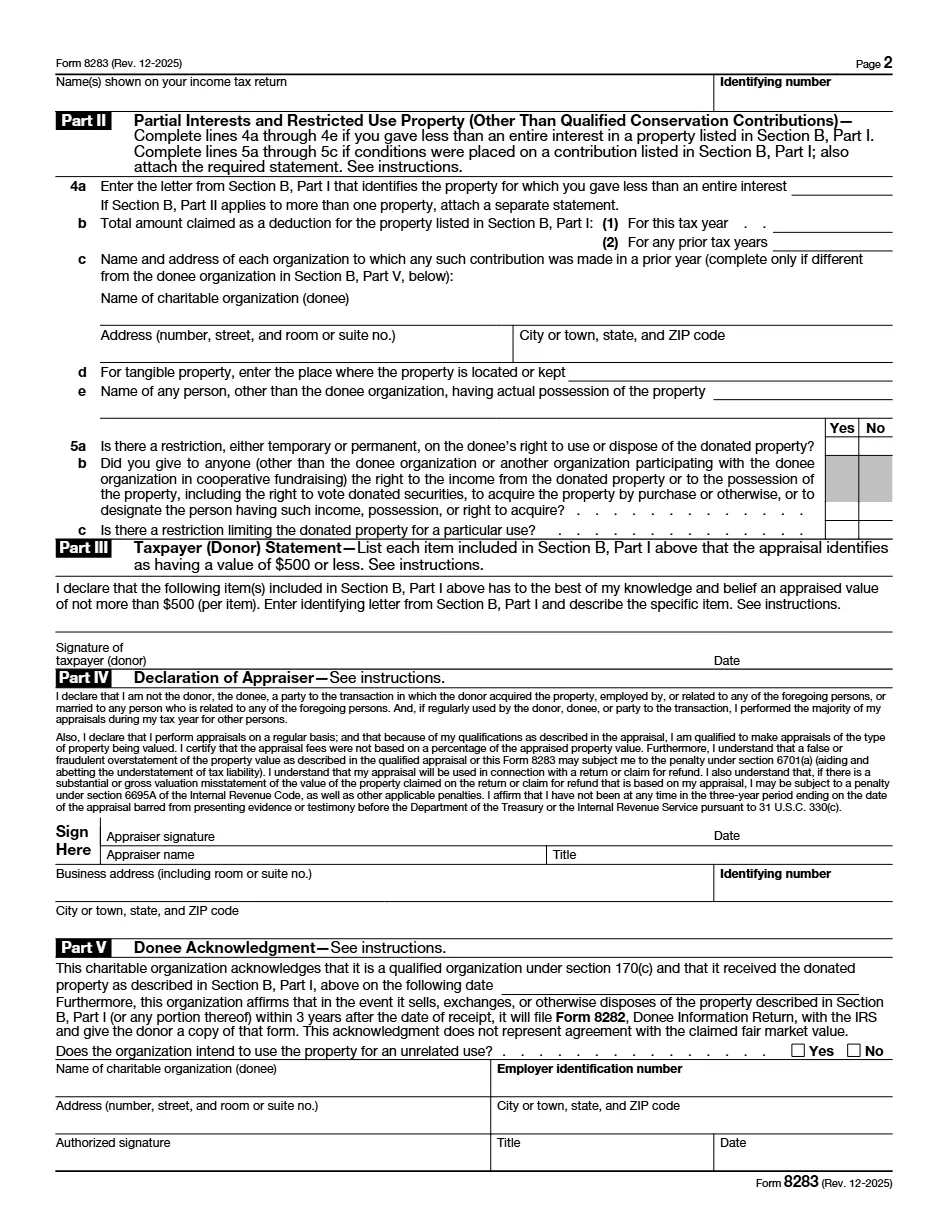
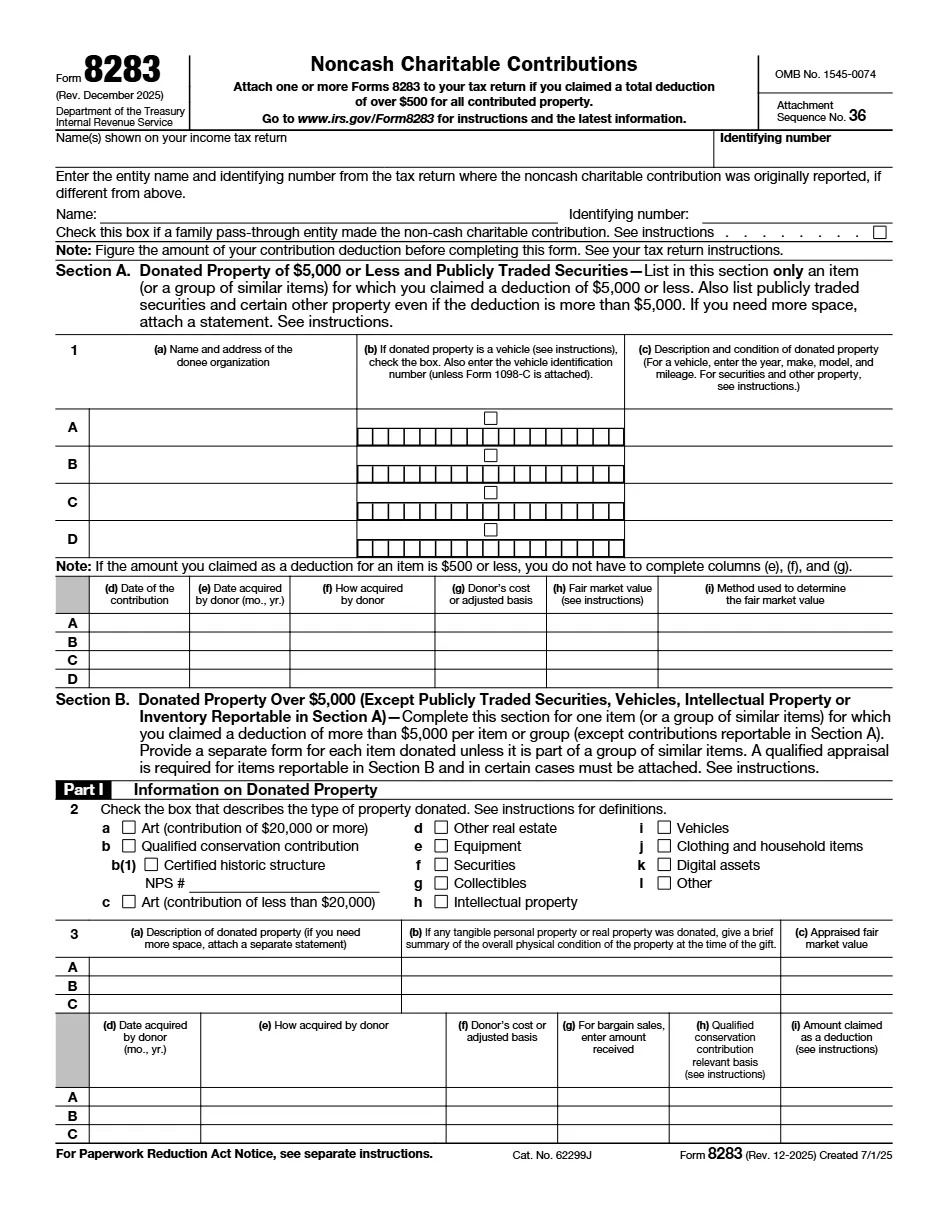
No, Maryland has no separate state-level donation appraisal requirement; the governing rules are federal. A qualified appraisal is required when the claimed deduction for donated personal property exceeds $5,000, reported on Form 8283 Section B, with the appraisal itself attached above $500,000.
Do similar donated items get combined toward the $5,000 threshold?
Yes. Federal rules aggregate similar items, so a collection where each piece is worth less than $5,000 still requires a qualified appraisal and the appraiser's signature on Form 8283 once the group's total claimed deduction passes $5,000. Maryland collectors donating in batches hit this rule more often than they expect.
Does every item donated in Maryland need an appraisal?
No, that common claim is false: under IRS Publication 561, a qualified appraisal is required only when the deduction for the property or aggregated similar items exceeds $5,000. Smaller gifts need substantiation and, above $500 in total noncash gifts, Form 8283 reporting, but not a formal appraisal.
How do Maryland probate valuations relate to donation appraisals?
They are separate systems: Maryland's Estates and Trusts article lets a personal representative value estate vehicles from price guides and hire qualified, disinterested appraisers for debatable values, while a charitable deduction for donated estate property is substantiated under the federal rules. When heirs donate inherited items, we prepare the appraisal to the federal qualified appraisal standard so it works for the deduction.

.png)






.jpeg)