Whether you're considering donating artwork, real estate, or business equipment to charity, you'll need to navigate specific IRS requirements to claim your charitable tax deduction. The rules are sometimes complex and also strictly enforced, with complete deduction denial for even minor documentation errors. Here's what you need to know to secure your qualified appraisal and maximize your charitable tax benefits.
What Is a Qualified Appraisal for Charitable Contributions?
A qualified appraisal is a specific document that meets detailed IRS requirements under Treasury Regulations. Think of it as the IRS's gold standard for proving your donated property's fair market value. Your appraisal must include a detailed description sufficient for someone unfamiliar with the property to identify it, the physical condition of tangible property, and the valuation date with fair market value on that specific date. The document must specify the valuation method used and your appraiser must also include their qualifications, signature, and taxpayer identification number as proof of their credentials and accountability.
Critical Detail: We often find that donors overlook critical timing requirements. Your appraisal cannot be dated more than 60 days before your donation, and you must receive it before your tax return due date including extensions.
When Do You Need a Qualified Appraisal for Charitable Donations?
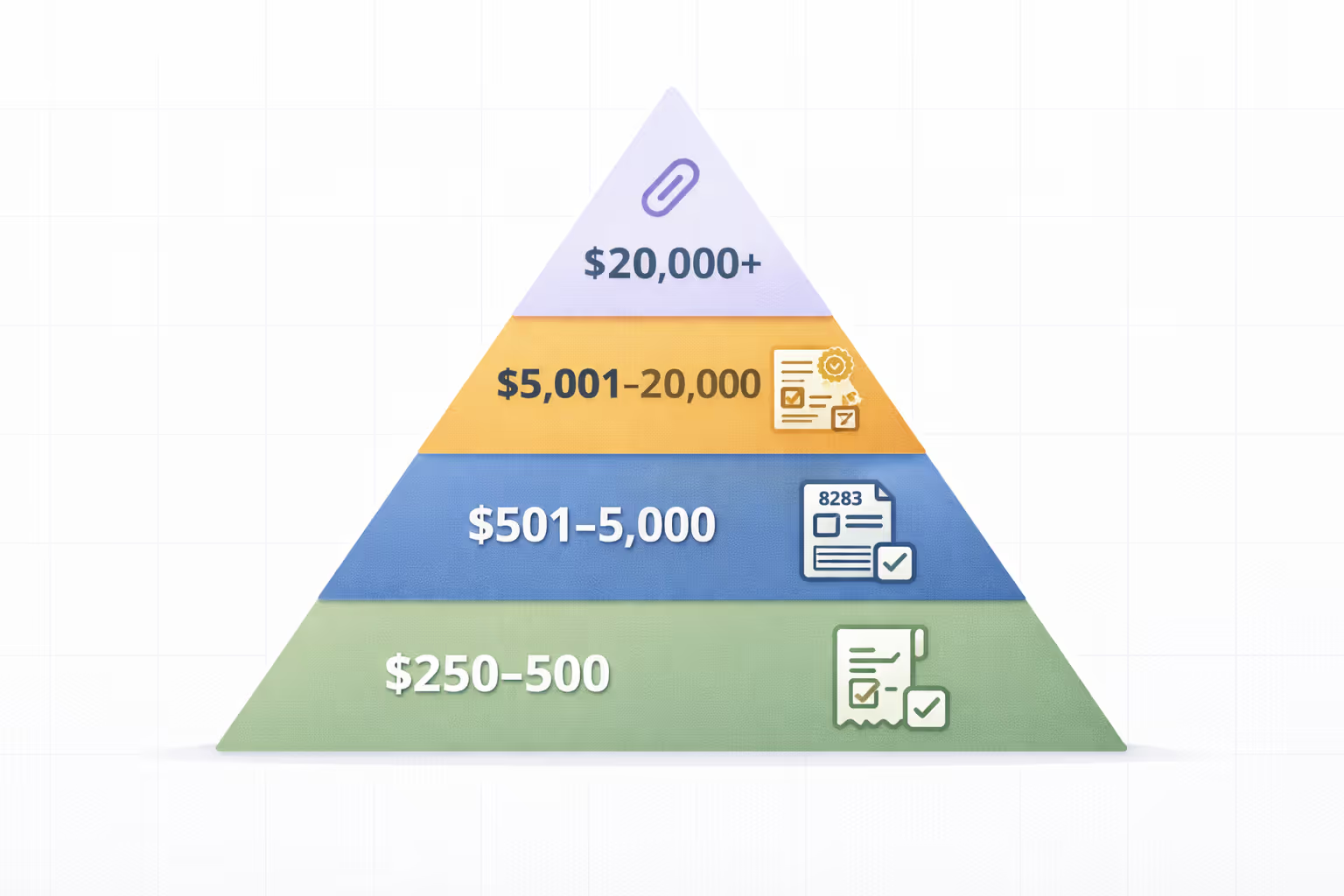
The IRS uses specific dollar thresholds to determine your documentation requirements, and understanding these helps you plan your donations strategically. For donations valued between $250 and $500, you need no special documentation beyond your receipt. When your claimed deduction reaches $501 to $5,000, you need Form 8283 Section A but no professional appraisal. However, once your donation exceeds $5,000 in claimed value, you need both Form 8283 Section B and a qualified appraisal from a certified professional. The requirements become more stringent for high-value donations. Art valued at $20,000 or more requires attaching the complete appraisal to your tax return. Any single item worth $500,000 or more also requires attachment regardless of the property type. Vehicles over $500 generally limit your deduction to the charity's actual sale proceeds rather than your appraised fair market value.
Important Exception: Publicly traded securities need no appraisal regardless of value. Their fair market value is easily determined from public trading records. It is however important to note that the IRS aggregates "similar items" when determining thresholds. If you donate multiple paintings to different charities totaling over $5,000 during the year, you'll need a qualified appraisal for the entire group. This aggregation rule catches many donors off guard, especially those spreading donations across multiple organizations.
Who Qualifies as an Appraiser for Charitable Donations?
Not every licensed appraiser can value charitable donations under IRS rules. Your appraiser must have either completed professional or college-level coursework relevant to your specific property type plus at least two years of experience valuing that type of property, or earned a recognized designation from established organizations like the American Society of Appraisers (ASA) or International Society of Appraisers (ISA).
Strict Independence Rule: Your appraiser cannot be you, your family members, the charity, anyone who sold you the property, or anyone charging percentage-based fees. In addition, there is a property type requirement that is much narrower than most people realize. An antique furniture appraiser wouldn't qualify to value contemporary sculpture, and a residential real estate appraiser may not be suitable for commercial properties or raw land. The IRS interprets "type of property" based on appraisal industry customs, so you need someone with demonstrable expertise in your specific category of donated property.
How Do You Actually Get a Qualified Appraisal?
Getting a qualified appraisal starts with finding the right professional for your specific property type. You can contact a certified appraisal firm like AppraiseItNow that specializes in charitable donation valuations. Once you've selected a qualified appraiser, you'll provide them with detailed information about your property including purchase records, condition reports, and any relevant documentation, then schedule a physical inspection if required for tangible property. The appraiser will then research comparable sales, apply appropriate valuation methods, and deliver a written report meeting all IRS requirements within your 60-day donation window, typically taking one to three weeks depending on property complexity and the appraiser's current workload.
Frequently Asked Questions
Q. Can the charity provide my appraisal since they're receiving the property? A. No. Appraisers employed by or working primarily for the receiving charity are disqualified due to conflict of interest, even if they have proper credentials. Q. Do I need a new appraisal if I donate similar items in different years? A. Yes. Each tax year requires separate documentation, and appraisals older than 60 days before donation cannot be used even for identical items. Q. What happens if I make an error? E.g. donating property worth $4,800 and later finding out it's worth $5,200 A. You'll need to file an amended return with Form 8283 Section B and obtain a qualified appraisal retroactively, which can trigger penalties if the IRS discovers the error first.
Ready to secure your charitable tax deduction?
At AppraiseItNow, we specialize in qualified appraisals for charitable donations across all property types, from fine art and real estate to business equipment and intellectual property. Our certified appraisers maintain the required credentials and independence standards, ensuring your appraisal meets every IRS requirement from content accuracy to timing compliance.
Professional Protection: We've prevented countless deduction losses by catching compliance issues that donors and even some CPAs overlooked. Our systematic approach ensures your charitable giving achieves maximum tax benefits while supporting the causes you care about most. Contact AppraiseItNow today for a consultation on your qualified appraisal needs. We're always happy to help you maximize your charitable impact while ensuring full IRS compliance for your tax deduction.