







Imagine opening an attic trunk and discovering boxes filled with decades-old stamps, carefully organized coins, or artwork you never knew existed. Whether you’ve inherited a collection or decided it’s time to liquidate your own, you’re facing a critical question: How do you sell it for its true value?
Selling a large collection requires a clear strategy. Without a proper plan, you risk accepting offers far below market value or missing opportunities to maximize your return. This guide will walk you through the essential steps, from understanding what you have to finalizing the sale.
Determining an accurate market value is the most critical step in the selling process. It informs your asking price, strengthens your negotiating position, and ensures a fair outcome. This process begins with a thorough inventory.
Before you can determine value, you need to know exactly what you have. Create a comprehensive inventory by organizing your items into categories, such as coins by denomination or stamps by country. Note the approximate quantity in each category and set aside any pieces that appear rare, unusual, or in exceptional condition.
Gather any existing documentation you can find, including certificates of authenticity, purchase receipts, or previous appraisals. If the collection was inherited, ask family members for any background they might have. Knowing whether the original owner was a serious investor or a casual hobbyist provides valuable context and helps establish the collection’s history, or provenance. Documentation like this almost always leads to higher prices.
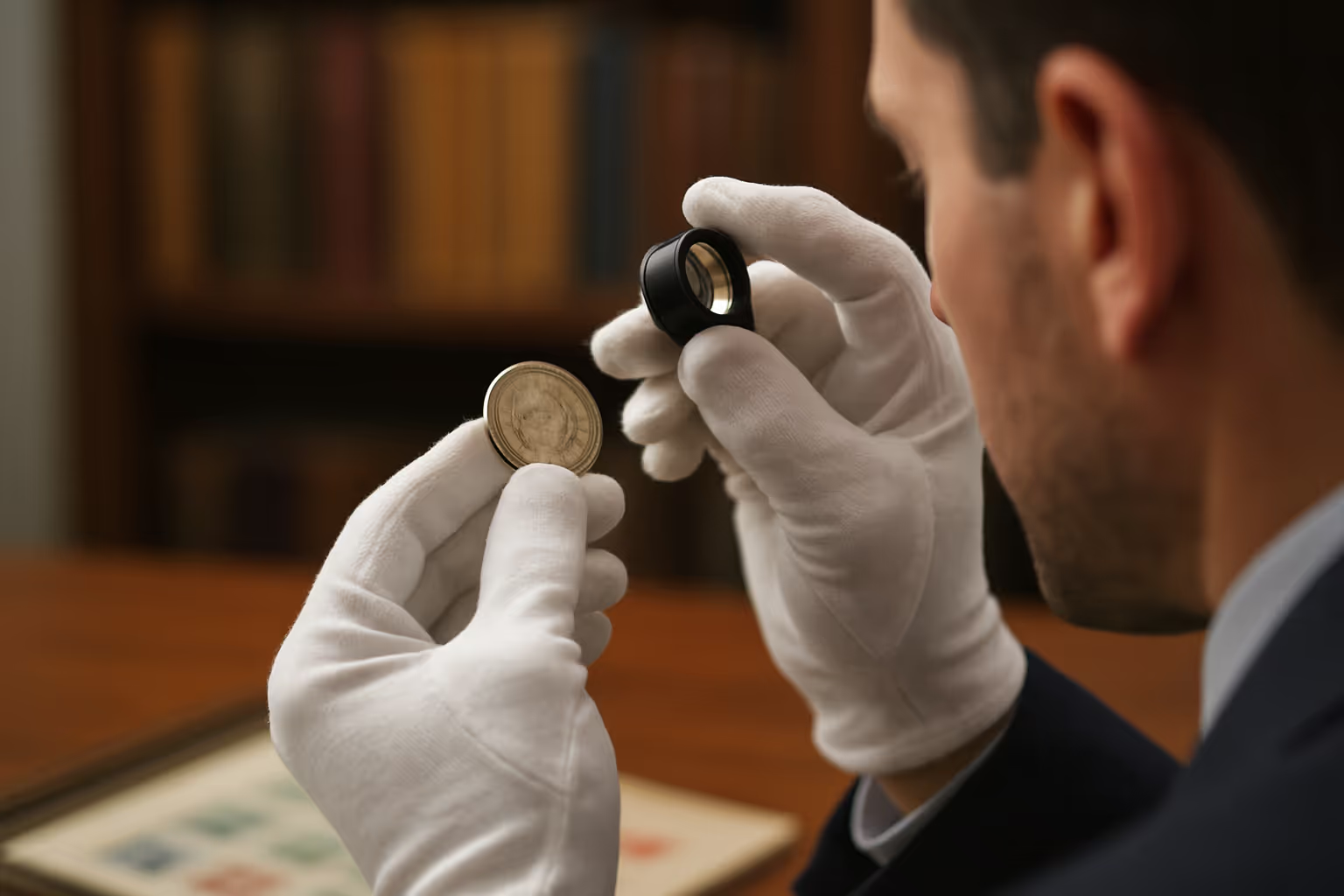
While it’s tempting to consult online auction sites or published catalogs for pricing, these sources rarely reflect true market value. Catalog values often assume an item is in perfect, mint condition—a rarity for most collectibles.
A Word of Caution: A minor flaw that’s invisible to an untrained eye can reduce an item’s value by 80-90%. Relying on published price guides without a professional condition assessment can lead to wildly inaccurate expectations.
A professional appraisal from a qualified, certified appraiser provides an accurate, unbiased valuation. Appraisers research recent, comparable sales to determine what similar items are actually selling for in today’s market. They are trained to identify rare varieties, spot condition issues, and distinguish authentic items from reproductions.
Appraisals that follow the Uniform Standards of Professional Appraisal Practice (USPAP) are recognized by the IRS, insurance companies, and courts, providing a credible document that supports your asking price. Armed with an independent appraisal, you can negotiate confidently and evaluate offers objectively, rather than relying on what an interested buyer tells you. For high-value collections (generally $20,000 or more), obtaining a second appraisal can provide further confirmation and protect against potential undervaluation.
Once you understand your collection’s value, you can choose the right selling method. The best approach depends on your collection’s worth, your timeline, and how involved you want to be in the process.
Selling to an Established Dealer is often the fastest and most convenient option, making it ideal if you need a quick sale or prefer to sell the entire collection in one transaction. However, dealers must make a profit, so their offers will reflect wholesale prices, typically 40-60% of retail value for common items. For rare and highly desirable pieces, they may offer a higher percentage. Always get written offers from at least three reputable dealers and never feel pressured to make an immediate decision.
Consigning to an Auction House provides access to a global network of serious collectors and can achieve strong prices for high-quality material. This is a great choice if your collection contains individual items worth several thousand dollars or more. Keep in mind that the auction process takes time—often two to six months from consignment to payment—and includes a seller’s commission of 10-20%. Major auction houses are selective, but smaller, regional houses may be a good fit for collections with more modest values.
Selling on Online Marketplaces like eBay gives you direct access to buyers, but it requires a significant investment of time and effort. This path works well if you have moderately valued items you can sell individually and are comfortable managing photography, listings, shipping, and customer service. While you might achieve prices closer to retail, you must factor in platform fees, payment processing charges, and the sheer amount of time needed to liquidate a large collection piece by piece.
Arranging a Private Treaty Sale involves selling directly to a collector, often through an introduction from an appraiser or dealer. This method can yield excellent results without public exposure or commissions. It’s best suited for specialized collections that appeal to a niche market. Patience is key, as finding the right buyer takes time, but the financial return can be well worth the wait.
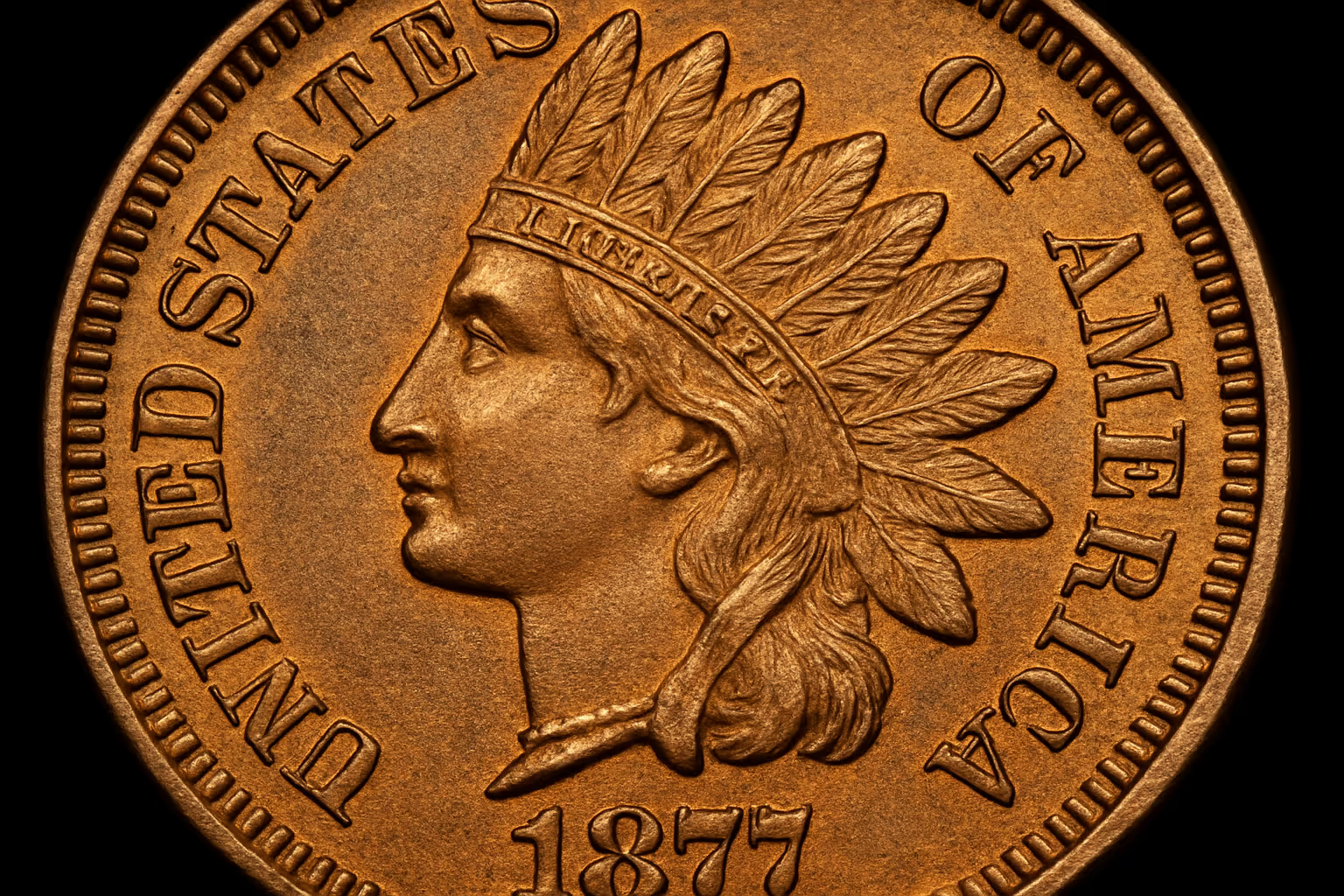
Coin collections, or numismatics, present unique challenges because of the vast difference in value between common and rare pieces. For U.S. coins, the 1930s is a critical dividing line. Most coins minted after this period were produced in massive quantities and are worth little more than their face value unless they are a rare key date, a mint error, or in exceptional uncirculated condition.
Condition is paramount in numismatics. Coins are graded on a 70-point scale, and the difference of a few points can mean thousands of dollars. For example, an 1877 Indian Head cent worth $100 in “About Good” condition could be worth over $3,000 in “Mint State” condition. Many older U.S. coins (pre-1965 dimes, quarters, and halves) also contain silver, giving them an intrinsic “melt value” based on precious metal prices.
When working with coin professionals, seek out dealers affiliated with organizations like the Professional Numismatists Guild (PNG) or the American Numismatic Association (ANA).
Critical Warning: Never clean your coins. Cleaning removes the natural patina that collectors value and can slash a coin’s worth by 50% or more.
Stamp collecting, or philately, was immensely popular in the mid-20th century, and many of today’s collections were inherited from that era. As with coins, stamps issued after 1930 generally have minimal value beyond their face value for postage. The U.S. Postal Service began printing them in enormous quantities, creating a supply that still far exceeds collector demand.
The real value in a stamp collection is typically found in pre-1930 issues. However, stamps are fragile paper artifacts, and their value depends heavily on condition. An appraiser will examine the centering of the design, the integrity of the perforations, the freshness of the color, and the condition of the gum on the back. Even minor damage like a small tear or crease can reduce a stamp’s value by 90%. While most inherited collections contain common material, it’s always wise to have a specialist review them. A professional can identify any rare items you might have otherwise overlooked before you use them for postage or discard them.
The art market operates differently from other collectibles. An artwork’s value is determined by the artist’s reputation, its provenance (ownership history), authenticity, and physical condition. Original paintings typically command higher values than prints, but factors like size, subject matter, and medium all play a role.
It’s important to understand the different market tiers. The primary market refers to retail galleries, where prices are highest. The secondary market consists of auctions and private resales, which provide a more realistic benchmark for what a piece is worth today. Finally, the wholesale market is what dealers pay, typically 40-60% of the estimated retail value.
Art appraisal requires deep specialization. An expert in 19th-century American painting may not be qualified to appraise contemporary photography. When seeking an appraisal, look for professionals certified by organizations like the Appraisers Association of America (AAA), American Society of Appraisers (ASA), or International Society of Appraisers (ISA).
Selling a collection successfully begins with accurate valuation and a clear understanding of your options. Whether you’re settling an estate, downsizing, or converting a lifetime of collecting into immediate value, professional guidance makes the critical difference between optimal outcomes and missed opportunities.
At Appraise It Now, our USPAP-compliant appraisals provide you with accurate market valuations based on actual sales data, not inflated catalog prices. This valuation is supported by comprehensive documentation that gives you a credible tool to support your asking price and build trust with potential buyers. Beyond the numbers, we offer expert guidance on the best selling strategies tailored to your specific collection and goals. Ultimately, this entire process is designed to give you confidence and peace of mind, ensuring you can navigate the sale from a position of strength.
The appraisal process is straightforward and can often be completed remotely through the submission of photographs and collection details. For larger or higher-value collections, an in-person evaluation ensures the most accurate assessment.
Ready to discover your collection’s true market value? Contact us today to discuss your collection and get clear, professional guidance on your next steps.




